
Preparing the week's meals! [EN/PT]

We should always look for ways to make our week easier. Our daily routine is often exhausting, and it usually doesn't leave us with much free time. One of the things that has helped me the most to eat well, spend less money, and save time is preparing all of my meals for the week on Sunday.
I've realized that this decision has brought me nothing but benefits so far, and I've been doing it this way for almost two months now. First, I plan my weekly menu, and on Saturday, my only responsibility is taking care of the protein. I go to the supermarket, calculate how much meat I'll need to last until Friday, and buy it. On Sunday, I head to the local produce market to pick up fresh vegetables before returning home to start cooking.
It takes me no more than three hours to prepare all of my meals for the week. I always start with the meat, which this week is slow-cooked pork leg, cooked for about an hour. The pork has been marinating since Saturday, which is exactly why I buy it first. I also made this recipe last week, and it turned out so good that I decided to make it again. The seasoning and cooking method were taught to me by my mother, so besides being delicious, this dish also carries a touch of nostalgia and fond memories.
[PT]
Precisamos sempre encontrar maneiras de facilitar nossa semana. A rotina, muitas vezes, além de ser cansativa, não nos deixa muito tempo livre. Uma das coisas que mais tem me ajudado a comer bem, gastar pouco e economizar tempo é preparar toda a comida da semana no domingo.
Percebi que essa escolha só trouxe vantagens até agora, e já faz quase dois meses que faço tudo dessa forma. Primeiro, penso no cardápio da semana e, no sábado, minha única responsabilidade é cuidar da proteína. Então vou ao mercado, faço o cálculo da quantidade de carne que precisarei comprar para durar até sexta-feira. No domingo, vou à feira comprar os legumes e volto para casa para começar a cozinhar.
Não gasto mais do que três horas para preparar toda a comida da semana. Primeiro faço a carne, que nesta semana será pernil de porco, cozido lentamente por cerca de uma hora. O pernil fica marinando desde sábado, e é justamente por isso que compro a carne primeiro. Também fiz essa receita na semana passada e ficou tão boa que resolvi repetir. O tempero e o modo de preparo foram ensinados pela minha mãe, então, além de tudo, esse prato também carrega uma pitada de saudade e nostalgia.

Next, it's time for the vegetables. Every week I buy pretty much the same ones, and that's something I need to pay more attention to so I can add a little more variety. Carrots and beets are always on the list. I also buy either broccoli or cauliflower, the choice depends on which one looks fresher and has the better price, but I always bring home at least one of them, and sometimes both.
Finally, I choose one vegetable that can be turned into a soup, a cream, or a mashed side dish. Last week, I made a yam cream soup, which I also often prepare using arracacha (Peruvian parsnip). But since it had been a long time since I last had mashed potatoes, I decided to make that instead this week.
Depois é a vez dos legumes. Toda semana eu compro praticamente os mesmos, e isso é algo em que preciso prestar mais atenção para variar um pouco. Cenoura e beterraba são presença garantida. Também compro brócolis ou couve-flor; a escolha entre um e outro depende de qual está mais bonito e com o melhor preço, mas sempre levo pelo menos um deles e, às vezes, os dois.
Por último, escolho um legume que possa virar um caldo, um creme ou um purê. Na semana passada fiz um creme de inhame, que também costumo preparar muitas vezes com batata-baroa. Mas, como fazia bastante tempo que eu não comia purê de batata, acabei optando por ele nesta semana.


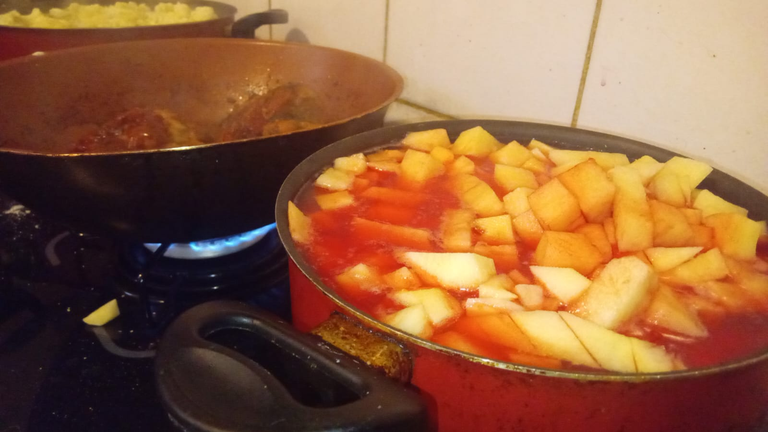
One thing I always try to do is reuse the water I cooked the vegetables in to make mashed potatoes, cream soups, or broths. That way, I don't waste the nutrients that would otherwise be poured down the drain. Sometimes the logistics don't allow it because I need to prepare several things at the same time, but whenever possible, I make sure to take advantage of it.
The biggest benefit of doing this is definitely saving money, since I don't need to eat at restaurants or order takeout. Because I plan my weekly menu in advance, I can make sure my meals are healthy and include plenty of vegetables. Another great advantage is the time I save. I simply assemble my plate, put it in the microwave, and within three or four minutes, lunch is ready.
The downside is that, after Wednesday, the food, although still very good, no longer has that freshly cooked appearance. Of course, as soon as I'm done cooking, everything goes straight into the refrigerator, which helps a lot. Still, after almost a week, even when properly stored, that difference starts to become noticeable.
Another drawback is that I'm not eating fresh salads, only cooked vegetables. I simply don't have enough time to prepare anything else, not even a simple salad. That's a limitation because I study in the morning and get home with only about fifteen minutes to spare before I have to start working on my computer. Because of that, my lunch routine needs to be as efficient as possible, and I just can't afford to spend another ten minutes preparing something.
Overall, I think this system I've found for eating well throughout the week works really well for me. On top of that, I only have to clean the kitchen once a week, I don't end up with a sink full of dishes every day, and, in the end, the advantages far outweigh the disadvantages.
What about you? Have you ever thought about doing something similar, or do you already have a routine like this?
Uma coisa interessante que eu sempre tento fazer é aproveitar a água em que cozinhei algum legume para preparar o purê, o creme ou o caldo, evitando perder os nutrientes que seriam descartados. Às vezes, a logística não permite fazer isso, porque em alguns momentos preciso preparar tudo ao mesmo tempo. Mas, sempre que possível, faço esse aproveitamento.
Bem, a principal vantagem de fazer isso é economizar dinheiro, já que não preciso comer em restaurantes ou pedir comida. Como penso no cardápio da semana com antecedência, consigo planejar refeições saudáveis, com bastante legumes. Outro ponto positivo é a economia de tempo: basta montar o prato, colocá-lo no micro-ondas e, em três ou quatro minutos, meu almoço está pronto.
O ponto negativo é que, depois de quarta-feira, a comida, apesar de ainda estar muito boa, já não tem aquele aspecto de comida fresca. Claro que, assim que termino de preparar tudo, a comida vai direto para a geladeira, e isso ajuda bastante. Mas, depois de quase uma semana, mesmo bem armazenada, essa diferença acaba aparecendo.
Outro ponto negativo é que não estou comendo saladas, apenas legumes. Eu realmente não tenho tempo para preparar nada, nem mesmo uma salada. Isso acaba sendo uma limitação, porque estudo pela manhã e chego em casa faltando apenas quinze minutos para começar meu trabalho no computador. Então, todo esse planejamento do almoço precisa ser realmente eficiente, e eu não poderia gastar mais dez minutos preparando alguma coisa.
Enfim, acho que essa maneira que encontrei para me alimentar bem durante a semana funciona muito bem para mim. Além disso, só preciso limpar a cozinha uma vez por semana, não acumulo tantas louças para lavar e, no fim das contas, os pontos positivos superam, e muito, os negativos.
E você, já pensou em fazer algo parecido ou já tem uma rotina semelhante?
Buenas tardes muy rico se ve esa carne a me gusta mucho la carne asada por eso todos los sabados lo preparo al lado de mi familia para disfrutarlo mejor ,a mi me gusta mucho la cocina y preparar platillos muy rico
Congratulations @michupa! You have completed the following achievement on the Hive blockchain And have been rewarded with New badge(s)
Your next target is to reach 90000 upvotes.
You can view your badges on your board and compare yourself to others in the Ranking
If you no longer want to receive notifications, reply to this comment with the word
STOP