Instinctive strategy [EN/PT]

Hello Splinters, welcome back!
There are days when we simply get tired of overthinking things. Instead of hunting for perfect combinations, studying abilities, or trying to anticipate every possible move the opponent might make, the urge arises to just put the biggest available monsters on the field and let brute force settle the matter. It might seem like an unplanned decision, almost like picking a team based solely on the highest stats. But does that really mean it isn't a strategy? Perhaps not. After all, deciding that your best option is to gather the most powerful monsters you own is still a conscious choice. It is the "Heavyweight Monsters" strategy.
The logic is incredibly simple. Instead of looking for complex ability synergies, you look at the available options and ask yourself: which one hits the hardest? Which one can take the most damage? Which one stays alive the longest? From there, you fill your team with true heavyweights. There’s no great mystery or hidden formula behind it. It’s essentially the equivalent of walking into a fight wielding the biggest hammers you could find. Even though it’s a very straightforward approach, it can work surprisingly well when the battle rules favor durability or high damage output, or simply give these monsters enough room to unleash their full power.
I usually do the exact opposite. I like to think through my lineups, test out possibilities, and try to find a strategy that makes sense given the specific conditions. I’ve even mentioned before how much I prefer certain compositions, like the one I use with Iziar in the Life element. But not every battle requires you to reinvent the wheel. Some matches practically tell you to stop overcomplicating things and simply field enough raw power to settle the score. And perhaps that is one of the most interesting aspects of Splinterlands: a seemingly simple choice can be just as effective as a strategy that took minutes to plan.
When I started playing nearly five years ago, I believe that was an approach I took much more often. It wouldn't be surprising to see new players doing the exact same thing. Early on, before fully grasping the game's abilities, combinations, and possibilities, it’s natural to look at the stats and pick whatever seems the most powerful. Over time, we learn to explore every detail more thoroughly and start seeking out more elaborate solutions. The funny thing is, after learning so much, we might forget that the basics still work. That was the exact mindset I brought to today’s battle: no trying to craft a strategic masterpiece. I simply picked some of my strongest monsters within the mana limit and put them to work. Now, enough theory. Let’s see if that old brute-force formula actually worked!

Click here to watch this battle
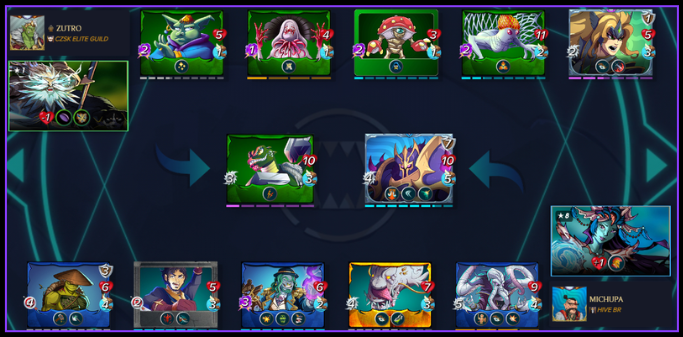
For today's battle, many players would likely say we are facing perfect conditions. Personally, I prefer it when special rules are in play, especially when there are two or more at once, as it makes team building much more interesting. Even so, a battle with no special rules has its upsides. With a generous amount of mana available and all elements unlocked, we still have plenty of freedom to devise a strategy and choose the monsters that best fit the situation.

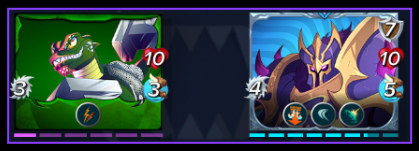
For the first position, we have two monsters capable of dealing significant damage while also withstanding heavy attacks. I really liked my opponent's choice, especially because Grund can attack twice in a row, and depending on the target, that can make a huge difference right from the opening turns. However, I also brought a very capable tank for this role. It combines speed, durability, and solid offensive power, so I believe we’re in for a very balanced clash on the front lines.
For the lineup, I followed practically the same principle I mentioned earlier: no need to overcomplicate things. In the back row, I placed two ranged-attack monsters, choosing strong options that meshed well with the battle conditions. I also added a monster capable of restoring shields, something that can make a huge difference over the course of the turns. After that, I included a magic attacker and two more resilient monsters to round out the formation and help pressure opponents hiding in the rear. It was a simple composition, but strong enough to get the job done.

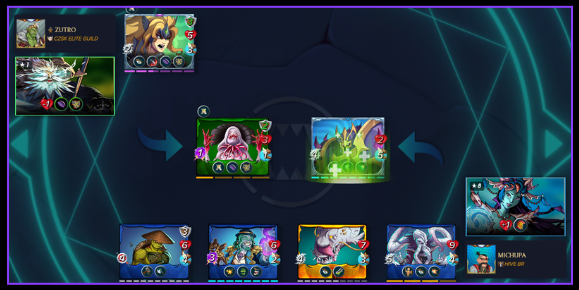
One thing I really like about my lineups is that I don't rely on just one type of attack. This variety usually helps me in many situations, and in this battle, it proved especially important. My opponent brought protection against magic attacks, so if I had bet everything on that type of damage, I could have run into serious trouble. Fortunately, my formation had other alternatives, and that diversification made all the difference.
My opponent also put together a good team and made interesting choices for this battle. However, this time, the combination of resilience and offensive power won the day. My monsters were chosen quite simply: they were strong, tough, and capable of dealing massive damage. I didn't need any complex gimmicks or wild, elaborate combos. In the end, it was these true war machines that decided the battle.
And that wraps up another post. Thank you for making it to the end and dedicating a few minutes of your time to follow my words, ideas, and thoughts. I hope you enjoyed today's battle and reflection. See you in the next post!

Olá Splinters, bem vindos de volta!
Tem dias em que a gente simplesmente cansa de pensar demais. Em vez de ficar procurando combinações perfeitas, estudando habilidades ou tentando imaginar todos os movimentos possíveis do adversário, surge aquela vontade de colocar os maiores monstros disponíveis no campo e deixar que eles resolvam o problema na base da força. Parece uma decisão sem planejamento, quase como escolher um time apenas olhando para os números mais altos. Mas será que isso realmente deixa de ser uma estratégia? Talvez não. Afinal, quando você decide que sua melhor opção é reunir os monstros mais poderosos que possui, você também está fazendo uma escolha consciente. É a estratégia dos Heavyweight Monsters.
A lógica é extremamente simples. Em vez de procurar aquela combinação complicada entre habilidades, você olha para as opções disponíveis e pensa: qual deles bate mais forte? Qual aguenta mais dano? Qual consegue permanecer vivo por mais tempo? A partir daí, você vai preenchendo seu time com verdadeiros pesos-pesados. Não existe muito mistério, nem uma grande fórmula escondida por trás disso. É praticamente o equivalente a entrar em uma briga carregando os maiores martelos que você encontrou. Mesmo sendo uma abordagem bastante direta, ela pode funcionar surpreendentemente bem quando as regras da batalha favorecem resistência, dano elevado ou simplesmente permitem que esses monstros tenham espaço suficiente para mostrar toda a sua força.
Eu costumo fazer justamente o contrário. Gosto de pensar nas minhas formações, testar possibilidades e tentar encontrar alguma estratégia que faça sentido dentro das condições apresentadas. Já falei algumas vezes, inclusive, sobre minha preferência por determinadas composições, como aquela que utilizo com a Iziar no elemento Life. Só que nem toda batalha exige que você tente reinventar a roda. Algumas partidas praticamente dizem para você parar de complicar e simplesmente colocar força suficiente no campo para resolver a situação. E talvez esse seja um dos pontos mais interessantes do Splinterlands: uma escolha aparentemente simples pode ser tão eficiente quanto uma estratégia que levou vários minutos para ser planejada.
Quando comecei a jogar, há quase cinco anos, acredito que esse era um caminho que eu seguia com muito mais frequência. E não seria nenhuma surpresa encontrar jogadores iniciantes fazendo exatamente a mesma coisa. No começo, antes de conhecer profundamente as habilidades, combinações e possibilidades do jogo, é natural olhar para os números e escolher aquilo que parece mais poderoso. Com o passar do tempo, aprendemos a explorar melhor cada detalhe e começamos a procurar soluções mais elaboradas. O curioso é que, depois de aprender tanto, podemos acabar esquecendo que o básico continua funcionando. Foi exatamente essa mentalidade que levei para a batalha de hoje: nada de tentar criar uma obra-prima estratégica. Apenas escolhi alguns dos meus monstros mais fortes dentro do limite de mana e coloquei todos eles para trabalhar. Agora chega de teoria. Vamos ver se essa velha fórmula da força bruta realmente funcionou!
Para assistir essa batalha, clique aqui
Para a batalha de hoje, muitos jogadores provavelmente diriam que estamos diante de condições perfeitas. Eu, particularmente, gosto mais quando as regras especiais estão presentes, principalmente quando temos duas ou mais delas ao mesmo tempo, pois isso acaba tornando a montagem do time muito mais interessante. Mesmo assim, uma batalha sem nenhuma regra também tem seu lado positivo. Com uma boa quantidade de mana disponível e todos os elementos liberados, ainda temos bastante liberdade para montar nossa estratégia e escolher os monstros que melhor se encaixam na situação.
Para ocupar a primeira posição, temos dois monstros que podem causar bastante estrago e também suportar muitos ataques. Gostei bastante da escolha feita pelo meu adversário, principalmente porque o Grund pode atacar duas vezes consecutivas e, dependendo do alvo, isso pode fazer uma diferença enorme logo nos primeiros turnos. Porém, também trouxe um tank muito competente para essa função. Ele combina velocidade, resistência e um bom poder ofensivo, então acredito que teremos uma disputa bastante equilibrada logo na linha de frente.
Para completar a formação, segui praticamente o mesmo princípio que falei anteriormente: nada de tentar inventar demais. Na parte de trás, coloquei dois monstros com ataque ranged, escolhendo opções fortes e que combinavam bem com as condições dessa batalha. Também adicionei um monstro capaz de restaurar o escudo, algo que pode fazer bastante diferença durante os turnos. Depois disso, coloquei um atacante mágico e mais dois monstros resistentes para fechar a formação e ajudar a pressionar os adversários que estivessem protegidos na retaguarda. Uma composição simples, mas com força suficiente para cumprir seu papel.
Uma coisa que gosto bastante nas minhas escalações é justamente não depender de apenas uma forma de ataque. Essa variedade costuma me ajudar em várias situações e, nessa batalha, acabou sendo especialmente importante. Meu adversário trouxe proteção contra ataques mágicos e, se eu tivesse apostado tudo nesse tipo de dano, poderia ter encontrado muitos problemas. Felizmente, minha formação tinha outras alternativas e essa diversificação acabou fazendo toda a diferença.
Meu adversário também montou uma boa equipe e fez escolhas interessantes para essa batalha. Porém, dessa vez, a combinação de resistência e poder ofensivo acabou falando mais alto. Meus monstros foram escolhidos de uma maneira bem simples: eram fortes, resistentes e capazes de causar muito dano. Não precisei de uma grande invenção ou de alguma combinação mirabolante. Hoje, quem decidiu a batalha foram mesmo essas verdadeiras máquinas de guerra.
E por aqui eu encerro mais um post. Agradeço a você que chegou até o final e dedicou alguns minutos do seu tempo para acompanhar minhas palavras, ideias e pensamentos. Espero que tenha gostado da batalha e da reflexão de hoje. Nos vemos no próximo post!