
📜 Codex ATF – Edition 007. How much is artificial intelligence really worth.

📑How much is artificial intelligence really worth: Beyond the Hype and into the Logic
We are at a point where everything that moves in the digital universe seems to be covered in a thick layer of noise. If you open the internet, you get the impression that we are living in a revolution in which every line of code written by an algorithm is worth a gold bar. But if we look beyond the pompous headlines and stock charts that want to convince us that AI is the new electricity, what is left? How much is all this technology worth, in real numbers, in real productivity, and not in hype?

The market value that we see displayed today is, to a large extent, a speculative bubble. Large companies are fighting with astronomical figures because they are afraid of being left behind, not necessarily because the product they deliver today would be ten times more efficient than what we had a few years ago. It is a game of power, an arms race in which resources are massively consumed to train ever larger models, in the hope that, at some point, that complexity will translate into useful intelligence. For the average user, this value is irrelevant. It doesn't matter how much the company is worth on the stock market, what matters is whether the tool you are offered shortens your path from intention to result.
The true value of artificial intelligence is one of a reductionist nature. It does not create value out of nothing, but simply compresses the time needed to process information. If before you needed hours to look for a code template, synthesize documentation or find an anomaly in a data set, now you have a tool that does it almost instantly. The value here is not the intelligence of the algorithm, but your time. If the AI consumes more of your time correcting the errors it generates than the time it saves you by generating them, then its value is negative. It is a paradox that many ignore: we are so fascinated by technology that we forget to calculate the cost of human maintenance of the system.
There is another dimension of value that we frequently ignore: the opportunity cost of our own thinking. This is where things get tricky. If we delegate the decision-making, synthesis and creation processes to a statistical model, the value of our cognitive capacity risks depreciating. AI is only as valuable as your ability to control it. If you become a simple operator who just presses a button and accepts the output, you become an extension of the algorithm, not its master. The true value appears when you use AI as a lever: it lifts the weight, but you decide the direction and force of the push.
In conclusion, if we were to draw a line, artificial intelligence is not an entity that has intrinsic value. It is only a multiplier. If you have a healthy, rigorous and efficient work system, AI will multiply your results. If you have chaos in your workflow, AI will amplify the chaos. Don’t look for value in grand models, in advertisements, or in “world-changing” promises. Look for value in those little pieces of code, in those repetitive tasks you’ve taken off your to-do list, and in the ease with which you can now test ideas that would have previously been too expensive.
- The value of artificial intelligence is directly proportional to your ability to integrate it without being overwhelmed by the noise. It’s a tool that, used correctly, allows you to be more present in what you’re doing, freeing you from dead tasks, but which, used indiscriminately, turns you into a mere spectator of your own work.
If we go a little further along this thread, a question arises that is usually avoided because it is inconvenient: what is the price we pay for this convenience? If we accept the idea that artificial intelligence functions as a lever that eases our effort, we must ask ourselves what happens to the muscles that we no longer use. There is a real risk, namely the atrophy of the ability to build something from scratch, without external help. We become so accustomed to the speed of delivery of an algorithm that we forget that the process of creation, that struggle with the blank page or the unsolved logic problem, is actually where thinking is refined. If we remove friction, we also remove the opportunity to understand the depth of things.
A kind of comfortable mediocrity is born. Because algorithms are trained on statistical averages, on what is probable, on what is already known and accepted, everything that results from them tends to sit somewhere in the middle. Everything becomes correct, everything becomes grammatically perfect, everything becomes homogeneous. But innovation, pure creativity, that spark that changes the rules of the game, is never in the middle. It is at the edges, in the errors, in the courage to be imperfect or unusual. There is a danger that, by relying too much on artificial intelligence, we start to produce a world that looks good on the surface, but which lacks that human density, that nerve that only appears when someone puts their personal stamp on it, at the risk of making mistakes.
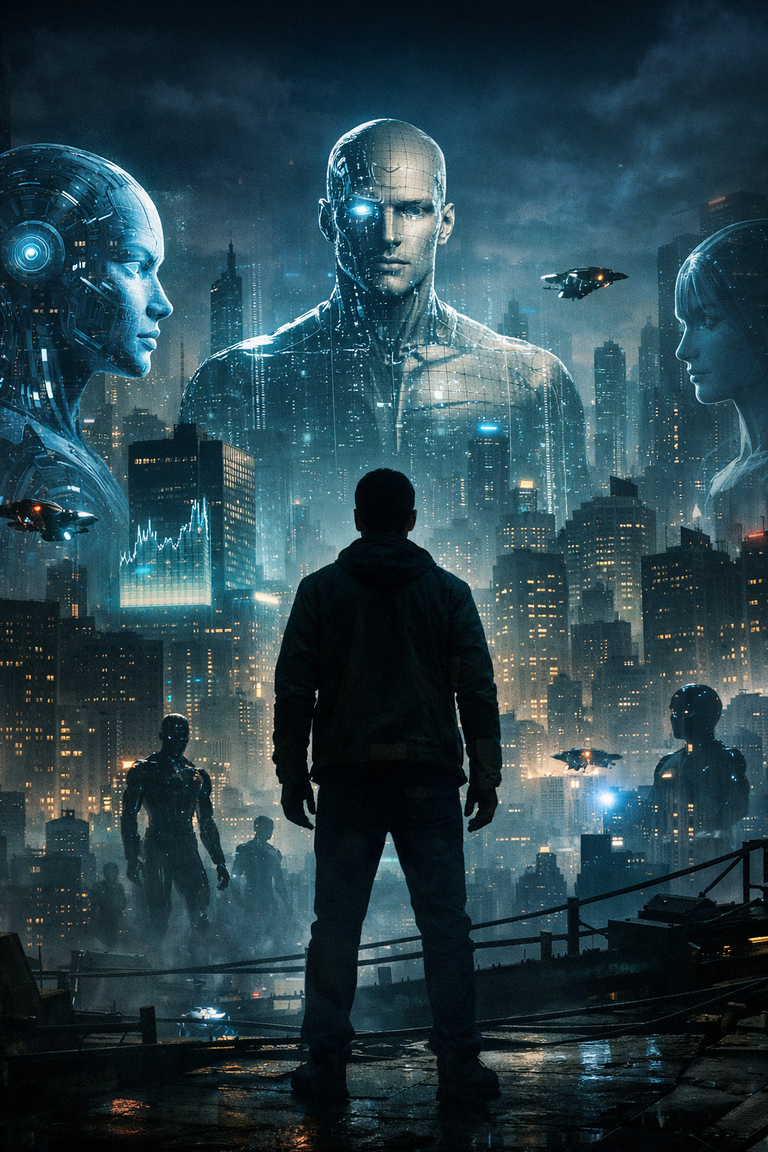
There is also the problem of ownership of the idea. When you ask a model to generate a structure, a text or a solution for you, that piece of work does not really belong to you. It is a by-product of a statistical mechanism that you have just asked a question to. If we lose touch with the execution, if we no longer know how things work underneath, we become dependent on a black box that we do not understand. The true value lies not in the final result, no matter how brilliant it may be, but in our ability to understand the architecture behind it. When we delegate understanding, we also cede control.
This does not mean that we should reject technology, but rather change our relationship with it. I believe that the true measure of value in the future will be the ability to maintain a critical distance. Let us use the tools to clean up the noise, to automate the repetitive, but let us keep for ourselves that part that defines us: the decision, the vision and, above all, the assumption of error. If an algorithm makes a mistake, it is just a bug; if a human makes a mistake, it is a lesson. We must be careful not to become mere operators of systems that we can no longer correct when they go crazy, because we have forgotten how to build something solid with our own hands and our own minds.
The end is not a number, but a choice. At the end of the day, technology does not have an agenda of its own, although it seems that way. It is a mirror. If you, as a user, are looking for efficiency, you will find it. But if you are looking for a replacement for your own thinking, technology will gladly serve you, but empty you of content. The real value is not in the code, in the models, or in the servers, but in your ability to say no when the system becomes more important than the result. Stay aware of how much of your work is your own signature and how much is generated noise. That is, in the end, the only measure of value that matters.

📜Discover the editorial side of #ATF — ideas, reflections, and blockchain as memory.
Explore the Codex ATF series.:
📑 Edition 001: Open Archives
📑 Edition 002: No rewards in LTC, but Litecoin in the DNA
📑Edition 003: Artificial Intelligence in Digital Life. Are you using AI in your online activities? Do you use it or just observe it?
📑 Edition 004: SWAP.HIVE:ATF Guide - Rewards and Risks
📑Edition 005: Litecoin’s Journey to 150 $ - Between Fair Wind and Volatility Storm
📑Edition 006: From Freedom to Custody - The Silent Takeover of Decentralization
- All images in this blog post were created with the assistance of Microsoft Copilot, an artificial intelligence tool developed by Microsoft. They are artistic visualizations intended to illustrate the narrative themes and do not depict real events or individuals.
!PIZZA
!LOLZ