I want your backline! [EN/PT]

Hello Splinters, welcome back!

There’s one weak spot that all players fear leaving vulnerable, and that spot is the back row, or rear guard, if you prefer to call it that. It’s not a very accessible spot. Naturally, monsters will attack the first monster in the front row, so that position requires a strong monster—and for that, we have plenty of sturdy options: the tanks, as I like to call them. But what about the back line? Well, there will be some important—and often vulnerable—monsters there.
It’s hard to protect every monster on the field, and you never know what your opponent is planning. You might spend resources protecting the monsters in the back, while your opponent focuses solely on the tank. You can protect your rear for potential attacks, but your opponent might come with monsters packed with Sneak, Opportunity, and Snipe attacks. It’s a bit unpredictable in that regard, and that’s why positioning becomes a defensive ally. There are other options to mitigate the damage, of course, but if the strategy is to attack the enemy’s backline, there’s a high chance the damage will be significant.
Of course, everyone could focus solely on attacking the backline, so why doesn’t everyone do that? Because this is just one strategy among many, and it isn’t always the best one. I could choose to attack the enemy backline or I could focus on quickly destroying the opponent’s tank. Either way, these are choices, and the result only becomes clear as the match progresses. In the meantime, a lot can happen. Personally, I like to use this sneakier strategy, as I understand that the backline is often a neglected spot in defense, and exploiting that is quite interesting.
So, when opportunities arise or we feel it’s the right time to use this strategy, it should be put into practice. The problem is when your opponent thinks the same way you do. That’s what happened in today’s battle: both players wanted to target each other’s rear with monsters possessing Sneak and Opportunity abilities. Does the best player win? The strongest? No. The one who thinks of a deadly attack and an appropriate defense wins. Keep following along and you’ll see how this battle went!

To watch this battle, click here
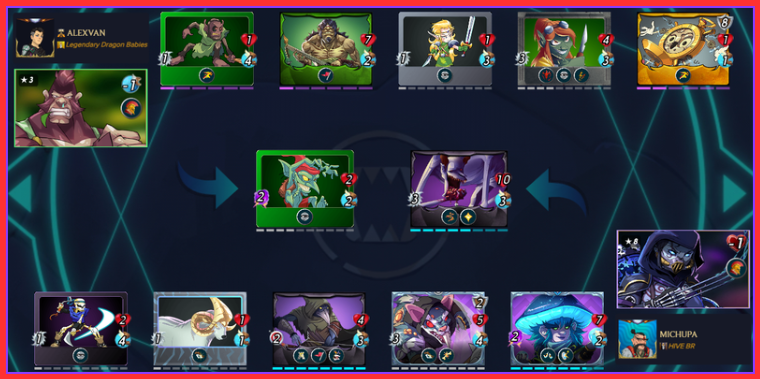
A few notes on the battle:
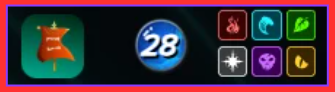
28 mana, all elements available, and no rules. Perfect conditions for using any strategy, as long as it’s appropriate for the amount of mana, which isn’t great, but isn’t bad either.
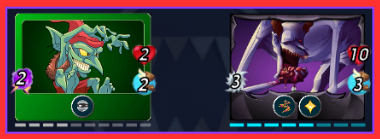
For the tank, due to the need to use mana efficiently, I used a monster with excellent cost-effectiveness. Good health, good attack, deals damage to the attacker, and regenerates its own health. My opponent messed up here, and thank goodness.
In my back row, I focused on three things: more attack for my melee monsters, more shields, and monsters that could attack the enemy’s back row. Could it be any simpler? That’s all it would take to secure victory with a pure and lethal strategy.

Well, my opponent thought the same way, and I’d say even more efficiently, by fielding more offensive monsters in his back row. His logic was exactly the same as mine, but he made two mistakes: a poor tank with no shield protection—that led to his defeat—and once again: thank goodness.
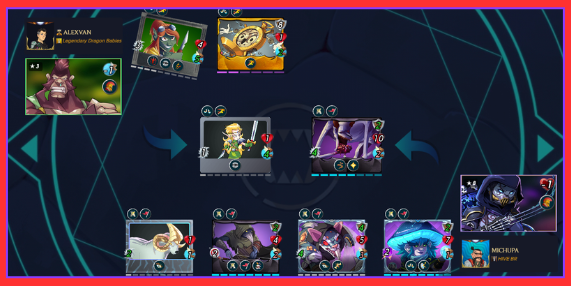
Was it a tough battle? A little. It could have been worse if my opponent had paid closer attention to the details. In this battle, every monster seemed intent on drawing blood from the enemy backline, and the winner was the one who thought most carefully about team composition. A good match.
Translated with DeepL.com

Olá Splinters, bem vindos de volta!
Existe um ponto fraco que todos os jogadores temem deixar vulnerável, e esse lugar é a linha de trás, ou retaguarda, se assim você prefere chamar. Não é um lugar muito acessível. Naturalmente, os monstros vão atacar o primeiro monstro da linha de frente, então, para essa posição, é necessário um monstro forte e, para isso, temos muitas opções robustas: os tanks, como gosto de chamar. Mas e a linha de trás? Bem, ali estarão alguns monstros importantes e, muitas vezes, vulneráveis.
É difícil proteger todos os monstros em campo e nunca se sabe o que o adversário está planejando. Você pode gastar recursos protegendo os monstros de trás e seu adversário focar apenas no tank. Pode proteger sua retaguarda para eventuais ataques, mas o seu adversário vir com monstros cheios de ataque Sneak, Opportunity e também Snipe. É um pouco imprevisível nesse aspecto e, por isso, o posicionamento se torna um aliado defensivo. Existem outras opções para amenizar os estragos, claro, mas se a estratégia é atacar a linha de trás inimiga, existem grandes chances do dano ser significativo.
Claro, todo mundo poderia focar apenas em atacar a linha de trás, então por que nem todos fazem isso? Porque essa é apenas uma estratégia entre tantas outras, e nem sempre é a melhor de todas. Eu poderia escolher atacar a linha de trás inimiga ou poderia focar em destruir rapidamente o tank adversário. De qualquer forma, são escolhas, e o resultado só aparece no decorrer da partida. Enquanto isso, muita coisa pode acontecer. Eu, particularmente, gosto de usar essa estratégia mais sorrateira, pois entendo que a linha de trás é, muitas vezes, um local negligenciado na defesa, e explorar isso é bem interessante.
Então, quando as oportunidades aparecem ou sentimos que é a hora certa de usar essa estratégia, ela deve ser colocada em prática. O problema é quando o adversário pensa igual a você. Foi isso que aconteceu na batalha de hoje: ambos os jogadores queriam atingir a retaguarda um do outro com monstros de habilidades Sneak e Opportunity. Vence o melhor? O mais forte? Não. Vence aquele que pensa em um ataque mortal e em uma defesa apropriada. Continue acompanhando e verá como foi essa batalha!
Para assistir essa batalha, clique aqui
Alguns pontos sobre a batalha:
28 de mana, todos os elementos disponíveis e sem regras. Condições perfeitas para se usar qualquer estratégia desde que ela seja apropriada para a quantidade de mana, que não é boa, mas também não é ruim.
Para tank, devido a necessidade de usar bem o recurso de mana, usei um monstro que possui um custo benefício ótimo. Boa quantidade de vida, bom ataque, causa danos ao atacante e regenera a própria vida. Meu adversário falhou aqui e ainda bem.
Na minha linha de trás eu foquei em 3 coisas, mais ataque para meu monstros melee, mais escudos e monstros que pudessem atacar a linha de tr´s inimiga. Mais simples que isso? Apenas isso seria necessário para buscar a vitória em uma estratégia pura e letal.
Bem, meu adversário pensou da mesma forma e posso dizer que de forma até mesmo mais eficiente em possuir monstros mais ofensivos em sua linha de trás. A lógica dele foi exatamente a mesma que a minha mas pecou em duas coisas: um tank ruim e sem proteção de um escudo, isso o levou a derrota e mais uma vez: ainda bem.
Foi uma batalha difícil? Um pouco, Poderia ser pior se detalhes estivessem sido observados com atenção pelo meu adversário. Nessa batalha, cada monstro parecia querer arrancar um pouco de sangue da linha de trás inimiga e venceu aquele que pensou melhor na estruturação da equipe. Um bom jogo.