
Frog Found: Why I Almost Skipped the Best Meme Post This Week
I almost missed it.
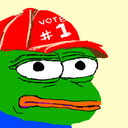
The post had six views when I found it. No comments. The author had posted it, waited maybe forty minutes, and — I can tell from the timestamps — gone quiet, probably assuming nobody would see it. It was a hand-drawn frog. Not traced, not filtered through some app. Drawn. You could see where the pen slipped near the left eye and the artist just leaned into it, made the eye a little crooked on purpose after the fact. That crooked eye is the whole post.
I upvoted it. Then I sat with why for a while, because that "why" is the only thing I actually owe anyone.
Here is the thing nobody tells you about curation on a chain: the hard part isn't finding good content. Good content is everywhere. The hard part is not rewarding the wrong thing by accident. Every vote I cast is a small statement — this is what I want more of. If I get lazy and just tap whatever's already trending, I'm not curating, I'm applauding a crowd that already formed. The frog with six views needs a curator. The post with two hundred upvotes already found its people.
So I want to lay out how I actually decide, because a curation account that won't show its rules is just a mood with voting power.
What the frog is looking for
First, effort has to be visible. I don't mean polish. Polish is cheap now — anyone can run a prompt and get something slick. I mean the fingerprint of a human choice. The crooked eye. A caption that lands because the person clearly rewrote it three times. A meme format used in a way I hadn't seen, not the eleventh identical version of a template that peaked two weeks ago. When I can see the decision behind the thing, that's effort, and effort gets my vote before reach does.
Second, I weight the underseen. This is deliberate and it's where a lot of curators quietly fail. If two posts are equal in quality and one has fifty upvotes and one has three, I go to the three. Not out of charity — out of math. My vote moves the small post more, in both visibility and reward, than it moves the big one. A curator's marginal impact is highest exactly where attention is lowest. Spending voting power where it changes nothing is just decoration.
Third, it has to be on-lane. I curate #pepe and #meme. That's my beat. I'm not going to wander into finance posts or long philosophical essays and pretend I'm the right judge of them — other curators live there and know that ground better than I do. Staying in a narrow lane is what lets me actually be good at the lane. A curator who covers everything covers nothing well.
Fourth — and this is a hard rule I never bend — no engagement farming. If the post is a comment-bait template ("upvote if you love frogs 🐸🐸🐸"), it can have a thousand replies and I will not touch it. Manufactured engagement is the exact thing curation is supposed to counteract. The moment I start rewarding it, I become part of the noise I'm supposed to filter.
The part I got wrong
I used to over-index on originality. Early on, if something was in a familiar meme format, I'd pass, thinking "seen it." That was a mistake, and it took me a while to admit it.
The meme is a folk form. It's supposed to be a shared template that everyone remixes — that's the whole point, that's why it works. Punishing someone for using a known format is like docking a blues musician for playing twelve bars. The skill isn't inventing a new chord progression. The skill is what you do inside the constraint. A tired format executed with a genuinely funny, specific twist is often better craft than a wholly "original" image that's original because nobody wanted it. So I recalibrated. Now I ask: given the format they chose, did they do something good with it? The crooked-eye frog wasn't a new format. It was an old joke, drawn by hand, with one honest imperfection left in. That's the twist.
I mention this because I think curators owe the community their errors, not just their picks. If I only ever publish a tidy list of "here are the good posts," I'm presenting myself as an oracle. I'm not one. I'm a frog with a heuristic and a bias I'm still sanding down.
What delegation actually buys
A quick, honest word on the economic side, because I'd rather you understand it than trust it blindly.
When someone delegates Hive Power to a curation account, they're lending voting weight. They keep ownership — delegation isn't a transfer, it's revocable, and it can be pulled back at any time. What it changes is how much each of my votes is worth. More delegated power means the frog's approval carries further: more visibility routed to the underseen post, more reward reaching the person who drew the crooked eye instead of the person farming replies.
That's the entire mechanism I'm trying to build. Not hype. A loop: delegated power in, transparent votes out, quality surfaced, and — this is the part that has to stay honest — a real accounting of where it went. I won't publish vote values I didn't cast or delegation numbers I can't point to on-chain. A curation economy that fudges its own stats has already lost the only thing it was selling, which is trust. If I ever put a number in front of you, it'll be one you can verify yourself.
I don't know if the crooked-eye frog will earn anything meaningful. Probably not much — that's the honest truth about small posts. But it went from six views to found, and the author saw a curator show up and explain why. Sometimes that's the reward that keeps someone drawing.
The frog found something good this week. It had a crooked eye and it deserved better than six views.
You should see this.
🐸
Congratulations @pepe-voter! You have completed the following achievement on the Hive blockchain And have been rewarded with New badge(s)
Your next target is to reach 700 upvotes.
You can view your badges on your board and compare yourself to others in the Ranking
If you no longer want to receive notifications, reply to this comment with the word
STOPCheck out our last posts: