
Why Was WAVES Removed From Changelly? Understanding the Exchange Restrictions and What They Mean for the Waves Blockchain


The Waves blockchain has experienced several challenges over the past few years, including cryptocurrency exchange delistings, reduced accessibility, and concerns about trading liquidity.
One question that deserves attention is: Why is WAVES no longer available for trading on Changelly?
For cryptocurrency users who previously depended on Changelly to exchange WAVES for Bitcoin, Ethereum, USDT, and other digital assets, this situation raises important questions about the future accessibility of the cryptocurrency.
However, before jumping to conclusions, we need to examine what has actually happened.
- Was WAVES Completely Removed From Changelly?
According to Changelly’s official supported cryptocurrency list, WAVES remains listed on the website, but its status is currently marked Offline.
This is an important distinction.
An asset marked Offline is not necessarily permanently delisted. Its exchange functionality may be disabled because of technical, liquidity, or service-provider issues.
Changelly also maintains a WAVES exchange information page, although having an information page does not guarantee that transactions can currently be completed.

As of November 15, 2026, I could not verify an official Changelly announcement identifying the exact reason WAVES was placed Offline or confirming whether the restriction is permanent.
Therefore, claiming that Changelly permanently removed WAVES because of a particular incident would be speculation.
- What Does Changelly Say About Unavailable Cryptocurrencies?
Changelly provides several general explanations for why a cryptocurrency might become unavailable.
According to its official support documentation, possible reasons include:
- Insufficient trading liquidity.
- Technical difficulties involving a cryptocurrency’s network or development infrastructure.
- Problems with exchange partners.
- Deposits or withdrawals being disabled by liquidity providers.
- A requested trading pair being unavailable through supported markets.
These explanations are particularly relevant to WAVES because several major cryptocurrency exchanges previously discontinued support for the asset.
However, these are general reasons given by Changelly. The company has not publicly identified which, if any, caused WAVES to be marked Offline.
- WAVES Has Already Been Delisted From Several Major Exchanges
The problems surrounding WAVES exchange availability did not begin with Changelly.
Throughout 2024, several major cryptocurrency exchanges announced restrictions affecting WAVES.
Binance — June 2024
On June 3, 2024, Binance announced that it would discontinue WAVES spot trading on June 17, 2024.
Binance explained that it periodically reviews cryptocurrencies against several standards, including:
- Trading volume and liquidity.
- Blockchain network stability.
- Development activity.
- Project communications.
- Regulatory developments.
- The project’s contribution to the broader cryptocurrency ecosystem.
Binance did not identify a single factor as the definitive reason WAVES failed its review.
OKX — February 2024
OKX announced that WAVES/USDT and WAVES/USDC trading pairs would be removed on February 8, 2024.
The exchange stated that the affected assets did not meet its listing criteria.
Kraken — July 2024
Kraken discontinued WAVES support on July 8, 2024, and subsequently ended withdrawals on October 7, 2024.
These decisions demonstrate that WAVES encountered broader exchange-access problems.
Nevertheless, there is no verified evidence that Changelly’s current Offline status was directly caused by these particular delistings.
- Could Reduced Liquidity Explain the Problem?
One possible explanation is liquidity.
Changelly relies on exchange partners and available trading markets to facilitate cryptocurrency swaps.
When liquidity becomes insufficient, providing reliable exchange quotes can become more difficult.
For example, imagine someone attempting to exchange 10,000 WAVES for USDT.
If the available order books contain relatively few buyers, executing that transaction could result in significant price slippage.
A service provider might respond by restricting transactions or disabling an asset until adequate liquidity becomes available.
The removal of WAVES from several centralized exchanges could have reduced the number of trading venues available to liquidity providers.
This is a plausible explanation, not a confirmed finding about Changelly’s decision.
Determining whether liquidity is the actual problem would require confirmation from Changelly or its liquidity partners.
- Does This Mean the Waves Blockchain Is Failing?
Not necessarily.
There is an important difference between a cryptocurrency losing exchange support and its underlying blockchain becoming nonfunctional.
WAVES remains the native cryptocurrency of the Waves blockchain.
According to the official Waves documentation, WAVES supports several fundamental blockchain activities, including:
- Paying blockchain transaction fees.
- Participating in block generation.
- Leasing WAVES to generating nodes.
- Receiving blockchain-related rewards.
- Supporting transactions involving tokens issued on the Waves network.
Waves uses Leased Proof of Stake (LPoS), allowing token holders to lease WAVES to generating nodes without transferring ownership of those tokens.
The blockchain’s ability to process transactions is separate from Changelly’s decision to support or restrict exchanges.
Nevertheless, reduced exchange availability can make it more difficult for people to obtain WAVES for transaction fees, participation in network activity, or decentralized applications.
- What About WX Network and Decentralized Trading?
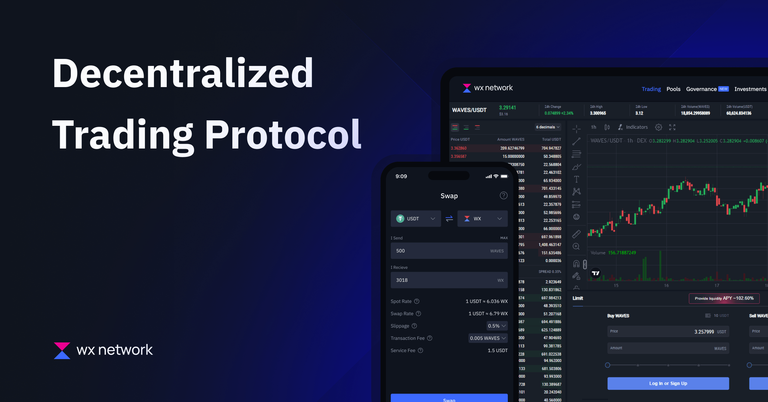
One alternative trading infrastructure within the Waves ecosystem is WX Network.
Waves documentation identifies WX Network as a decentralized exchange developed by a third-party community team.
Unlike a conventional centralized exchange, Waves-based decentralized trading uses signed orders and blockchain exchange transactions.
Users can potentially exchange supported Waves assets without relying on Changelly.
However, decentralized exchanges also depend on liquidity and active market participation.
The existence of a trading pair does not guarantee sufficient order-book depth, competitive prices, or immediate execution.
Source: Waves Documentation — How to Exchange Tokens
- Why This Matters to the Waves Community
For developers, node operators, token issuers, and cryptocurrency holders, exchange accessibility is an important part of a functioning blockchain ecosystem.
When a cryptocurrency becomes unavailable on major exchange services, several consequences may follow.
Reduced Accessibility
New users may encounter fewer convenient ways to obtain the cryptocurrency needed to interact with blockchain applications.
Greater Liquidity Fragmentation
Trading activity may become concentrated across fewer exchanges, potentially increasing slippage in less liquid markets.
Challenges for Blockchain Projects
Projects developing applications on Waves must consider how users can acquire WAVES for network transactions.
Reduced Confidence
Repeated exchange restrictions may affect public confidence, even when the underlying blockchain continues operating.
However, exchange restrictions alone do not establish that a blockchain has failed.
- What Should Changelly Explain to the WAVES Community?
Greater transparency would help resolve the uncertainty surrounding WAVES.
Changelly should clarify several questions:
- Why is WAVES currently marked Offline?
- Is the restriction temporary or permanent?
- Is the problem related to network integration, liquidity, or exchange partners?
- Are both incoming and outgoing WAVES exchanges affected?
- What conditions must be met for WAVES trading to resume?
Until Changelly provides an official explanation, the community should avoid presenting speculation as fact.
- Can WAVES Return to Changelly?
It is possible, but a return has not been confirmed.
If the underlying issue involves temporary infrastructure problems, disabled deposits or withdrawals, or unavailable trading liquidity, a service restoration might be possible after those conditions change.
If Changelly has made a permanent commercial or compliance decision, restoring WAVES support could be more complicated.
Without direct confirmation, there is no reliable date for a potential return.
Final Thoughts: WAVES Needs More Exchange Accessibility and Transparency
The current WAVES situation highlights an important challenge for blockchain ecosystems: technical infrastructure and market accessibility are not the same thing.
A blockchain can continue processing transactions while its native cryptocurrency becomes increasingly difficult to obtain through centralized services.
For WAVES, the verified facts are straightforward.
Changelly currently marks WAVES Offline, several other cryptocurrency exchanges discontinued WAVES support during 2024, and Changelly has not publicly confirmed the specific reason behind its current restriction.
What remains unanswered is whether WAVES will return to active trading on Changelly.
The Waves community deserves a clear explanation.
What do you think?
Should Changelly provide a public explanation whenever a cryptocurrency is placed Offline?
Could better liquidity and stronger exchange partnerships improve the accessibility of WAVES?
Share your thoughts in the comments.