
The Lean Startup - Book Review


The Lean Startup is a book written by Eric Ries, which, through three parts (Vision, Direction, and Acceleration), aims to impart knowledge on how a startup should be managed to the reader.
It's quite curious how I came across this book. The other day, a short video recommendation appeared where the presenter discussed some books I had already read and ranked them below this book called "The Lean Startup," which made me curious to see if it was really that interesting.
I ended up looking for the book in some stores and noticed that the feedback was very positive, and since the subject seemed quite interesting, I decided to give it a chance. You might think this book isn't for you since it's about startups, but according to the author Eric Ries' own definition, "A startup is a human institution designed to create a product or service under conditions of extreme uncertainty."
In today's world, with innovations happening constantly, the possibility of pandemics, wars, and changes in global trade, we can conclude that we are in a scenario of extreme uncertainty, which is precisely the conditions that startups have to deal with. This book presents the lean startup methodology to help entrepreneurs succeed amidst constant uncertainty.
Therefore, even if you are not a startup, the concepts in this book can help you survive in this uncertain environment. An example to illustrate how quickly everything changes is that every year technology companies hold meetings to share upcoming innovations, governments make agreements with other countries, and wars erupt unexpectedly. In this scenario, the more you learn to survive and have a sustainable company, the better it will be for you.
I'll be much appreaciated if you Votes, Reblogs or give any Tips. Thanks and have good reading! 🍀
The Lean Startup - Short Book Review
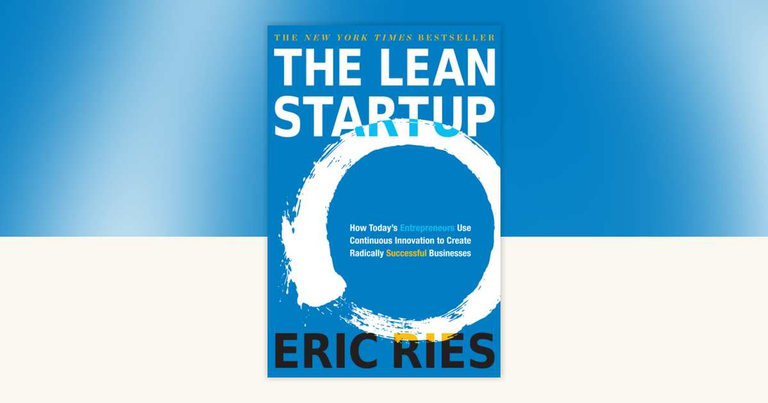
At the beginning of the book there is a topic titled "How this book is organized" which gives an overview of the content of each of these parts. The first topic of the book, "Vision", is more introductory and the author shares some stories and gives some definitions, such as who an entrepreneur would be, what a startup would be and a fundamental concept that is validated learning, which he himself learned thanks to a failure in one of his ventures.
The second is called "Direction", in which the author uses the lean startup method itself, addressing the build-measure-learn feedback cycle, something that is well used in businesses that work with the public, in which the feedback ends up shaping the final product.
Finally, the last topic is "Acceleration", which is, as the name suggests, simply executing the feedback cycle presented previously in the Steering chapter, but faster. The difference is that at this stage, in addition to carrying out this task, at the same time it will be in the process of expansion.
I'm still at the beginning of the book and until then, the feedback I have is from the first part of the book. What I liked so far is that it has good definitions and some insights that can be learned. The problem is that much of it comes from the author telling his own story, which ends up making this beginning quite tiring at least. I remember that in another book this was a big problem for other people when the author starts telling a lot of stories and doesn't get straight to the point. I think he spoke in a more explicit and simple step-by-step manner, I think a mix of the author explaining the concepts on one page and then telling them in a way that gives an example would be more interesting.

The Lean Startup é um livro escrito por Eric Ries, que se propõe através de 3 Partes (Visão, Direção e Aceleração) que é a forma em que o livro é divido, em passar o conhecimento de como uma startup deve ser administrada para o leitor.
É bem curioso a forma como me deparei com esse livro. Um dia desses apareceu uma recomendação de vídeo curto, em que o apresentador comentou de alguns livros que eu já tinha lido e os colocou em ranks abaixo desse livro chamado "The Lean Startup", o que me deixou curioso para saber se realmente seria um livro tão interessante mesmo.
Acabei procurando pelo livro em algumas lojas e notei que os feedbacks do livro eram bem positivos e como o assunto parecia ser bem interessante resolvi dar uma chance ao livro. Talvez você possa pensar que esse livro não é para você já que fala sobre startup, mas de acordo com a própria definição do autor Eric Ries "Uma startup é um instituição humana projetada para criar um produto ou serviço sob condições de incerteza extrema".
No mundo atual, com inovações acontecendo à todo momento, chances de pandemia, guerras, mudanças no comércio global, podemos chegar á uma conclusão estamos em um cenário de incerteza extrema, que é justamente as condições que a startup tem que lidar. O livro traz o método de lean startup para ajudar os empreendedores à ter sucesso em meio à incerteza constante.
Assim, mesmo que você não seja uma startup, os conceitos do livro podem servir para você sobreviver ao cenário de incerteza. Um exemplo para mostrar como tudo muda tão rápido, é que todo ano as empresas de tecnologia fazem uma reunião para compartilhar as novidades que estão por vir, os governos fazem acordos com outros países, guerras surgem de forma inesperada. Nesse cenário, quanto mais você aprender à sobreviver e ter uma empresa sustentável melhor será para você.
Fico agradecido se você puder dar um Voto, Reblogs ou algum Tips. Obrigado e boa leitura! 🍀
The Lean Startup - Short Book Review
No começo do livro tem um tópico de título "Como este livro é organizado" que dá uma visão geral do conteúdo de cada uma dessas partes. O primeiro tópico do livro que é "Visão" é mais introdutório e o autor compartilha algumas histórias e dá algumas definições, como quem seria um empreendedor, o que seria uma startup e um conceito fundamental que é o de aprendizagem validada, que ele mesmo aprendeu graças à um fracasso em um de seus empreendimentos.
O segundo é chamado "Direção", em que o autor parte para o método de startup enxuta em si, abordando o ciclo de feedback construir-medir-aprender, algo que é bem utilizado em negócio que trabalham com o público, em que o feedback acaba moldando o produto final.
Por fim, o último tópico é o de "Aceleração", que é como o nome sugere, simplesmente executar o ciclo de feedback apresentado anteriormente no capítulo de Direção, mas de forma mais rápida. A diferença é que nessa etapa, além de realizar essa tarefa, ao mesmo tempo estará em processo de expansão.
Eu ainda estou no início do livro e até então, o que eu tenho de feedback é da primeira parte do livro. O que eu gostei até o momento é que tem boas definições e alguns insights que dá para ser retirado. O problema é que grande parte vem do autor contando a sua própria história, o que acaba deixando bem cansativo esse início pelo menos. Me lembro de que em um outro livro isso já foi um problema muito grande para outras pessoas quando o autor começa a contar muitas histórias e não vai direto ao assunto. Acho que falou um passo a passo mais explícito e simples, acho que uma mistura do autor explicando os conceitos em uma página e depois contando de forma a dar um exemplo seria mais interessante.



⭐ Crypto Games ⭐

I have seen that book and have heard people also talk about it. Since most startups are tech based, I think it was inspired by the lean development model, which iterate fast and test and repeat. This help save on the most precious resource which is time. So as long as you don't burn too much capital you can get to where you want to be, you can dramatically increase your chances of success.
This method is what inspired the Machine Learning movement and eventually the AI training approach. The mantra is, fail often, fail fast.
Congratulations @rimurutempest! You received a personal badge!
Wait until the end of Power Up Day to find out the size of your Power-Bee.
May the Hive Power be with you!
You can view your badges on your board and compare yourself to others in the Ranking
Check out our last posts: