
Film Review: Star Trek VI: The Undiscovered Country (1991)

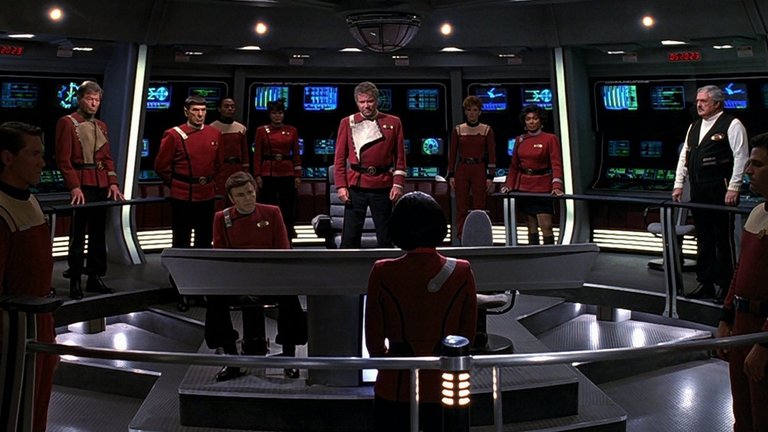
(NOTE: Capsule version of the review is available here
Star Trek VI: The Undiscovered Country occupies a singular, bittersweet position within the Star Trek canon, representing the end of an era in more than one profound sense. Released in 1991, the film premiered shortly after the death of Gene Roddenberry, the visionary creator who had steered the franchise for decades, leaving a void that the production could not fully fill. Simultaneously, the geopolitical landscape was shifting beneath the narrative's feet. The collapse of the Soviet Union and the subsequent end of the Cold War meant that the specific political paradigm which originally inspired the franchise's exploration of superpower rivalry was dissolving just as the film entered cinemas. Yet, paradoxically, this sense of endings was juxtaposed with the franchise enjoying a new golden age, secured largely by Star Trek: The Next Generation. This period of transition allowed the original crew to depart with dignity, providing a conclusion that stands as one of the finest endings in the history of Hollywood cinema, redeeming the franchise following the fiasco of Star Trek V: The Final Frontier.
To understand the film's significance, one must acknowledge the precarious state of the franchise immediately prior. The Final Frontier was widely regarded as the nadir of the film series, a production undone by a lack of execution and tonal dissonance. Paramount Pictures recognised the need for a strong, sure hand to correct this trajectory, leading to the return of Nicholas Meyer. Having been brought to the project on the strength of The Wrath of Khan, which many consider the best Star Trek film, Meyer initially fought not only with executives over budget but also with Roddenberry regarding creative control. The production was arduous, yet the script heavily influenced the end of the Cold War. The plot begins with a cataclysmic event that forces the Klingon Empire to sue for peace with its old enemy, the United Federation of Planets. This narrative device served as a direct commentary on the changing times, mirroring the real-world thawing of tensions between the US and USSR.
The narrative structure itself is relatively simple, turning into a murder mystery with a whodunnit plot that is easily solvable through process of elimination. However, Meyer excels in number of set pieces that elevate the material above a standard television episode. The opening sequence involves the USS Excelsior, commanded by Captain Hikaru Sulu (George Takei), handling a major energy wave revealed to be the effects of a massive explosion of Praxis, a moon that was the Klingon Empire’s main source of energy. Two months later, at a Starfleet conference, Spock (Leonard Nimoy) informs Captain Kirk (William Shatner) and other high-ranking officers that, as a result of this catastrophe, the Klingons will deplete the oxygen reserves of their home world in fifty years, forcing them to enter negotiations and end seven decades of hostility. The USS Enterprise is ordered to escort the Klingon ship carrying Chancellor Gorkon (David Warner) to Earth. What follows is mysterious torpedo attack on Klingon ship and Gorkon’s assassination. Kirk surrenders in order to preserve the piece, and is brought to trial together with Bones McCoy (DeForest Kelley) and sentenced to life in prison to be served at infamous mining colony of Rura Penthe. As peace conference approaches, Enterprise crew must find the way to rescue them, while at the same time discover who was really behind the assassination.
The personal stakes are deeply rooted in the continuity of the previous films. An important motive for the creation of the film was the need not to allow the original series to end with the embarrassing Final Frontier. Leonard Nimoy, serving as executive producer and co-writer, provided creative input that helped anchor the emotional weight of the story. The plot plays heavily on the past continuity, most notably through the character of Kirk. Due to the death of his son David Marcus, Kirk has very personal reasons to hate Klingons and oppose the peace, a sentiment established in The Search for Spock. In that film, David's death was a key emotional beat, and the subsequent knowledge casts a shadow over the character's later interactions. Here, it gives a raw testament to unresolved grief when Kirk chillingly declares, "Let them die!", contrasting sharply with the more cerebral and pacifistic Jean-Luc Picard of the Next Generation.
The supporting cast generally delivers spectacular performances, aware that this would be their last feature film together. They ride into the sunset with a sense of camaraderie that previous films could not quite match. Christopher Plummer, an old friend of Shatner, plays the villainous Klingon General Chang with gusto, delivering Shakespeare-quoting lines that provide interesting moments. However, Meyer’s combination of action and drama is occasionally marred by over-pretentious or misplaced Shakespeare quotes, the only thing standing in the way of Star Trek perfection. The supporting cast, with the exception of Kim Cattral as Lt. Valeris, Spock’s enigmatic would-be successor, is mostly buried under heavy makeup. Michael Dorn plays Worf’s grandfather who defends Kirk at the trial, making another connection with The Next Generation, while Rosana DeSoto portrays Gorkon’s daughter Azetbur, observing the trial of Kirk and Bones.
Despite relatively low budget, Meyer’s direction mantains high quality, especially during action set pieces. The assassination of Gorkon in zero gravity is a novel visual for the franchise, establishing a high-stakes conspiracy determined to sabotage these delicate negotiations. Kirk and Bones escaping from the notorious Klingon prison on Rura Penthe, referred to as a "gulag" to invoke easily understandable Cold War associations, remains a highlight of the action sequences. It is a gritty, desperate escape that feels earned rather than contrived.
However, the biggest flaw of the film is the relatively uninspired music score by Cliff Eidelman. It pales in comparison with the works of Jerry Goldsmith and James Horner in previous films. While Horner’s score for Wrath of Khan and The Search for Spock provided a richer, darker, and more emotionally complex tapestry, Eidelman’s work is merely serviceable in the context of this film, lacking the haunting themes that elevate the series.
The film’s connection to the wider universe was further emphasised by the airing of the The Next Generation two-part episode Unification, which aired only weeks before The Undiscovered Country premiered. The plot of the film is directly linked to events previously covered in those episodes, specifically the Khitomer Peace Conference. Unification serves as a symbolic bridge, with Spock’s father Sarek appearing and his death occurring off-screen, adding emotional weight to the transition. The film itself references Khitomer as the location for the upcoming peace conference, cementing the link between the eras. When the original cast literally signs off during the end credits, it is a truly nice touch that acknowledges the audience's investment in these characters.
Ultimately, The Undiscovered Country is a fitting tribute to the original crew. It was a correction to the narrative errors of The Final Frontier and a response to the changing geopolitical world. It won the Saturn Award for Best Science Fiction Film, acknowledging its critical success. While it is not without its flaws, particularly regarding its score and occasional melodrama, it remains a cornerstone of intelligent science fiction cinema. The members of the cast delivered a spectacular ride, capturing the essence of their characters' final days with a poignancy that resonates decades later.
RATING: 8/10 (+++)
Blog in Croatian https://draxblog.com
Blog in English https://draxreview.wordpress.com/
InLeo blog https://inleo.io/@drax.leo
Hiveonboard: https://hiveonboard.com?ref=drax
Rising Star game: https://www.risingstargame.com?referrer=drax
1Inch: https://1inch.exchange/#/r/0x83823d8CCB74F828148258BB4457642124b1328e
BTC donations: 1EWxiMiP6iiG9rger3NuUSd6HByaxQWafG
ETH donations: 0xB305F144323b99e6f8b1d66f5D7DE78B498C32A7