
The power of persuasion through social media numbers [EN/PT]

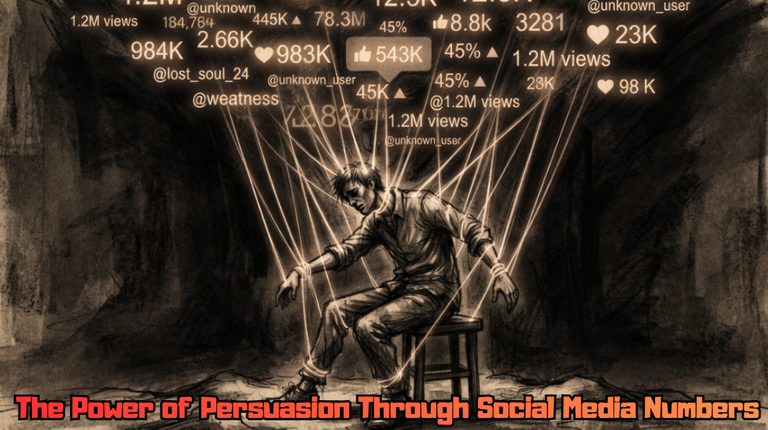
Maybe we really are entering the age of the fake. Filters hiding faces, news being generated purely for engagement, numbers mattering more than competence on social media, and increasingly refined techniques designed to hold your attention. But in the middle of everything that's happening, one of the fakest things we can imagine is numbers themselves. How many influencers are artificially inflating their metrics to create a positive impact and appear more relevant than they really are?
One of the most common and easily accessible things today is fake followers, bot-generated engagement, and even fake views, and all of this can serve different purposes. A few months ago, for example, I saw an ad for a burger that seemed too good to be true. The price was great and the product looked excellent. So, to verify whether it was legitimate, what was the first thing I did? I checked their social media to see how many followers they had, how much engagement they got, and things like that. After doing that, I placed the order and bought a meal that never arrived.
If I had paid a little more attention to the details, I could have avoided that small loss. Still, I'll treat it as the price of a lesson learned. I took the numbers into consideration, even though I know scammers use exactly this kind of information to appear trustworthy and carry out their schemes. And if someone like me, who is relatively well-informed, fell for it, imagine people who are less aware of these tactics.
This is just one example of how these numbers and this accessibility can be used by dishonest people to deceive others. Influencers can use similar tricks to attract more people, build trust, and appear relevant. Companies can do the same, and so can professionals in any field. Imagine that you need a plumber and have two options: Plumber A and Plumber B. You check their social media because it's one of the few places where you can get information about their work. Then you discover that Plumber A has 5,000 followers, while Plumber B has only 65. They both charge the same price. Which one would you hire?
That's the thing: numbers are there to influence your choices. Even if the professional with fewer followers is infinitely more competent, we still tend to base our decisions on numbers that may not even be real. All this proves is that the plumber with thousands of fake followers understands personal marketing, but does that actually make him a good plumber? This is just a hypothetical example, but we can apply it to countless situations. How often do artificial and fake numbers lead us to make decisions, and why are we giving them more importance than almost anything else?
In the end, both sides lose. Those who do things organically, honestly, and fairly are harmed, and so are the consumers, viewers, and followers who often believe that numbers are synonymous with trust, when in reality they're simply being persuaded by cheap tricks. The world is becoming increasingly fake in this sense, and perhaps it's time to look at things more carefully and stop giving so much importance to numbers.
Credits:
Translated: Deepl
Cover: created by Canva.
AI-generated image Flow

Talvez estejamos mesmo entrando na era do "fake". Filtros mascarando rostos, notícias sendo geradas para engajamento, números importando mais do que competência nas redes sociais e técnicas cada vez mais lapidadas para prender a sua atenção. Mas, no meio de tantas coisas acontecendo, uma das coisas mais falsas que podemos imaginar são os números: quantos influencers estão inflando seus números de forma artificial para que tenham impacto positivo e possam demonstrar alguma relevância?
A coisa mais comum e de fácil acesso nos dias de hoje são seguidores falsos, engajamento por bots e até mesmo visualizações, e tudo isso pode ter diferentes intenções. Por exemplo, vi há alguns meses atrás uma propaganda de um lanche que estava bom demais para ser verdade, um preço muito bom por um produto aparentemente excelente. Então, para confirmar se tudo aquilo era válido, qual foi a verificação que fiz quase de imediato? Olhar as redes sociais para ver a quantidade de seguidores, engajamento e essas coisas. Depois que fiz essa verificação, o pedido foi feito e então comprei um lanche que nunca chegou.
Com um pouco mais de atenção aos detalhes, eu poderia ter evitado esse pequeno prejuízo, mas vou levar esse acontecimento como um preço que paguei por um aprendizado. Eu levei em consideração os números, logo eu, que sei que golpistas vão utilizar esse tipo de informação para passar confiança e então aplicar seus golpes. E se eu, que sou uma pessoa mais informada, acabei caindo nessa, imagine pessoas com mais dificuldades?
Essa é apenas uma situação, uma maneira de utilizar essa facilidade, esses números, para que pessoas mal-intencionadas consigam aplicar golpes. Influencers podem usar artifícios parecidos para atrair mais pessoas, passar confiança e demonstrar relevância. Empresas podem usar isso da mesma forma, ou um profissional de qualquer área. Imagine que você precise de um encanador na sua casa e tenha duas opções, o encanador A e o encanador B. Você olha para as redes sociais deles, pois é onde teria um pouco de informação sobre o trabalho, e então se depara com a informação de que o encanador A possui 5 mil seguidores, enquanto o B possui apenas 65. Os dois cobram o mesmo preço. Qual você vai contratar?
Pois é, números servem para fazer você escolher, e mesmo que o profissional que possui menos seguidores seja infinitamente mais competente que o outro, ainda assim nos baseamos em números que podem não ser verdadeiros. Isso prova que o encanador que possui muitos seguidores falsos entende de marketing pessoal, mas será mesmo que é um bom encanador? Essa foi apenas uma suposição, mas podemos levar isso em consideração para várias situações. O quanto números artificiais e falsos podem nos levar a fazer escolhas e o quanto estamos levando isso mais em consideração do que qualquer outra coisa?
No fim, dois lados são prejudicados: os que fazem as coisas de forma orgânica, verdadeira e leal e, na ponta, o consumidor, espectador ou seguidor, que muitas vezes acredita que números são sinônimos de confiança, mas está apenas sendo persuadido por artifícios baratos. O mundo está cada vez mais falso nesse sentido e talvez seja a hora de olharmos as coisas com mais cuidado e pararmos de dar tanta importância para os números.
Credits:
Translated: Deepl
Cover: created by Canva.
AI-generated image Flow
Nothing we see today is to be believed. People are chasing so much clout and attention and so they resort to living fake lives. What we do for survival…
Yeah, I don't even know if I can really judge those people
This post has been manually curated by @bhattg from Indiaunited community. Join us on our Discord Server.
Do you know that you can earn a passive income by delegating to @indiaunited. We share more than 100 % of the curation rewards with the delegators in the form of IUC tokens.
Here are some handy links for delegations: 100HP, 250HP, 500HP, 1000HP.
100% of the rewards from this comment goes to the curator for their manual curation efforts. Please encourage the curator @bhattg by upvoting this comment and support the community by voting the posts made by @indiaunited.
Congratulations @michupa! You have completed the following achievement on the Hive blockchain And have been rewarded with New badge(s)
Your next target is to reach 610000 upvotes.
You can view your badges on your board and compare yourself to others in the Ranking
If you no longer want to receive notifications, reply to this comment with the word
STOPCheck out our last posts:
Seeing is believing but not true on social media.