Light and Darkness [EN/PT]

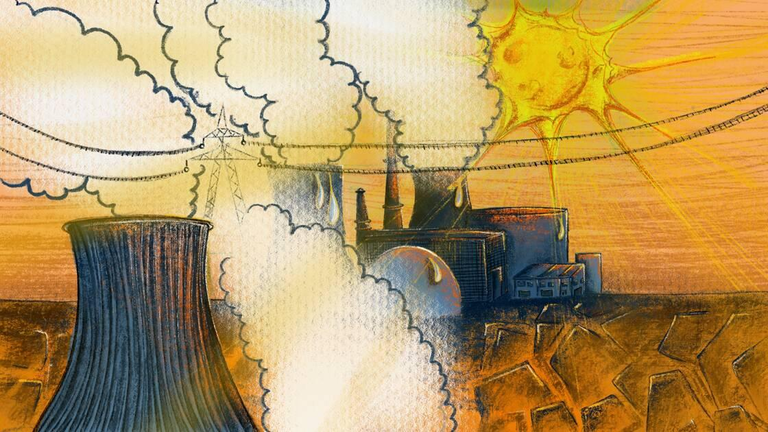
I've always found it curious how some of humanity's greatest inventions carry a certain contradiction. We create tools to make life easier, solve problems, and build a better future, but at some point, we discover that they can also bring consequences we don't know how to completely control. Nuclear energy is a good example of this. On one hand, we have a source capable of producing enormous amounts of electricity without releasing large volumes of carbon dioxide into the atmosphere during operation. In a world concerned about climate change, this seems like an advantage that is difficult to ignore. On the other hand, there are several risks that don't simply disappear because the energy being produced is considered clean. Perhaps this contradiction is precisely what makes it so difficult to decide what place this technology should have in our future.
When we talk about nuclear energy, it's common to immediately remember disasters such as Chernobyl and Fukushima. These were very different events, but both left deep scars and demonstrated how a failure can extend far beyond the boundaries of a power plant and affect entire communities for a very long time. This doesn't mean every reactor is a disaster waiting to happen, nor that the technology has remained unchanged since those incidents. Safety systems have evolved, designs have changed, and stricter forms of supervision have been introduced. Still, I can't look at these risks as if they were merely technical details. We're talking about an activity where a mistake, a combination of failures, or even an extreme natural event can have consequences that are difficult to repair. It's the kind of responsibility that doesn't end when electricity reaches our homes.
And there's another problem that often receives less attention than accidents: radioactive waste. Even when a power plant operates correctly, it produces waste that must be carefully stored and isolated. Some of these materials remain dangerous for such long periods that it's difficult to even imagine what the world will look like when future generations are still dealing with them. This makes me think about a rather uncomfortable question: to what extent do we have the right to create a problem that won't be solved during our own lifetime? We can develop safe storage facilities, improve waste treatment, and reduce risks, but we're still leaving an enormous responsibility to people who haven't even been born. On the other hand, it would also be unfair to ignore the environmental impacts of the alternatives. Fossil fuels cause pollution and contribute to global warming, while renewable energy sources also require space, materials, infrastructure, and investment. No form of energy exists without some kind of cost.
For this reason, I don't believe the answer is simply to turn nuclear energy into the main solution for everything, much less eliminate it immediately without considering what would replace it. Perhaps the most sensible approach is to treat it as a limited option, subject to extremely strict safety standards, transparency, and constant supervision, while expanding investments in renewable energy and energy storage. We also need to consider the reality of each country, because not all of them have the same natural, economic, or technological conditions. Ultimately, this discussion shouldn't be a competition between nuclear energy and clean energy, as if a perfect choice existed. It should be an honest conversation about risks, needs, and consequences. After all, producing energy is essential to modern life, but that doesn't mean every price is acceptable. The challenge is finding a balance without pretending the dangers don't exist.
Credits:
Translated: Deepl
Cover: created by Canva.
AI-generated image Flow

Sempre achei curioso como algumas das maiores invenções da humanidade carregam uma espécie de contradição. Criamos ferramentas para facilitar a vida, resolver problemas e construir um futuro melhor, mas, em algum momento, descobrimos que elas também podem trazer consequências que não sabemos controlar completamente. A energia nuclear é um bom exemplo disso. De um lado, temos uma fonte capaz de produzir enormes quantidades de eletricidade sem lançar grandes volumes de dióxido de carbono na atmosfera durante sua operação. Em um mundo preocupado com as mudanças climáticas, isso parece uma vantagem difícil de ignorar. Do outro, existe uma série de riscos que não desaparecem simplesmente porque a energia produzida é considerada limpa. E talvez seja justamente essa contradição que torne tão difícil decidir qual deve ser o lugar dessa tecnologia no nosso futuro.
Quando falamos sobre energia nuclear, é comum lembrar imediatamente de acidentes como Chernobyl e Fukushima. São acontecimentos muito diferentes entre si, mas ambos deixaram marcas profundas e mostraram que uma falha pode ultrapassar os limites de uma usina e afetar comunidades inteiras por muito tempo. Não significa que todo reator seja uma tragédia esperando para acontecer, nem que a tecnologia tenha permanecido parada desde aqueles episódios. Os sistemas de segurança evoluíram, os projetos mudaram e existem formas mais rigorosas de fiscalização. Ainda assim, não consigo olhar para esses riscos como se fossem apenas detalhes técnicos. Estamos falando de uma atividade em que um erro, uma combinação de falhas ou até um evento natural extremo pode ter consequências difíceis de reparar. É o tipo de responsabilidade que não termina quando a eletricidade chega às nossas casas.
E existe outro problema que costuma receber menos atenção do que os acidentes: o lixo radioativo. Mesmo que uma usina funcione corretamente, ela produz resíduos que precisam ser armazenados e isolados com muito cuidado. Alguns permanecem perigosos por períodos tão longos que é difícil até imaginar como será o mundo quando as próximas gerações ainda tiverem de lidar com eles. Isso me faz pensar em uma pergunta bastante desconfortável: até que ponto temos o direito de criar um problema que não será resolvido durante o nosso próprio tempo de vida? Podemos desenvolver depósitos seguros, melhorar o tratamento desses materiais e reduzir os riscos, mas ainda estamos deixando uma responsabilidade enorme para pessoas que sequer nasceram. Por outro lado, também seria injusto ignorar os impactos ambientais das alternativas. Combustíveis fósseis causam poluição e contribuem para o aquecimento global, enquanto fontes renováveis também exigem espaço, materiais, infraestrutura e investimentos. Nenhuma forma de energia existe sem algum custo.
Por isso, não acredito que a resposta seja simplesmente transformar a energia nuclear na principal solução para tudo, muito menos eliminá-la de maneira imediata e sem considerar o que ocuparia seu lugar. Talvez o caminho mais sensato seja tratá-la como uma opção limitada, submetida a padrões de segurança extremamente rigorosos, transparência e fiscalização constante, enquanto ampliamos os investimentos em fontes renováveis e em armazenamento de energia. Também precisamos considerar a realidade de cada país, porque nem todos possuem as mesmas condições naturais, econômicas ou tecnológicas. No fim, a discussão não deveria ser uma disputa entre energia nuclear e energia limpa, como se existisse uma escolha perfeita. Deveria ser uma conversa honesta sobre riscos, necessidades e consequências. Afinal, produzir energia é essencial para a vida moderna, mas isso não significa que qualquer preço seja aceitável. O desafio é encontrar um equilíbrio sem fingir que os perigos não existem.
Credits:
Translated: Deepl
Cover: created by Canva.
AI-generated image Flow