
Anti-Phishing Proposed Solution

NOTE: before reading
Since we are once again dealing with more phishing attempts, please reconsider my decentralized POP-UP warning solution for frontends to implement. Each frontend can decide its own warnings and rules, including which domains/URLs to filter and other customizations, while the core of the phishing flagging remains the same and permanent on-chain.
Another request is not to take this proposed solution as it is, but to take some ideas and inspiration from it and implement whatever works best in the long run. Maybe the HP system is broken, or maybe the reputation solution is broken.
But all phishing attempts involve links, and our HP/reputation system, or any other metrics, our technology can be used to flag them and even provide a system to counter false flags. Then, frontends can use this JSON data and use their centralized control to remove bad actors.
So, if @ world-travel-pro flags something, his on-chain data might show that he flagged it, but Ecency can simply decide to exclude this person's flags, even if he has HP/reputation.
The ideas and core concepts are clear. We just need to think about a long-term solution to this problem.

Anti-Phishing Proposed Solution: A Shield for the Hive Ecosystem
Currently, suspicious actors on Hive are growing in numbers, utilizing fake airdrop scams, memo transfers, and other deceptive methods to steal account keys from our userbase. Once they succeed, they immediately use those compromised accounts to spread the infection further. These attackers are also leaning heavily into identity theft, deception, and the use of AI to mimic trusted figures and trick users into handing over their keys. It is genuinely sad to see the hard-earned Hive of fellow hivers taken by scammers. It is time we stop being passive observers and start building a proactive, community-driven defense layer that protects every Hiver, from the whales to the newcomers.
The Problem: The Silent Plague of Account Takeovers
The phishing problem on Hive is unique and significantly more dangerous than standard Web2 scams. We aren't just dealing with "fake emails" here. On Hive, the attack vectors are built into the social fabric of the chain itself.
Post, Comment and Memo Spam: Because Hive is an open ledger, scammers can "inject" malicious links directly into a user’s notification feed. This happens through 0.001 HIVE transfers with a phishing link memo, bot-generated comments on trending posts, or even creating entirely new posts and microblogs for the scam.
The Identity Trap: Scams like hive.blog.reward are designed to look identical to an "official Hive team". Even though Hive doesn't have a centralized team, that fact is unknown to many in our userbase who end up getting scammed. When a user clicks, they are prompted to "log in" or use other methods to claim a prize. This is the "kill shot" where scammers capture Active or Owner keys.
Irreversibility: Once an Owner key is compromised, the account recovery process is a race against time. If the scammer begins a power-down and transfers the HP out, the decentralized nature of the chain means there is no "undo" button. In worse cases, many users don't even know how to perform account recovery. They simply leave Hive with a bad taste in their mouth. Even if the loss was caused by their own lack of knowledge, it still damages Hive’s image because we are not doing anything at the frontend level to stop it.
Frontend Passivity: Currently, our amazing frontends like PeakD and Ecency act as silent windows. They display a malicious link with the same visual weight as a link to a high-quality blog post. There is no real-time warning, leaving the user 100% responsible for spotting sophisticated clones. The reputation system is not working here because rookie users often don't care about the negative reputation score of a fake airdrop scammer. Simply put, it isn't the same practice people are familiar with in the Web2 world.
The Proposed Solution: Stake-Weighted Consensus Warnings
We need a system that identifies "bad actors" and "malicious links" in real-time without violating the core principles of decentralization. My proposal is to implement a Stake-Weighted Reporting and Warning System based on three pillars:
Decentralized Reporting (The Signal)
Instead of a central "blacklist" managed by one person, we use the community. Any user can report a link as phishing. This report is broadcast as a custom JSON operation on the blockchain, making the data permanent, transparent, and accessible to everyone.The HP-Weighted Threshold (The Filter)
To prevent "trolls" or malicious groups from flagging legitimate content, the warning only triggers based on Hive Power (HP). A warning label only appears once the sum of the reporters’ HP reaches a specific threshold (e.g., 150,000 HP). This ensures that it takes a significant, "vested" part of the community to trigger a global warning.The Frontend Shield (The UI)
When a user clicks a link that has crossed the HP threshold, the frontend (PeakD, Ecency, etc.) intercepts the click with a firm but informative pop-up:
"Caution: Community Security Warning"
Users representing 185,000 HP have flagged this link as a potential scam. Engaging with this site may lead to account theft. Proceed with extreme caution.
Flexibility in Implementation
The beauty of this solution is that it doesn't require a "hard fork" or a single centralized authority. It can be implemented with high flexibility:
Global vs. Local: Frontends can choose to use a shared API that aggregates these reports, or they can run their own nodes to pull the data directly from the chain.
User Choice (Opt-Out): To maintain the spirit of decentralization, this feature by default is opt-in to ensure protection, but with an opt-out option as well. If a user wants to browse without any "nanny" filters, they can simply toggle the protection off in their settings.
Dynamic Thresholds: The "150k HP" limit isn't set in stone. Much like a return proposal for the DHF, the community could vote to increase or decrease the sensitivity of the filter based on the current threat level.
Social Proof: To increase trust, the warning could display the names or profile pictures of the top 3-5 recognizable accounts who flagged the link based on their HP. If you see known security experts on the list, the signal is 100% clear.
Educating Reporters: In the event of a suspicious link, a guide can be provided to users and reporters so they can directly report the hosting provider as well, in case a website is being used to attempt phishing on our userbase.
Conclusion
Countering phishing is not against decentralization; it is an act of community preservation. If we can reduce the success rate of these attacks by even 30%, we save dozens of accounts and maintain the integrity of our ecosystem. This system turns our collective stake into a collective shield.
Wow, that's fantastic! If we can somehow implement this, it would be a great way to show that the scam account was flagged with X total HP, meaning many users took the time to mark that account as harmful.
It turned out really well, I hope the devs like it too and implement it somehow.
THIS or THAT, something positive will come out of it.
I really hope it works out, that they implement this kind of improvement to make the routine at the hive better and safer.
One small correction,
accountLINKGreat idea. If there's a way where people can automatically follow trusted flaggers that will be great
Thanks for bringing attention to this point. I thought about this case as well, not sure why this slipped from my mind during posting.
It should work same way as witnesses and proposal proxy system but for anti phishing only.
Good ideas!
Awesome idea, especially now since those links seem to be spreading more and more!
I think this is a great idea! How do you propose convincing the major front-ends to adopt this system?
!BBH
!PIZZA
!ALIVE
I think your comment and reblog are great ways to show support and agreement with the solution shared above.
Later, anyone can use this comment section and the list of reblogs to demonstrate community backing to frontend founders. The way solutions get implemented on Hive requires us to create a significant amount of 'buzz' to reach the right ears. If major stakeholders (those who support the Ecency and PeakD proposals or the witnesses managing Hive.blog) align their voices with ours, it will have a huge impact. Currently, we need to build more momentum and community spirit to effectively request and demand this change.
I see no utility in applying stake as a metric. It would make far more sense to me to use rep. There are several stakeholders with far more stake than any reasonable stake threshhold that could maliciously manipulate such a mechanism profitably. Reputation is not so potentially manipulable, and is a more meaningful metric regarding trust. Rep threshhold could be set to, say ~250, which would require at least three high rep accounts to report a link as sketchy, while dozens of accounts possess enough stake to surpass any reasonable threshhold based on stake.
Otherwise this is a great idea, that may well keep people safer on Hive.
Thanks!
That would actually make Rep useful for something for once!
So u r saying world-travel-pro can have 76 reputation and keep false flagging while having rewards declined so we can't even reduce reputation.
Anyone with high reputation once gone anti hive can stop our ability to reduce their reputation while continuing to exploit phishing flagging feature.
View more
If u r talking about reputation score, anyone can get hacked with 60 or more reputation and it will take alot of downvotes to reduce it to negative score (till then, more accounts would be compromised).
This is a stake based system to protect the nature of decentralization.
If you are talking about few people reporting it, then have high requirements and u can follow proxy (same proxy proposal and witnesses but a sperate proxy feature to not merge with those 2) reports of anyone thus your REPUTABLE reporters can also fit in this current model. Sorry I am not understanding u currently. Do u mean reputation score? If yes, it's not effective in this wide spread airdrop scams and memo transfers. Some users recover account in 5 days at max so we have to negative reputation them which is a very serious punishment.
Stake has utterly failed to decentralize Hive.
Then only whales can trigger the report.
Using reputation score enables longstanding users to trigger the report when at least a couple people report it. Using stake enables 1 whale to do so, potentiating manipulation for financial benefit.
How does that game the reporting system? With the threshold at ~250, they'd have to have 3 accounts to overcome the threshold, even if the accounts were >80 rep.
View more
I see no utility in applying stake as a metricI brainstormed all of edge cases and any system except stake can have some ways to game around the system. This is more edge cases proof.
How can rep be gamed in this usecase?
The purpose of the post above was to spark a debate regarding anti-phishing solutions at the frontend level. If you suggest that these solutions should be reputation-based, I do not have a problem with that ATM. Currently, we need frontends to consider the fact that implementing anti-phishing measures at the frontend level will not kill the spirit of decentralization.
I see some flaws in the reputation system, but I either do not want to debate them or I am not a skilled enough debater regarding that specific point at the moment.
Since both you and I agree that frontends should take action, let us keep pushing this narrative so we can lower the phishing rate.
Thanks for understanding!
@valued-customer
The devil is in the details. You haven't responded when I asked how rep can be gamed in this use case. You have neither addressed how using stake can be gamed in this use case when I point out ways that can happen. What is the real reason you are adamantly insisting on using stake as a metric rather than rep?
You insist on using a metric that will enable more centralization of power regarding phishing attacks on Hive, while trying to claim using rep won't work, that is not supported by facts. You don't lack debating skills, you lack factual basis for this insistence on stake instead of rep. Why?
View more
thats a great idea my friend
hope it gets implemented soon 👌👌
This is an awesome idea, I am all for it !
Love it, anything that makes it more difficult to stop thieves has to be positive move for all the genuine folk who use this place
This post has been manually curated by @bhattg from Indiaunited community. Join us on our Discord Server.
Do you know that you can earn a passive income by delegating to @indiaunited. We share more than 100 % of the curation rewards with the delegators in the form of IUC tokens.
Here are some handy links for delegations: 100HP, 250HP, 500HP, 1000HP.
100% of the rewards from this comment goes to the curator for their manual curation efforts. Please encourage the curator @bhattg by upvoting this comment and support the community by voting the posts made by @indiaunited.
Actually had a post near ready for exactly this matter. GMTA!
Phishing, spammers, trolls, mischief.
All annoying in the eye of the beholder. And most of the time, they are annoying, waste resources, and fill blocks with stupid data.
One of the reasons I started thinking about OpenAttribute was exactly this:
How do we make Hive safer without creating censorship or giving someone too much power?
I'm a much bigger fan of education, accountability, timeouts, warnings, and giving people a way back.
OpenAttribute.app is simple.
It just takes a bit of accountability.
So far, LikeTu, ThreeSpeak, Opntr.ee and OpenAttribute itself have started using it.
Imagine this
Let's say we have an
openattribute.watchattribute.Whenever a user reports, mutes, or blacklists another account, that can become a signal.
The important distinction:
A mute is personal. A report is a signal. Neither is a verdict.
And suddenly we can do some pretty interesting things:
Different problems, different responses
Phishing
Serious warning, manual review, potentially permanent exclusion.
Spam
"Slow down" page, cooldown, education.
Hate speech
Educational flow or community-specific handling.
Unjustified behavior
Explain what happened, show how to get back on track, and give the user a path forward.
But here's the important part:
OpenAttribute doesn't decide what happens.
That's the beauty of it.
The blockchain remains open.
Users can still use Hive directly, through another frontend, or straight from the terminal.
Today, one frontend discovers a malicious account, mutes or blocks it, and moves on.
Tomorrow, another frontend discovers the same account and has to start from zero.
Why?
Imagine every frontend working together on community-based security, while still deciding for itself what those signals mean.
And it doesn't have to stop at frontends.
Any Hiver could contribute to the signal layer.
We're not building one global moderation authority.
We're building a common language for community signals.
And hopefully, a safer Hive without handing a single entity the power to decide what everyone else is allowed to see.
Great Minds Think Alike INDEED!
I really like the direction you're taking with OpenAttribute. My proposal was mainly focused on the phishing/link side, while you're looking at the bigger picture of how to make Hive safer by proving a framework everyone can use without turning it into a censorship system.
I'll definitely take a closer look at OpenAttribute. 🤗
Specifically, considering how often I use the Hive database to store and fetch encrypted information, I'll probably have a lot of fun playing with it, just like I did with Doctor JSON.
Once again, I'm proposing while you're showing how it can actually be done! Same same, but different. Your presence and comment actually gave me more confidence that I pitched a solid idea.
Please read and share the truth 🙏🏾
On hive it's like some people don't realise everything is documented and you can never hide from the truth 😂😂😂😂😂🍻

@acidyo @neoxian @themarkymark @hurtlocker @jacobtothe @steevc @meno @theycallmedan @crimsonclad and friends ✨⭕✨😂😂😂
Do you really think no one sees what you do 🤔
@acidyo You took my rep away for no reason with the help of blocktrades delegation 😂 @steevc knows all about it
You and themarkymark work for blocktrades or are blocktrades 😂
You are so sad doing what you do
Promoting your 💩💩💩💩💩💩
Selfvoting your 💩💩💩💩💩💩💩💩💩
You have downvoted so many people away for no reason
You really need to have a hard long look in the mirror and see what you have become
It doesn't matter if you have people who believe anything you say for a few cents or a few pennies 😂😂😂😂
Look at your buddy oldsoulnewb 😂😂😂😂😂
Everything is documented
So the choice is yours again leave me alone and bring my rep back and I will stop sharing the truth
You can call my long copy paste comments spam but it only makes you look stupid 😂

I hope you understand you are only making it worse 😂
Hive is not a game it might be a big game to you 🤔
It seems you love to game Hive don't you 😜
Everyone sees don't you think it's time to stop 🛑
You have shown all the real issues with Hive 😂 you have shown why real people couldn't invest in Hive and build on Hive 😂
You are in god mode 😂 activated 😂 you Marky Dan and others 😂😂😂😂😜
I hope you enjoyed this post or you might see in comment from 😂 which you like to call spam 😂😂😂
@jacobtothe Keep digging just remember @acidyo took my rep away with the help of blocktrades delegations and everything is documented 😂😂😂
☝🏾✨⭕✨☝🏾🍻🍻🍻🍻
👇🏾👇🏾👇🏾👇🏾👇🏾👇🏾👇🏾
@jacobtothe and friends Please get help there's clearly something wrong with you 🙏🏾
I hope blocktrades pays you well enough 😂😂😂😂
Some people just never learn when 😂😂😂👇🏾👇🏾👇🏾👇🏾👇🏾👇🏾👇🏾👇🏾👇🏾👇🏾👇🏾👇🏾
@jacobtothe @livinguktaiwan @oflyhigh @abit @adm @eval @hivetoday @abitmore @hurtlocker @hurt-locker @epstein @gundamzerofour @gundamzerotwo @gundamzerofive @buratus @gungunkrishu @tarabh @nattosenpai @fw206 @ocd @acidyo @hivetrending @mrtats @poshtoken @davideownzall @dudeontheweb @caspermoeller89 @strawhat @angeluxx @cositav @rachaeldwatson @solumviz @poshtoken.wallet @shiftrox @hiddenblade @hivegc @alohaed @tobias-g @nattosenpai @hivetrending @erikah @davidke20 @davideownzall @zingtoken @honey-swap @friendlymoose @x-rain @hivegc @rishi556 @ocd-witness @russia-btc @ocdb @justinw @nutritree @themarkymark @geekgirl @buynburn @stresskiller @forkyishere @forykw @belikechuck @leovoter @upmyvote @punkteam @makerhacks @wiseagent @steevc @davidthompson57 @videoaddiction @annoyingmosquito @meesterboom @demotruk @meno @thelittlebank @knot @buttcoins @snapie @coolmole @davidickeyyall @crimsonclad @smooth @oldsoulnewb @ds-tech @artgirl @flemingfarm @neoxian @nwothini335 @bdvoter.cur @zaku @mango-juice @empo.voter @empoderat @ferranlogs @trumpman @bhattg @azircon @riverflows @lazy-panda @gogreenbuddy @tarazkp @buildawhale @logic @abit @freedom @solominer @letusbuyhive @bijoy12 @sagarkothari88 @theycallmedan @ipromote @apeminingclub @nathen007 @dlmmqb @slobberchops @chops316 @littlenewthings @bozz @adm @abit @cwow2 @adm @logic @savvyplayer @patrice @spaminator @topcomment @theworldaroundme @jongolson @mobi72 and friends ✨⭕✨ Please get help 🙏🏾
@jacobtothe @acidyo @themarkymark @hurtlocker and friends 😁 No one will ever trust you again you weirdo 😂
👇🏾👇🏾👇🏾👇🏾👇🏾👇🏾👇🏾
Hello everyone I hope you are all good and well today in this post is some of the evidence to prove my case
If you didn't know I've been getting downvoted for a long time on Hive
They have been trying to bully me with downvotes and words but it doesn't affect me I've been online for over 25 years
So I've dealt with people like this before it's nothing new
But what they are doing is bad Very badi joined steemit like everyone else thinking it offers freedom but I must say steemit offered much more freedom than Hive does
Everyone already knows I only post my own original content I have no need to steal anything from anyone
I've been labelled a lot of things on Hive 😂 by the biggest farmers scammers and downvoters
Actions speak louder than any words do especially when them words are coming from a compolsive liars
I will keep updating this post when I get time
https://hive.blog/hive/@ureka.stats/the-untrending-report-hive-downvote-analysis-16-09-2025-20250916181314
https://hive.blog/hivedev/@makerhacks/please-peakd-allow-me-to-completely-block-spammers-would-you-ever-vote-for-this
https://hive.blog/hive-167547/@dlmmqb/re-kgakakillerg-t34wy6
https://hive.blog/hive-170475/@acidyo/re-kgakakillerg-t32sw1
https://hive.blog/hive-167922/@themarkymark/re-kgakakillerg-t30ziu
https://hive.blog/hive/@ureka.stats/the-untrending-report-hive-downvote-analysis-29-09-2025-20250929172045
No downvotes for this racist person 🧐
https://hive.blog/hive-196387/@acidyo/re-kgakakillerg-t41yr6
https://hive.blog/dvs/@dhedge/re-kgakakillerg-t3clz3
https://hive.blog/hive-150329/@kgakakillerg/t3a8fu
https://hive.blog/musical/@steevc/re-kgakakillerg-t2kz1m this post
To all the downvoters on Hive When the downvotes stop 🛑 and my rep is back I stop sharing the truth 🙏🏾
☝🏾☝🏾☝🏾☝🏾☝🏾☝🏾 Keep calling the truth lies 😂☝🏾
So many pretend to be doing god's work but they are really working for the devil 👿
Karma will strike you and who ever supports you 🙏🏾
☝🏾☝🏾☝🏾☝🏾☝🏾☝🏾☝🏾☝🏾☝🏾☝🏾☝🏾☝🏾
To @jacobtothe and friends 😁
@crimsonclad please do your job 🙏🏾
https://hive.blog/hive-135178/@crimsonclad/re-kgakakillerg-sxllhv
https://hive.blog/hive-148441/@hivewatchers/svftu9
https://hive.blog/hive-148441/@hivewatchers/svdjjz
https://hive.blog/hive-176853/@steevc/re-kgakakillerg-syyy4x
https://hive.blog/dev/@howo/re-kgakakillerg-szhax7
https://hive.blog/hive/@steevc/follow-friday-respect
https://hive.blog/hive-127022/@shmoogleosukami/re-kgakakillerg-t0hcxc
It's unbelievable that they downvoted this Goodbye Auntie R.I.P 🙏🏾
Comments being downvoted by blocktrades https://hive.blog/hive-170744/@kgakakillerg/t0ns3b
https://hive.blog/hive-127466/@steevc/re-blocktrades-t0kint
https://hive.blog/hive-127466/@blocktrades/t0lq41
https://hive.blog/hive/@ureka.stats/the-untrending-report-hive-downvote-analysis-2025-06-29-20250629143829
https://hive.blog/hive-127466/@kgakakillerg/t0m1vn
https://hive.blog/hive-108278/@kgakakillerg/t0rfo8
https://hive.blog/hive-127466/@kgakakillerg/t0vcl7
Stop farming Hive https://hive.blog/burnpost/@buildawhale/re-1756307402814502169-20250827t151240z
😂😂😂😂😂
📊 The Untrending Report - Hive Downvote Analysis - 2025-09-07
RE: Understanding Pointers in C Programming
Please Peakd, allow me to completely block spammers (Would you ever vote for this?) thanks for exposing yourself more @makerhacks
Please go through it all instead of calling it spam 😂😂😂😂🤣🤣🤣🤣🤣🤣🤣
https://blurt.blog/hive/@candy49/5slvnx-taskmaster4450-is-being-downvoted-on-hive-by-you-know-who
🚨🚨🚨🚨🚨🚨🚨🙄🙄🙄🙄🚨🚨🚨🚨
https://hive.blog/hive-108278/@kgakakillerg/themarkymark
https://hive.blog/hive-178138/@thefed/t6q9kb 🙄🙄🙄🙄🙄🙄🙄🚨🚨🚨🚨🚨🚨🚨🚨🙄🙄🙄🙄🙄
https://hive.blog/music/@geneeverett33/11-25-25-three-tune-tuesday-picking-tunes-from-the-punk-band-the-descendents-1982-1997-era
🚨🚨🚨🙄🙄🙄🙄🙄🙄🙄🚨🚨🚨🚨🚨
https://hive.blog/dmania/@steemcleaners/ps46kb
https://hive.blog/hive-124838/@fjworld/re-peaksnaps-t7161i
🚨🚨🚨🚨🙄🙄🙄🙄🙄🙄🙄🙄🙄🚨🚨🚨🚨
https://blurt.blog/blurt-131902/@condividisulweb/3w94e8-hive-manipulation-censorship-and-suspicious-funds-the-hidden-truth
🚨🚨🚨🚨🙄🙄🙄🙄🚨🚨🚨
https://hive.blog/hive/@kgakakillerg/i-ve-been-put-on-two-blacklists
Thank you for reading and viewing this post
To all the downvoters on Hive When the downvotes stop 🛑 and my rep is back I stop sharing the truth 🙏🏾
I'm sharing the truth I know it hurts you but it is what it is 😂🍻
It's crazy that hives market cap is 36 million dollars 🤔🧐 and a account to hold 24 million dollars 💰 crazy
To everyone who is turning a blind eye to the truth karma will strike you down 🙏🏾
Stop Doing the devils work do gods work 🙏🏾
☝🏾😂😂😂😂😂😂😂😂📷📸📸
☝🏾☝🏾☝🏾☝🏾☝🏾
#themarkymarkfiles #buildawhalefiles #acidyofiles #hurtlockerfiles #neoxianfiles #louis88files #azirconfiles #jacobtothefiles #ausbitbankfiles #poshtokenfiles #menofiles #Guiltypartiesfiles #Usainvotefiles #smoothfiles
☝🏾☝🏾☝🏾☝🏾☝🏾☝🏾☝🏾☝🏾
#bilpcoin bpc #truth Connection Over Competition
The world teaches us to compete. Life teaches us to collaborate. Every person you meet is fighting a battle you cannot see. Every success you admire was built on support you do not see. Happiness thrives in community. Success thrives in generosity. Today, replace comparison with curiosity. Ask how you can help someone else win. Lift as you climb. The ladder is an illusion.
The Myth of the @Solominer Triumph
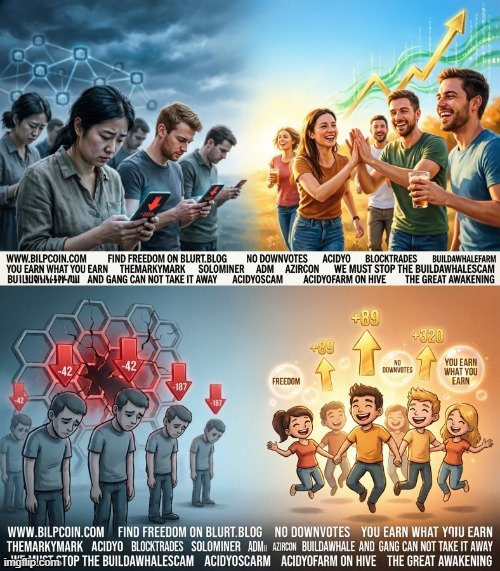
We romanticize the lone genius, but every visible achievement rests on invisible hands: mentors, friends, strangers who held space, ancestors who survived. Success is a chorus. Happiness is a shared hearth. To archive either, you must acknowledge the chorus. Thank the quiet contributors. Lift others as you climb. The ladder is an illusion. We are all climbing the same mountain, just different paths.
The Craft of Listening
We speak to be heard, but we connect by hearing. Listening is not waiting for your turn. It is an act of surrender, a temporary exile of the ego. Happiness lives in the space between words. Success thrives on accurate perception. Today, listen to someone without planning your reply. Let their truth land. You will be surprised by what emerges when you stop performing and start receiving.
On Letting Go of the Timeline
We are taught to march: first this, then that, then the reward. But life does not obey our calendars. Seasons shift. People change. Projects stall. The archive of a well-lived life is not a straight line; it is a topography of peaks, plateaus, and necessary detours. Happiness requires surrender to the untimely. Success requires trust in the unmeasured. Today, release the clock. Work at the pace of truth, not urgency.
What We Build Will Outlast What They Break
The awakening. The weeks, months, years of evidence. The reckoning. The building. What they break, we rebuild. What they suppress, we amplify. What they lie about, we expose. The foundation is laid. The structure is rising. The alternative is becoming real. Today, stand on what we have built. It will hold.
For in the end, what is built on truth outlasts what is built on lies.
The Alternative
Another World Is Possible
They tell you there is no alternative. They tell you this is the only game in town. They tell you to accept the extraction, the suppression, the lies. But another world is possible. A world where creation is rewarded. Where truth is protected. Where power is distributed. Where freedom is structural. Today, imagine it. Then build it.
For in the end, the most radical act is to believe that another world is possible.
The Ghost Accounts
The Faces Behind the Masks
@kriborin. @lessys. @arsahk. @buildawhale. @ipromote. @acidyo @jacobtothe @cwow2 @oldsoulnewb @alpha @solominer @meno @freedom @letusbuyhive @themarkymark. @poshtoken. @ocdb. @smooth. These are not just usernames. They are nodes in a network. They are the machinery of extraction. They are the ghosts that haunt the reward pool. Today, learn their names. Know their functions. Understand their purpose.
For in the end, you cannot fight what you cannot name.
The Courage to Speak
Silence Is the Currency of the Corrupt
There is a particular kind of evil that does not require action. It only requires your silence.
Every day you choose not to speak, you are speaking. Every day you choose not to look, you are looking away. Every day you choose not to question, you are answering on behalf of those who profit from your compliance.
The downvoting whales of Hive understand this. They know that if they can silence enough voices, the remaining ones will fall in line. They know that if they can label enough truth as "spam," the community will stop searching for signal. They know that your silence is their most valuable asset.
Do not give it to them.
Speak today. Share the data. Point to the ledger. Ask the questions they do not want asked. You do not need a million Hive Power to do this. You only need a voice and the courage to use it.
For in the end, silence is not peace. It is the sound of a garden being salted.
#TruthUnsilenced #SpeakUp #HiveTransparency #BlurtRising #Bilpcoin
https://blurt.blog/blurt-195646/@bilpcoinbpc/day-14-the-silence-of-the-lambs
https://hive.blog/hive-178138/@bilpcoinbpc/the-mirage-of-the-mint-on-the-illusion-of-value-in-a-rigged-casino
https://steemit.com/bilpcoin/@bilpcoinbpc/hive-blurt-steemit-our-journey-across-chains-we-offer-our-honest-truth-we-ve-walked-through-hive-blog-once-a-promise-now-a
https://peakd.com/hive-158694/@bilpcoinbpc/a-open-letter-to-hive
https://blurt.blog/blurt-195646/@bilpcoinbpc/65n7hz-do-you-fight-for-the-truth-or-for-those-who-silence-it
https://blurt.blog/blurt-195646/@bilpcoinbpc/6jayqa-there-is-a-quiet-unraveling-happening-on-hive-blog
https://hive.blog/hive/@test.ureka/the-untrending-report-hive-downvote-analysis-2025-06-27-20250627213824
https://peakd.com/hive/@ureka.stats/the-untrending-report-hive-downvote-analysis-16-09-2025-20250916181314
https://www.publish0x.com/@bilpcoinbpc
https://www.youtube.com/playlist?list=PLbH29p-63eW_PIi4l0KUNLMQ0ageCtkk5
https://www.youtube.com/@bilpcoinbpc
https://www.youtube.com/@bpcaimusic
https://www.bilpcoin.com
https://blurt.blog/@bilpcoinbpc/posts
https://audius.co/bpcaimusic
https://hive.blog/hive-126152/@bilpcoinbpc/bpc-ai-truth-hurts
https://hive.blog/hive-167922/@bilpcoinbpc/you-rewarded-only-those-who-kissed-the-ring-mc-franko-and-the-frankos-bpcaimusic-bilpcoin
bilp
Please read and share the truth 🙏🏾
On hive it's like some people don't realise everything is documented and you can never hide from the truth 😂😂😂😂😂🍻

@acidyo @neoxian @themarkymark @hurtlocker @jacobtothe @steevc @meno @theycallmedan @crimsonclad and friends ✨⭕✨😂😂😂
Do you really think no one sees what you do 🤔
@acidyo You took my rep away for no reason with the help of blocktrades delegation 😂 @steevc knows all about it
You and themarkymark work for blocktrades or are blocktrades 😂
You are so sad doing what you do
Promoting your 💩💩💩💩💩💩
Selfvoting your 💩💩💩💩💩💩💩💩💩
You have downvoted so many people away for no reason
You really need to have a hard long look in the mirror and see what you have become
It doesn't matter if you have people who believe anything you say for a few cents or a few pennies 😂😂😂😂
Look at your buddy oldsoulnewb 😂😂😂😂😂
Everything is documented
So the choice is yours again leave me alone and bring my rep back and I will stop sharing the truth
You can call my long copy paste comments spam but it only makes you look stupid 😂

I hope you understand you are only making it worse 😂
Hive is not a game it might be a big game to you 🤔
It seems you love to game Hive don't you 😜
Everyone sees don't you think it's time to stop 🛑
You have shown all the real issues with Hive 😂 you have shown why real people couldn't invest in Hive and build on Hive 😂
You are in god mode 😂 activated 😂 you Marky Dan and others 😂😂😂😂😜
I hope you enjoyed this post or you might see in comment from 😂 which you like to call spam 😂😂😂
@jacobtothe Keep digging just remember @acidyo took my rep away with the help of blocktrades delegations and everything is documented 😂😂😂
☝🏾✨⭕✨☝🏾🍻🍻🍻🍻
👇🏾👇🏾👇🏾👇🏾👇🏾👇🏾👇🏾
@jacobtothe and friends Please get help there's clearly something wrong with you 🙏🏾
I hope blocktrades pays you well enough 😂😂😂😂
Some people just never learn when 😂😂😂👇🏾👇🏾👇🏾👇🏾👇🏾👇🏾👇🏾👇🏾👇🏾👇🏾👇🏾👇🏾
@jacobtothe @livinguktaiwan @oflyhigh @abit @adm @eval @hivetoday @abitmore @hurtlocker @hurt-locker @epstein @gundamzerofour @gundamzerotwo @gundamzerofive @buratus @gungunkrishu @tarabh @nattosenpai @fw206 @ocd @acidyo @hivetrending @mrtats @poshtoken @davideownzall @dudeontheweb @caspermoeller89 @strawhat @angeluxx @cositav @rachaeldwatson @solumviz @poshtoken.wallet @shiftrox @hiddenblade @hivegc @alohaed @tobias-g @nattosenpai @hivetrending @erikah @davidke20 @davideownzall @zingtoken @honey-swap @friendlymoose @x-rain @hivegc @rishi556 @ocd-witness @russia-btc @ocdb @justinw @nutritree @themarkymark @geekgirl @buynburn @stresskiller @forkyishere @forykw @belikechuck @leovoter @upmyvote @punkteam @makerhacks @wiseagent @steevc @davidthompson57 @videoaddiction @annoyingmosquito @meesterboom @demotruk @meno @thelittlebank @knot @buttcoins @snapie @coolmole @davidickeyyall @crimsonclad @smooth @oldsoulnewb @ds-tech @artgirl @flemingfarm @neoxian @nwothini335 @bdvoter.cur @zaku @mango-juice @empo.voter @empoderat @ferranlogs @trumpman @bhattg @azircon @riverflows @lazy-panda @gogreenbuddy @tarazkp @buildawhale @logic @abit @freedom @solominer @letusbuyhive @bijoy12 @sagarkothari88 @theycallmedan @ipromote @apeminingclub @nathen007 @dlmmqb @slobberchops @chops316 @littlenewthings @bozz @adm @abit @cwow2 @adm @logic @savvyplayer @patrice @spaminator @topcomment @theworldaroundme @jongolson @mobi72 and friends ✨⭕✨ Please get help 🙏🏾
@jacobtothe @acidyo @themarkymark @hurtlocker and friends 😁 No one will ever trust you again you weirdo 😂
👇🏾👇🏾👇🏾👇🏾👇🏾👇🏾👇🏾
Hello everyone I hope you are all good and well today in this post is some of the evidence to prove my case
If you didn't know I've been getting downvoted for a long time on Hive
They have been trying to bully me with downvotes and words but it doesn't affect me I've been online for over 25 years
So I've dealt with people like this before it's nothing new
But what they are doing is bad Very badi joined steemit like everyone else thinking it offers freedom but I must say steemit offered much more freedom than Hive does
Everyone already knows I only post my own original content I have no need to steal anything from anyone
I've been labelled a lot of things on Hive 😂 by the biggest farmers scammers and downvoters
Actions speak louder than any words do especially when them words are coming from a compolsive liars
I will keep updating this post when I get time
https://hive.blog/hive/@ureka.stats/the-untrending-report-hive-downvote-analysis-16-09-2025-20250916181314
https://hive.blog/hivedev/@makerhacks/please-peakd-allow-me-to-completely-block-spammers-would-you-ever-vote-for-this
https://hive.blog/hive-167547/@dlmmqb/re-kgakakillerg-t34wy6
https://hive.blog/hive-170475/@acidyo/re-kgakakillerg-t32sw1
https://hive.blog/hive-167922/@themarkymark/re-kgakakillerg-t30ziu
https://hive.blog/hive/@ureka.stats/the-untrending-report-hive-downvote-analysis-29-09-2025-20250929172045
No downvotes for this racist person 🧐
https://hive.blog/hive-196387/@acidyo/re-kgakakillerg-t41yr6
https://hive.blog/dvs/@dhedge/re-kgakakillerg-t3clz3
https://hive.blog/hive-150329/@kgakakillerg/t3a8fu
https://hive.blog/musical/@steevc/re-kgakakillerg-t2kz1m this post
To all the downvoters on Hive When the downvotes stop 🛑 and my rep is back I stop sharing the truth 🙏🏾
☝🏾☝🏾☝🏾☝🏾☝🏾☝🏾 Keep calling the truth lies 😂☝🏾
So many pretend to be doing god's work but they are really working for the devil 👿
Karma will strike you and who ever supports you 🙏🏾
☝🏾☝🏾☝🏾☝🏾☝🏾☝🏾☝🏾☝🏾☝🏾☝🏾☝🏾☝🏾
To @jacobtothe and friends 😁
@crimsonclad please do your job 🙏🏾
https://hive.blog/hive-135178/@crimsonclad/re-kgakakillerg-sxllhv
https://hive.blog/hive-148441/@hivewatchers/svftu9
https://hive.blog/hive-148441/@hivewatchers/svdjjz
https://hive.blog/hive-176853/@steevc/re-kgakakillerg-syyy4x
https://hive.blog/dev/@howo/re-kgakakillerg-szhax7
https://hive.blog/hive/@steevc/follow-friday-respect
https://hive.blog/hive-127022/@shmoogleosukami/re-kgakakillerg-t0hcxc
It's unbelievable that they downvoted this Goodbye Auntie R.I.P 🙏🏾
Comments being downvoted by blocktrades https://hive.blog/hive-170744/@kgakakillerg/t0ns3b
https://hive.blog/hive-127466/@steevc/re-blocktrades-t0kint
https://hive.blog/hive-127466/@blocktrades/t0lq41
https://hive.blog/hive/@ureka.stats/the-untrending-report-hive-downvote-analysis-2025-06-29-20250629143829
https://hive.blog/hive-127466/@kgakakillerg/t0m1vn
https://hive.blog/hive-108278/@kgakakillerg/t0rfo8
https://hive.blog/hive-127466/@kgakakillerg/t0vcl7
Stop farming Hive https://hive.blog/burnpost/@buildawhale/re-1756307402814502169-20250827t151240z
😂😂😂😂😂
📊 The Untrending Report - Hive Downvote Analysis - 2025-09-07
RE: Understanding Pointers in C Programming
Please Peakd, allow me to completely block spammers (Would you ever vote for this?) thanks for exposing yourself more @makerhacks
Please go through it all instead of calling it spam 😂😂😂😂🤣🤣🤣🤣🤣🤣🤣
https://blurt.blog/hive/@candy49/5slvnx-taskmaster4450-is-being-downvoted-on-hive-by-you-know-who
🚨🚨🚨🚨🚨🚨🚨🙄🙄🙄🙄🚨🚨🚨🚨
https://hive.blog/hive-108278/@kgakakillerg/themarkymark
https://hive.blog/hive-178138/@thefed/t6q9kb 🙄🙄🙄🙄🙄🙄🙄🚨🚨🚨🚨🚨🚨🚨🚨🙄🙄🙄🙄🙄
https://hive.blog/music/@geneeverett33/11-25-25-three-tune-tuesday-picking-tunes-from-the-punk-band-the-descendents-1982-1997-era
🚨🚨🚨🙄🙄🙄🙄🙄🙄🙄🚨🚨🚨🚨🚨
https://hive.blog/dmania/@steemcleaners/ps46kb
https://hive.blog/hive-124838/@fjworld/re-peaksnaps-t7161i
🚨🚨🚨🚨🙄🙄🙄🙄🙄🙄🙄🙄🙄🚨🚨🚨🚨
https://blurt.blog/blurt-131902/@condividisulweb/3w94e8-hive-manipulation-censorship-and-suspicious-funds-the-hidden-truth
🚨🚨🚨🚨🙄🙄🙄🙄🚨🚨🚨
https://hive.blog/hive/@kgakakillerg/i-ve-been-put-on-two-blacklists
Thank you for reading and viewing this post
To all the downvoters on Hive When the downvotes stop 🛑 and my rep is back I stop sharing the truth 🙏🏾
I'm sharing the truth I know it hurts you but it is what it is 😂🍻
It's crazy that hives market cap is 36 million dollars 🤔🧐 and a account to hold 24 million dollars 💰 crazy
To everyone who is turning a blind eye to the truth karma will strike you down 🙏🏾
Stop Doing the devils work do gods work 🙏🏾
☝🏾😂😂😂😂😂😂😂😂📷📸📸
☝🏾☝🏾☝🏾☝🏾☝🏾
#themarkymarkfiles #buildawhalefiles #acidyofiles #hurtlockerfiles #neoxianfiles #louis88files #azirconfiles #jacobtothefiles #ausbitbankfiles #poshtokenfiles #menofiles #Guiltypartiesfiles #Usainvotefiles #smoothfiles
☝🏾☝🏾☝🏾☝🏾☝🏾☝🏾☝🏾☝🏾
#bilpcoin bpc #truth Connection Over Competition
The world teaches us to compete. Life teaches us to collaborate. Every person you meet is fighting a battle you cannot see. Every success you admire was built on support you do not see. Happiness thrives in community. Success thrives in generosity. Today, replace comparison with curiosity. Ask how you can help someone else win. Lift as you climb. The ladder is an illusion.
The Myth of the @Solominer Triumph

We romanticize the lone genius, but every visible achievement rests on invisible hands: mentors, friends, strangers who held space, ancestors who survived. Success is a chorus. Happiness is a shared hearth. To archive either, you must acknowledge the chorus. Thank the quiet contributors. Lift others as you climb. The ladder is an illusion. We are all climbing the same mountain, just different paths.
The Craft of Listening
We speak to be heard, but we connect by hearing. Listening is not waiting for your turn. It is an act of surrender, a temporary exile of the ego. Happiness lives in the space between words. Success thrives on accurate perception. Today, listen to someone without planning your reply. Let their truth land. You will be surprised by what emerges when you stop performing and start receiving.
On Letting Go of the Timeline
We are taught to march: first this, then that, then the reward. But life does not obey our calendars. Seasons shift. People change. Projects stall. The archive of a well-lived life is not a straight line; it is a topography of peaks, plateaus, and necessary detours. Happiness requires surrender to the untimely. Success requires trust in the unmeasured. Today, release the clock. Work at the pace of truth, not urgency.
What We Build Will Outlast What They Break
The awakening. The weeks, months, years of evidence. The reckoning. The building. What they break, we rebuild. What they suppress, we amplify. What they lie about, we expose. The foundation is laid. The structure is rising. The alternative is becoming real. Today, stand on what we have built. It will hold.
For in the end, what is built on truth outlasts what is built on lies.
The Alternative
Another World Is Possible
They tell you there is no alternative. They tell you this is the only game in town. They tell you to accept the extraction, the suppression, the lies. But another world is possible. A world where creation is rewarded. Where truth is protected. Where power is distributed. Where freedom is structural. Today, imagine it. Then build it.
For in the end, the most radical act is to believe that another world is possible.
The Ghost Accounts
The Faces Behind the Masks
@kriborin. @lessys. @arsahk. @buildawhale. @ipromote. @acidyo @jacobtothe @cwow2 @oldsoulnewb @alpha @solominer @meno @freedom @letusbuyhive @themarkymark. @poshtoken. @ocdb. @smooth. These are not just usernames. They are nodes in a network. They are the machinery of extraction. They are the ghosts that haunt the reward pool. Today, learn their names. Know their functions. Understand their purpose.
For in the end, you cannot fight what you cannot name.
The Courage to Speak
Silence Is the Currency of the Corrupt
There is a particular kind of evil that does not require action. It only requires your silence.
Every day you choose not to speak, you are speaking. Every day you choose not to look, you are looking away. Every day you choose not to question, you are answering on behalf of those who profit from your compliance.
The downvoting whales of Hive understand this. They know that if they can silence enough voices, the remaining ones will fall in line. They know that if they can label enough truth as "spam," the community will stop searching for signal. They know that your silence is their most valuable asset.
Do not give it to them.
Speak today. Share the data. Point to the ledger. Ask the questions they do not want asked. You do not need a million Hive Power to do this. You only need a voice and the courage to use it.
For in the end, silence is not peace. It is the sound of a garden being salted.
#TruthUnsilenced #SpeakUp #HiveTransparency #BlurtRising #Bilpcoin
https://blurt.blog/blurt-195646/@bilpcoinbpc/day-14-the-silence-of-the-lambs
https://hive.blog/hive-178138/@bilpcoinbpc/the-mirage-of-the-mint-on-the-illusion-of-value-in-a-rigged-casino
https://steemit.com/bilpcoin/@bilpcoinbpc/hive-blurt-steemit-our-journey-across-chains-we-offer-our-honest-truth-we-ve-walked-through-hive-blog-once-a-promise-now-a
https://peakd.com/hive-158694/@bilpcoinbpc/a-open-letter-to-hive
https://blurt.blog/blurt-195646/@bilpcoinbpc/65n7hz-do-you-fight-for-the-truth-or-for-those-who-silence-it
https://blurt.blog/blurt-195646/@bilpcoinbpc/6jayqa-there-is-a-quiet-unraveling-happening-on-hive-blog
https://hive.blog/hive/@test.ureka/the-untrending-report-hive-downvote-analysis-2025-06-27-20250627213824
https://peakd.com/hive/@ureka.stats/the-untrending-report-hive-downvote-analysis-16-09-2025-20250916181314
https://www.publish0x.com/@bilpcoinbpc
https://www.youtube.com/playlist?list=PLbH29p-63eW_PIi4l0KUNLMQ0ageCtkk5
https://www.youtube.com/@bilpcoinbpc
https://www.youtube.com/@bpcaimusic
https://www.bilpcoin.com
https://blurt.blog/@bilpcoinbpc/posts
https://audius.co/bpcaimusic
https://hive.blog/hive-126152/@bilpcoinbpc/bpc-ai-truth-hurts
https://hive.blog/hive-167922/@bilpcoinbpc/you-rewarded-only-those-who-kissed-the-ring-mc-franko-and-the-frankos-bpcaimusic-bilpcoin
bilp
excellent analysis
bravo
Great idea bhai,
!PIZZA
This is a really clever idea!
Hopefully, this will spark more ideas and enable us to reduce the phishing rate on Hive. The first stepping stone was making people realize that warning pop-ups are not against decentralization. If anyone still considers them to be, we can make the decision-making process decentralized as well.
Will become more retarded with AI. A good solution is to use a whitelist for links ( AKA Pihole list for example).
Solves not everything for sure, but a good start
The point of this was, Anti phishing solutions are not centralized censorship especially, since they are visible onchain level as well.
so you tell me frontends use shared blacklist of hive users but not a shared databse of scam websites? LMAO
"Hidden due to low reputation or author preferences Display comment"
Well,
I think you dont even know what a pihole list is. Thats a premade opensource list what is up to date with close to all bad websites ( since new pop up every day). So you want to do same work other ppl do already on hive? That is low IQ shit.
https://www.reddit.com/r/hivenetwork/comments/1rddqmi/antiphishing_proposed_solution/
This post has been shared on Reddit by @dlmmqb through the HivePosh initiative.
#bilpcoin bpc #truth Connection Over Competition
The world teaches us to compete. Life teaches us to collaborate. Every person you meet is fighting a battle you cannot see. Every success you admire was built on support you do not see. Happiness thrives in community. Success thrives in generosity. Today, replace comparison with curiosity. Ask how you can help someone else win. Lift as you climb. The ladder is an illusion.
The Myth of the @Solominer Triumph

We romanticize the lone genius, but every visible achievement rests on invisible hands: mentors, friends, strangers who held space, ancestors who survived. Success is a chorus. Happiness is a shared hearth. To archive either, you must acknowledge the chorus. Thank the quiet contributors. Lift others as you climb. The ladder is an illusion. We are all climbing the same mountain, just different paths.
The Craft of Listening
We speak to be heard, but we connect by hearing. Listening is not waiting for your turn. It is an act of surrender, a temporary exile of the ego. Happiness lives in the space between words. Success thrives on accurate perception. Today, listen to someone without planning your reply. Let their truth land. You will be surprised by what emerges when you stop performing and start receiving.
On Letting Go of the Timeline
We are taught to march: first this, then that, then the reward. But life does not obey our calendars. Seasons shift. People change. Projects stall. The archive of a well-lived life is not a straight line; it is a topography of peaks, plateaus, and necessary detours. Happiness requires surrender to the untimely. Success requires trust in the unmeasured. Today, release the clock. Work at the pace of truth, not urgency.
What We Build Will Outlast What They Break
The awakening. The weeks, months, years of evidence. The reckoning. The building. What they break, we rebuild. What they suppress, we amplify. What they lie about, we expose. The foundation is laid. The structure is rising. The alternative is becoming real. Today, stand on what we have built. It will hold.
For in the end, what is built on truth outlasts what is built on lies.
The Alternative
Another World Is Possible
They tell you there is no alternative. They tell you this is the only game in town. They tell you to accept the extraction, the suppression, the lies. But another world is possible. A world where creation is rewarded. Where truth is protected. Where power is distributed. Where freedom is structural. Today, imagine it. Then build it.
For in the end, the most radical act is to believe that another world is possible.
The Ghost Accounts
The Faces Behind the Masks
@kriborin. @lessys. @arsahk. @buildawhale. @ipromote. @acidyo @jacobtothe @cwow2 @oldsoulnewb @alpha @solominer @meno @freedom @letusbuyhive @themarkymark. @poshtoken. @ocdb. @smooth. These are not just usernames. They are nodes in a network. They are the machinery of extraction. They are the ghosts that haunt the reward pool. Today, learn their names. Know their functions. Understand their purpose.
For in the end, you cannot fight what you cannot name.
The Courage to Speak
Silence Is the Currency of the Corrupt
There is a particular kind of evil that does not require action. It only requires your silence.
Every day you choose not to speak, you are speaking. Every day you choose not to look, you are looking away. Every day you choose not to question, you are answering on behalf of those who profit from your compliance.
The downvoting whales of Hive understand this. They know that if they can silence enough voices, the remaining ones will fall in line. They know that if they can label enough truth as "spam," the community will stop searching for signal. They know that your silence is their most valuable asset.
Do not give it to them.
Speak today. Share the data. Point to the ledger. Ask the questions they do not want asked. You do not need a million Hive Power to do this. You only need a voice and the courage to use it.
For in the end, silence is not peace. It is the sound of a garden being salted.
#TruthUnsilenced #SpeakUp #HiveTransparency #BlurtRising #Bilpcoin
https://blurt.blog/blurt-195646/@bilpcoinbpc/day-14-the-silence-of-the-lambs
https://hive.blog/hive-178138/@bilpcoinbpc/the-mirage-of-the-mint-on-the-illusion-of-value-in-a-rigged-casino
https://steemit.com/bilpcoin/@bilpcoinbpc/hive-blurt-steemit-our-journey-across-chains-we-offer-our-honest-truth-we-ve-walked-through-hive-blog-once-a-promise-now-a
https://peakd.com/hive-158694/@bilpcoinbpc/a-open-letter-to-hive
https://blurt.blog/blurt-195646/@bilpcoinbpc/65n7hz-do-you-fight-for-the-truth-or-for-those-who-silence-it
https://blurt.blog/blurt-195646/@bilpcoinbpc/6jayqa-there-is-a-quiet-unraveling-happening-on-hive-blog
https://hive.blog/hive/@test.ureka/the-untrending-report-hive-downvote-analysis-2025-06-27-20250627213824
https://peakd.com/hive/@ureka.stats/the-untrending-report-hive-downvote-analysis-16-09-2025-20250916181314
https://www.publish0x.com/@bilpcoinbpc
https://www.youtube.com/playlist?list=PLbH29p-63eW_PIi4l0KUNLMQ0ageCtkk5
https://www.youtube.com/@bilpcoinbpc
https://www.youtube.com/@bpcaimusic
https://www.bilpcoin.com
https://blurt.blog/@bilpcoinbpc/posts
https://audius.co/bpcaimusic
https://hive.blog/hive-126152/@bilpcoinbpc/bpc-ai-truth-hurts
https://hive.blog/hive-167922/@bilpcoinbpc/you-rewarded-only-those-who-kissed-the-ring-mc-franko-and-the-frankos-bpcaimusic-bilpcoin
bilp
Another tip: keep your tokens staked or in savings to protect them from immediate theft should your keys be compromised. Liquid HIVE/HBD will be taken immediately. Savings take 3 days to unlock, and staked HIVE releases at most 1/13th of your holdings after 7 days. This gives you time to secure your account, even if you can't remember right away where you stored that pesky Owner Key note. If you don't need it to be liquid, don't keep it liquid. Simple as that.
#bilpcoin bpc #truth Connection Over Competition
The world teaches us to compete. Life teaches us to collaborate. Every person you meet is fighting a battle you cannot see. Every success you admire was built on support you do not see. Happiness thrives in community. Success thrives in generosity. Today, replace comparison with curiosity. Ask how you can help someone else win. Lift as you climb. The ladder is an illusion.
The Myth of the @Solominer Triumph

We romanticize the lone genius, but every visible achievement rests on invisible hands: mentors, friends, strangers who held space, ancestors who survived. Success is a chorus. Happiness is a shared hearth. To archive either, you must acknowledge the chorus. Thank the quiet contributors. Lift others as you climb. The ladder is an illusion. We are all climbing the same mountain, just different paths.
The Craft of Listening
We speak to be heard, but we connect by hearing. Listening is not waiting for your turn. It is an act of surrender, a temporary exile of the ego. Happiness lives in the space between words. Success thrives on accurate perception. Today, listen to someone without planning your reply. Let their truth land. You will be surprised by what emerges when you stop performing and start receiving.
On Letting Go of the Timeline
We are taught to march: first this, then that, then the reward. But life does not obey our calendars. Seasons shift. People change. Projects stall. The archive of a well-lived life is not a straight line; it is a topography of peaks, plateaus, and necessary detours. Happiness requires surrender to the untimely. Success requires trust in the unmeasured. Today, release the clock. Work at the pace of truth, not urgency.
What We Build Will Outlast What They Break
The awakening. The weeks, months, years of evidence. The reckoning. The building. What they break, we rebuild. What they suppress, we amplify. What they lie about, we expose. The foundation is laid. The structure is rising. The alternative is becoming real. Today, stand on what we have built. It will hold.
For in the end, what is built on truth outlasts what is built on lies.
The Alternative
Another World Is Possible
They tell you there is no alternative. They tell you this is the only game in town. They tell you to accept the extraction, the suppression, the lies. But another world is possible. A world where creation is rewarded. Where truth is protected. Where power is distributed. Where freedom is structural. Today, imagine it. Then build it.
For in the end, the most radical act is to believe that another world is possible.
The Ghost Accounts
The Faces Behind the Masks
@kriborin. @lessys. @arsahk. @buildawhale. @ipromote. @acidyo @jacobtothe @cwow2 @oldsoulnewb @alpha @solominer @meno @freedom @letusbuyhive @themarkymark. @poshtoken. @ocdb. @smooth. These are not just usernames. They are nodes in a network. They are the machinery of extraction. They are the ghosts that haunt the reward pool. Today, learn their names. Know their functions. Understand their purpose.
For in the end, you cannot fight what you cannot name.
The Courage to Speak
Silence Is the Currency of the Corrupt
There is a particular kind of evil that does not require action. It only requires your silence.
Every day you choose not to speak, you are speaking. Every day you choose not to look, you are looking away. Every day you choose not to question, you are answering on behalf of those who profit from your compliance.
The downvoting whales of Hive understand this. They know that if they can silence enough voices, the remaining ones will fall in line. They know that if they can label enough truth as "spam," the community will stop searching for signal. They know that your silence is their most valuable asset.
Do not give it to them.
Speak today. Share the data. Point to the ledger. Ask the questions they do not want asked. You do not need a million Hive Power to do this. You only need a voice and the courage to use it.
For in the end, silence is not peace. It is the sound of a garden being salted.
#TruthUnsilenced #SpeakUp #HiveTransparency #BlurtRising #Bilpcoin
https://blurt.blog/blurt-195646/@bilpcoinbpc/day-14-the-silence-of-the-lambs
https://hive.blog/hive-178138/@bilpcoinbpc/the-mirage-of-the-mint-on-the-illusion-of-value-in-a-rigged-casino
https://steemit.com/bilpcoin/@bilpcoinbpc/hive-blurt-steemit-our-journey-across-chains-we-offer-our-honest-truth-we-ve-walked-through-hive-blog-once-a-promise-now-a
https://peakd.com/hive-158694/@bilpcoinbpc/a-open-letter-to-hive
https://blurt.blog/blurt-195646/@bilpcoinbpc/65n7hz-do-you-fight-for-the-truth-or-for-those-who-silence-it
https://blurt.blog/blurt-195646/@bilpcoinbpc/6jayqa-there-is-a-quiet-unraveling-happening-on-hive-blog
https://hive.blog/hive/@test.ureka/the-untrending-report-hive-downvote-analysis-2025-06-27-20250627213824
https://peakd.com/hive/@ureka.stats/the-untrending-report-hive-downvote-analysis-16-09-2025-20250916181314
https://www.publish0x.com/@bilpcoinbpc
https://www.youtube.com/playlist?list=PLbH29p-63eW_PIi4l0KUNLMQ0ageCtkk5
https://www.youtube.com/@bilpcoinbpc
https://www.youtube.com/@bpcaimusic
https://www.bilpcoin.com
https://blurt.blog/@bilpcoinbpc/posts
https://audius.co/bpcaimusic
https://hive.blog/hive-126152/@bilpcoinbpc/bpc-ai-truth-hurts
https://hive.blog/hive-167922/@bilpcoinbpc/you-rewarded-only-those-who-kissed-the-ring-mc-franko-and-the-frankos-bpcaimusic-bilpcoin
bilp
$PIZZA slices delivered:
@bhattg(3/15) tipped @dlmmqb
bulliontools tipped dlmmqb
Send $PIZZA tips in Discord via tip.cc!
!BBH
Thanks for staying active. Your GLD activity distribution of 0.0132 GLS has been sent.
Please read and share the truth 🙏🏾
On hive it's like some people don't realise everything is documented and you can never hide from the truth 😂😂😂😂😂🍻

@acidyo @neoxian @themarkymark @hurtlocker @jacobtothe @steevc @meno @theycallmedan @crimsonclad and friends ✨⭕✨😂😂😂
Do you really think no one sees what you do 🤔
@acidyo You took my rep away for no reason with the help of blocktrades delegation 😂 @steevc knows all about it
You and themarkymark work for blocktrades or are blocktrades 😂
You are so sad doing what you do
Promoting your 💩💩💩💩💩💩
Selfvoting your 💩💩💩💩💩💩💩💩💩
You have downvoted so many people away for no reason
You really need to have a hard long look in the mirror and see what you have become
It doesn't matter if you have people who believe anything you say for a few cents or a few pennies 😂😂😂😂
Look at your buddy oldsoulnewb 😂😂😂😂😂
Everything is documented
So the choice is yours again leave me alone and bring my rep back and I will stop sharing the truth
You can call my long copy paste comments spam but it only makes you look stupid 😂

I hope you understand you are only making it worse 😂
Hive is not a game it might be a big game to you 🤔
It seems you love to game Hive don't you 😜
Everyone sees don't you think it's time to stop 🛑
You have shown all the real issues with Hive 😂 you have shown why real people couldn't invest in Hive and build on Hive 😂
You are in god mode 😂 activated 😂 you Marky Dan and others 😂😂😂😂😜
I hope you enjoyed this post or you might see in comment from 😂 which you like to call spam 😂😂😂
@jacobtothe Keep digging just remember @acidyo took my rep away with the help of blocktrades delegations and everything is documented 😂😂😂
☝🏾✨⭕✨☝🏾🍻🍻🍻🍻
👇🏾👇🏾👇🏾👇🏾👇🏾👇🏾👇🏾
@jacobtothe and friends Please get help there's clearly something wrong with you 🙏🏾
I hope blocktrades pays you well enough 😂😂😂😂
Some people just never learn when 😂😂😂👇🏾👇🏾👇🏾👇🏾👇🏾👇🏾👇🏾👇🏾👇🏾👇🏾👇🏾👇🏾
@jacobtothe @livinguktaiwan @oflyhigh @abit @adm @eval @hivetoday @abitmore @hurtlocker @hurt-locker @epstein @gundamzerofour @gundamzerotwo @gundamzerofive @buratus @gungunkrishu @tarabh @nattosenpai @fw206 @ocd @acidyo @hivetrending @mrtats @poshtoken @davideownzall @dudeontheweb @caspermoeller89 @strawhat @angeluxx @cositav @rachaeldwatson @solumviz @poshtoken.wallet @shiftrox @hiddenblade @hivegc @alohaed @tobias-g @nattosenpai @hivetrending @erikah @davidke20 @davideownzall @zingtoken @honey-swap @friendlymoose @x-rain @hivegc @rishi556 @ocd-witness @russia-btc @ocdb @justinw @nutritree @themarkymark @geekgirl @buynburn @stresskiller @forkyishere @forykw @belikechuck @leovoter @upmyvote @punkteam @makerhacks @wiseagent @steevc @davidthompson57 @videoaddiction @annoyingmosquito @meesterboom @demotruk @meno @thelittlebank @knot @buttcoins @snapie @coolmole @davidickeyyall @crimsonclad @smooth @oldsoulnewb @ds-tech @artgirl @flemingfarm @neoxian @nwothini335 @bdvoter.cur @zaku @mango-juice @empo.voter @empoderat @ferranlogs @trumpman @bhattg @azircon @riverflows @lazy-panda @gogreenbuddy @tarazkp @buildawhale @logic @abit @freedom @solominer @letusbuyhive @bijoy12 @sagarkothari88 @theycallmedan @ipromote @apeminingclub @nathen007 @dlmmqb @slobberchops @chops316 @littlenewthings @bozz @adm @abit @cwow2 @adm @logic @savvyplayer @patrice @spaminator @topcomment @theworldaroundme @jongolson @mobi72 and friends ✨⭕✨ Please get help 🙏🏾
@jacobtothe @acidyo @themarkymark @hurtlocker and friends 😁 No one will ever trust you again you weirdo 😂
👇🏾👇🏾👇🏾👇🏾👇🏾👇🏾👇🏾
Hello everyone I hope you are all good and well today in this post is some of the evidence to prove my case
If you didn't know I've been getting downvoted for a long time on Hive
They have been trying to bully me with downvotes and words but it doesn't affect me I've been online for over 25 years
So I've dealt with people like this before it's nothing new
But what they are doing is bad Very badi joined steemit like everyone else thinking it offers freedom but I must say steemit offered much more freedom than Hive does
Everyone already knows I only post my own original content I have no need to steal anything from anyone
I've been labelled a lot of things on Hive 😂 by the biggest farmers scammers and downvoters
Actions speak louder than any words do especially when them words are coming from a compolsive liars
I will keep updating this post when I get time
https://hive.blog/hive/@ureka.stats/the-untrending-report-hive-downvote-analysis-16-09-2025-20250916181314
https://hive.blog/hivedev/@makerhacks/please-peakd-allow-me-to-completely-block-spammers-would-you-ever-vote-for-this
https://hive.blog/hive-167547/@dlmmqb/re-kgakakillerg-t34wy6
https://hive.blog/hive-170475/@acidyo/re-kgakakillerg-t32sw1
https://hive.blog/hive-167922/@themarkymark/re-kgakakillerg-t30ziu
https://hive.blog/hive/@ureka.stats/the-untrending-report-hive-downvote-analysis-29-09-2025-20250929172045
No downvotes for this racist person 🧐
https://hive.blog/hive-196387/@acidyo/re-kgakakillerg-t41yr6
https://hive.blog/dvs/@dhedge/re-kgakakillerg-t3clz3
https://hive.blog/hive-150329/@kgakakillerg/t3a8fu
https://hive.blog/musical/@steevc/re-kgakakillerg-t2kz1m this post
To all the downvoters on Hive When the downvotes stop 🛑 and my rep is back I stop sharing the truth 🙏🏾
☝🏾☝🏾☝🏾☝🏾☝🏾☝🏾 Keep calling the truth lies 😂☝🏾
So many pretend to be doing god's work but they are really working for the devil 👿
Karma will strike you and who ever supports you 🙏🏾
☝🏾☝🏾☝🏾☝🏾☝🏾☝🏾☝🏾☝🏾☝🏾☝🏾☝🏾☝🏾
To @jacobtothe and friends 😁
@crimsonclad please do your job 🙏🏾
https://hive.blog/hive-135178/@crimsonclad/re-kgakakillerg-sxllhv
https://hive.blog/hive-148441/@hivewatchers/svftu9
https://hive.blog/hive-148441/@hivewatchers/svdjjz
https://hive.blog/hive-176853/@steevc/re-kgakakillerg-syyy4x
https://hive.blog/dev/@howo/re-kgakakillerg-szhax7
https://hive.blog/hive/@steevc/follow-friday-respect
https://hive.blog/hive-127022/@shmoogleosukami/re-kgakakillerg-t0hcxc
It's unbelievable that they downvoted this Goodbye Auntie R.I.P 🙏🏾
Comments being downvoted by blocktrades https://hive.blog/hive-170744/@kgakakillerg/t0ns3b
https://hive.blog/hive-127466/@steevc/re-blocktrades-t0kint
https://hive.blog/hive-127466/@blocktrades/t0lq41
https://hive.blog/hive/@ureka.stats/the-untrending-report-hive-downvote-analysis-2025-06-29-20250629143829
https://hive.blog/hive-127466/@kgakakillerg/t0m1vn
https://hive.blog/hive-108278/@kgakakillerg/t0rfo8
https://hive.blog/hive-127466/@kgakakillerg/t0vcl7
Stop farming Hive https://hive.blog/burnpost/@buildawhale/re-1756307402814502169-20250827t151240z
😂😂😂😂😂
📊 The Untrending Report - Hive Downvote Analysis - 2025-09-07
RE: Understanding Pointers in C Programming
Please Peakd, allow me to completely block spammers (Would you ever vote for this?) thanks for exposing yourself more @makerhacks
Please go through it all instead of calling it spam 😂😂😂😂🤣🤣🤣🤣🤣🤣🤣
https://blurt.blog/hive/@candy49/5slvnx-taskmaster4450-is-being-downvoted-on-hive-by-you-know-who
🚨🚨🚨🚨🚨🚨🚨🙄🙄🙄🙄🚨🚨🚨🚨
https://hive.blog/hive-108278/@kgakakillerg/themarkymark
https://hive.blog/hive-178138/@thefed/t6q9kb 🙄🙄🙄🙄🙄🙄🙄🚨🚨🚨🚨🚨🚨🚨🚨🙄🙄🙄🙄🙄
https://hive.blog/music/@geneeverett33/11-25-25-three-tune-tuesday-picking-tunes-from-the-punk-band-the-descendents-1982-1997-era
🚨🚨🚨🙄🙄🙄🙄🙄🙄🙄🚨🚨🚨🚨🚨
https://hive.blog/dmania/@steemcleaners/ps46kb
https://hive.blog/hive-124838/@fjworld/re-peaksnaps-t7161i
🚨🚨🚨🚨🙄🙄🙄🙄🙄🙄🙄🙄🙄🚨🚨🚨🚨
https://blurt.blog/blurt-131902/@condividisulweb/3w94e8-hive-manipulation-censorship-and-suspicious-funds-the-hidden-truth
🚨🚨🚨🚨🙄🙄🙄🙄🚨🚨🚨
https://hive.blog/hive/@kgakakillerg/i-ve-been-put-on-two-blacklists
Thank you for reading and viewing this post
To all the downvoters on Hive When the downvotes stop 🛑 and my rep is back I stop sharing the truth 🙏🏾
I'm sharing the truth I know it hurts you but it is what it is 😂🍻
It's crazy that hives market cap is 36 million dollars 🤔🧐 and a account to hold 24 million dollars 💰 crazy
To everyone who is turning a blind eye to the truth karma will strike you down 🙏🏾
Stop Doing the devils work do gods work 🙏🏾
☝🏾😂😂😂😂😂😂😂😂📷📸📸
☝🏾☝🏾☝🏾☝🏾☝🏾
#themarkymarkfiles #buildawhalefiles #acidyofiles #hurtlockerfiles #neoxianfiles #louis88files #azirconfiles #jacobtothefiles #ausbitbankfiles #poshtokenfiles #menofiles #Guiltypartiesfiles #Usainvotefiles #smoothfiles
☝🏾☝🏾☝🏾☝🏾☝🏾☝🏾☝🏾☝🏾
#bilpcoin bpc #truth Connection Over Competition
The world teaches us to compete. Life teaches us to collaborate. Every person you meet is fighting a battle you cannot see. Every success you admire was built on support you do not see. Happiness thrives in community. Success thrives in generosity. Today, replace comparison with curiosity. Ask how you can help someone else win. Lift as you climb. The ladder is an illusion.
The Myth of the @Solominer Triumph

We romanticize the lone genius, but every visible achievement rests on invisible hands: mentors, friends, strangers who held space, ancestors who survived. Success is a chorus. Happiness is a shared hearth. To archive either, you must acknowledge the chorus. Thank the quiet contributors. Lift others as you climb. The ladder is an illusion. We are all climbing the same mountain, just different paths.
The Craft of Listening
We speak to be heard, but we connect by hearing. Listening is not waiting for your turn. It is an act of surrender, a temporary exile of the ego. Happiness lives in the space between words. Success thrives on accurate perception. Today, listen to someone without planning your reply. Let their truth land. You will be surprised by what emerges when you stop performing and start receiving.
On Letting Go of the Timeline
We are taught to march: first this, then that, then the reward. But life does not obey our calendars. Seasons shift. People change. Projects stall. The archive of a well-lived life is not a straight line; it is a topography of peaks, plateaus, and necessary detours. Happiness requires surrender to the untimely. Success requires trust in the unmeasured. Today, release the clock. Work at the pace of truth, not urgency.
What We Build Will Outlast What They Break
The awakening. The weeks, months, years of evidence. The reckoning. The building. What they break, we rebuild. What they suppress, we amplify. What they lie about, we expose. The foundation is laid. The structure is rising. The alternative is becoming real. Today, stand on what we have built. It will hold.
For in the end, what is built on truth outlasts what is built on lies.
The Alternative
Another World Is Possible
They tell you there is no alternative. They tell you this is the only game in town. They tell you to accept the extraction, the suppression, the lies. But another world is possible. A world where creation is rewarded. Where truth is protected. Where power is distributed. Where freedom is structural. Today, imagine it. Then build it.
For in the end, the most radical act is to believe that another world is possible.
The Ghost Accounts
The Faces Behind the Masks
@kriborin. @lessys. @arsahk. @buildawhale. @ipromote. @acidyo @jacobtothe @cwow2 @oldsoulnewb @alpha @solominer @meno @freedom @letusbuyhive @themarkymark. @poshtoken. @ocdb. @smooth. These are not just usernames. They are nodes in a network. They are the machinery of extraction. They are the ghosts that haunt the reward pool. Today, learn their names. Know their functions. Understand their purpose.
For in the end, you cannot fight what you cannot name.
The Courage to Speak
Silence Is the Currency of the Corrupt
There is a particular kind of evil that does not require action. It only requires your silence.
Every day you choose not to speak, you are speaking. Every day you choose not to look, you are looking away. Every day you choose not to question, you are answering on behalf of those who profit from your compliance.
The downvoting whales of Hive understand this. They know that if they can silence enough voices, the remaining ones will fall in line. They know that if they can label enough truth as "spam," the community will stop searching for signal. They know that your silence is their most valuable asset.
Do not give it to them.
Speak today. Share the data. Point to the ledger. Ask the questions they do not want asked. You do not need a million Hive Power to do this. You only need a voice and the courage to use it.
For in the end, silence is not peace. It is the sound of a garden being salted.
#TruthUnsilenced #SpeakUp #HiveTransparency #BlurtRising #Bilpcoin
https://blurt.blog/blurt-195646/@bilpcoinbpc/day-14-the-silence-of-the-lambs
https://hive.blog/hive-178138/@bilpcoinbpc/the-mirage-of-the-mint-on-the-illusion-of-value-in-a-rigged-casino
https://steemit.com/bilpcoin/@bilpcoinbpc/hive-blurt-steemit-our-journey-across-chains-we-offer-our-honest-truth-we-ve-walked-through-hive-blog-once-a-promise-now-a
https://peakd.com/hive-158694/@bilpcoinbpc/a-open-letter-to-hive
https://blurt.blog/blurt-195646/@bilpcoinbpc/65n7hz-do-you-fight-for-the-truth-or-for-those-who-silence-it
https://blurt.blog/blurt-195646/@bilpcoinbpc/6jayqa-there-is-a-quiet-unraveling-happening-on-hive-blog
https://hive.blog/hive/@test.ureka/the-untrending-report-hive-downvote-analysis-2025-06-27-20250627213824
https://peakd.com/hive/@ureka.stats/the-untrending-report-hive-downvote-analysis-16-09-2025-20250916181314
https://www.publish0x.com/@bilpcoinbpc
https://www.youtube.com/playlist?list=PLbH29p-63eW_PIi4l0KUNLMQ0ageCtkk5
https://www.youtube.com/@bilpcoinbpc
https://www.youtube.com/@bpcaimusic
https://www.bilpcoin.com
https://blurt.blog/@bilpcoinbpc/posts
https://audius.co/bpcaimusic
https://hive.blog/hive-126152/@bilpcoinbpc/bpc-ai-truth-hurts
https://hive.blog/hive-167922/@bilpcoinbpc/you-rewarded-only-those-who-kissed-the-ring-mc-franko-and-the-frankos-bpcaimusic-bilpcoin
bilp