
HiveWatcher's Politics of Not Being Political

Apparently Abuse Has Evolved Again
There is something reassuring about an organization that has spent ten years investigating abuse, because it means that, after all that experience, we should presumably be able to rely on it to distinguish between actual abuse and someone asking an inconvenient question. Fortunately, @HiveWatchers has provided us with a rather useful case study in what that distinction looks like.
The Hivewatchers – Threat Intelligence & Content Integrity Proposal

The proposal describes @HiveWatchers as an anti-abuse project that began by dealing with plagiarism, copypasta, reward abuse, and similar problems. It has since expanded its investigations to reward farming, AI-generated content, SEO spam, identity theft, cryptocurrency scams, sock puppets, social engineering, phishing, fraudulent fundraising, deceptive publishing, and various other forms of abuse.
That all sounds quite reasonable enough. They also repeatedly describe their work as investigative, evidence-based work intended to protect the ecosystem and its users. They ask the community to trust them with identifying threats, analyzing evidence, and determining what constitutes abuse.
So naturally, when someone asked them to explain the numbers behind their own funding request, the first thing they apparently investigated was her emotional state.
@ladyaryastark asked for something fairly straightforward:
“¿Podrían presentar un presupuesto desglosado de los gastos incurridos en su proyecto que respalden la solicitud del monto solicitado?”
In other words, could they provide a detailed budget showing what exactly the requested funds were supposed to pay for?
The proposal was asking for 80 HBD per day for three years, which comes out to 87,600 HBD over the requested period. One might therefore imagine that asking how this amount was calculated would be considered a reasonable question before handing over nearly ninety thousand HBD.
Instead, HiveWatchers explained that there were twenty hours of work every day, seven days a week. LadyArya then asked the obvious follow-up:
“Por cierto, 20 horas de trabajo diarios de cuántas personas por día?”
How many people are we talking about? Ten people? Twenty? That still didn't produce the detailed expenditure breakdown she had originally requested.
Instead, HiveWatchers responded with an accusation of jealousy on her part:
“Si sientes envidia y crees que puedes poner en marcha un proyecto mejor con Claude y contratar a alguien con esa experiencia (9 años de investigación, de los cuales ya llevaba 6 antes de que aparecieras en Hive en 2023) procedente de un país del tercer mundo, crea tu propio proyecto y presenta tu propuesta.”
Ah.
Envidia.
Apparently requesting an itemized explanation of a funding proposal is now evidence that the person asking is jealous of the people requesting the money. This is particularly interesting because the proposal itself says HiveWatchers wants the community to support it through the proposal system. The community is therefore being asked to make a financial decision about whether HiveWatchers deserves the requested funds.
Apparently the correct way to participate in that process is to vote yes. Asking questions about the proposal may cause an entirely different investigation.
Then things become even more interesting.
After the discussion about the funding, HiveWatchers added:
“Por cierto. Parece que estás promocionando Blurt en lugar de Hive. Aquí se considera que Blurt es una plataforma fraudulenta y hostil hacia Hive. Si no te gustan los proposals de Hive, vete a Blurt.”
There it is.
The competing blockchain enters the conversation. Not because LadyArya had asked HiveWatchers to explain Blurt, not because Blurt was somehow relevant to calculating the cost of twenty hours of work per day, and not because a blockchain's alleged fraud characteristics had anything to do with whether an 80 HBD/day funding request was adequately explained.
HiveWatchers brought it up themselves. FIRST, and they didn't merely say that they disagreed with Blurt. They explained that “Blurt is considered a fraudulent and hostile platform towards Hive” and followed that with the wonderfully welcoming suggestion:
“Si no te gustan los proposals de Hive, vete a Blurt.”
If you don't like Hive proposals, go to Blurt.
WHERE HAVE I HEARD THAT BEFORE?
If you don't like this cuntry, you can get out!
Arrogance at its finest.
This is a fascinating thing to hear from an organization that has supposedly promised not to go political and supposedly concerns itself with abuse. Because now we're no longer talking about plagiarism, reward farming, phishing, identity theft, or somebody stealing another person's content. We're talking about which blockchain somebody chooses to promote.
Apparently there is a preferred answer:
Hive.

That would already be interesting enough on its own, but then we get to the part where the same subject later appears in HiveWatchers' explanation for silencing LadyArya's replies.
When asked about what happened, HiveWatchers stated:
“This account's replies were silenced individually by the Hivewatchers account because it went on an unstable trolling spree. The account has also been actively promoting a fraud chain called Blurt on social media, instead of promoting Hive.”
So let's slow this down. Someone questioned the funding proposal, HiveWatchers called her envious, she continued questioning the proposal, HiveWatchers brought up Blurt, HiveWatchers told her that Blurt was considered fraudulent and hostile toward Hive, HiveWatchers told her that if she didn't like Hive proposals she could go to Blurt, she continued using and promoting Blurt, and later her promotion of Blurt appears in the explanation for why her replies were silenced.
But this is not political. This is merely abuse prevention.
Excellent.

There is another rather convenient little problem with the “fraud chain” characterization. HiveWatchers' own proposal says it investigates cryptocurrency scams, fraudulent fundraising, deceptive accounts, phishing, fraudulent investment schemes, and other forms of actual fraud. So if Blurt is actually fraudulent, what exactly is the fraud they are referring to? Where is the evidence, what specific fraudulent activity are they alleging, and what investigation established it?
Because “we consider it fraudulent and hostile toward Hive” is not exactly an investigation report. It is a characterization. If promoting another blockchain is itself considered abusive because HiveWatchers considers that blockchain fraudulent, then we have somehow arrived at a situation where the anti-abuse organization has expanded its mandate from investigating fraudulent activity to determining which competing blockchain users are permitted to promote.
That seems like quite an evolutionary leap from the original Cheetah bot. But perhaps this is what ten years of adapting to new forms of abuse looks like. Abuse has evolved to the point where it now includes advertising the competition. Fascistnating
I suppose AI really is changing everything.
There is also a rather amusing detail buried inside the proposal itself. HiveWatchers says:
“Most of Hivewatchers' work cannot be automated.”
They explain that many investigations require analyzing small pieces of evidence, understanding context, and applying human judgment. Fine. Then LadyArya suggested that some of this work could potentially be performed with software or AI.
The response was essentially: if you think Claude can do it, build your own project and submit your own proposal.
That is certainly one way to respond to a question about whether your proposed expenditure is justified. But the interesting part isn't whether Claude can replace HiveWatchers. The interesting part is that the question was never whether LadyArya could build a competing threat-intelligence organization.
She asked what the requested money was actually going to pay for. Those are different questions.
If I ask a contractor why a repair costs $10,000, the appropriate response isn't necessarily, “If you think you can do it cheaper, start your own construction company.” I would still like to know what the $10,000 is for. This is where things became sufficiently uncomfortable that “envious” was apparently the most appropriate technical term available.
Another contradiction hiding in plain sight. HiveWatchers says:
“The work has been consistent and evidence-based investigative work.”
Wonderful.
Then provide the evidence supporting the budget.
Explain the expenditure. Show how the 80 HBD/day figure was calculated. Explain how many people are working those twenty hours per day, how much goes to each person, and what portion covers tools, infrastructure, research, development, and whatever else is included.
That would be evidence.
Instead, the response included an appeal to AI-generated salary estimates, an accusation of envy, a suggestion to create a competing project, and a discussion about Blurt.
It is almost as though the uncomfortable question wasn't actually answered.
And then there is the matter of politics. HiveWatchers have previously presented themselves as an organization concerned with abuse rather than politics, and that distinction is rather important because criticizing a funding proposal is political in the ordinary sense of the word. The proposal itself is asking the community to allocate blockchain resources to a particular project, so people are allowed to oppose it, question it, say the requested amount is excessive, argue that the project isn't worth funding, suggest alternative ways of doing the same work, and even promote another blockchain. None of those things magically become abuse simply because the people being criticized don't appreciate them.
Yet when the competing blockchain enters the conversation, HiveWatchers' own wording becomes rather revealing:
“...actively promoting a fraud chain called Blurt on social media, instead of promoting Hive.”
Instead of promoting Hive.
That is an extraordinarily interesting phrase for an organization that supposedly isn't concerned with politics, isn't it? Because, now there appears to be an expectation that users should be promoting Hive rather than competing platforms, and if someone doesn't, apparently that information becomes relevant when explaining why their replies were silenced.
Again, "not political".
Just "anti-abuse".
Of course.
There is also a difference between “this account is blacklisted for abuse” and “this account's replies have been individually silenced.” That distinction matters, and it should be made clearly. In this particular episode, there was initially confusion because a tool surfaced an on-chain mute by HiveWatchers. HiveWatchers correctly pointed out that the account was not on their blacklist and that they don't have the ability to “mute” an account across every frontend.
Fine.
A mute is not a blacklist. Nobody needs to pretend otherwise. We know this already, but that correction doesn't erase the actual public statements explaining why HiveWatchers chose to silence those replies in the first place. They themselves said the replies were silenced because of an alleged “unstable trolling spree” and because the account was promoting Blurt instead of Hive.
So the question isn't whether a mute is technically equivalent to a blacklist.
It isn't.
The question is what conduct HiveWatchers considers sufficient to justify using its own influence to silence somebody's replies in the first place. And their own comments provide a rather interesting answer.
Questioning the funding proposal. Being accused of envy. Promoting a competing blockchain. Not promoting Hive. Apparently these are now neighboring concepts in the abuse department.
Which brings us back to that promise about not going political.
I'm having trouble locating the exact border. Perhaps it is somewhere between, “Please provide an itemized explanation for why you need this much money”, and “If you don't like Hive proposals, go to Blurt.”
Maybe the political part begins after the budget question and before the blockchain loyalty test.
It's difficult to say. But at least we can trust them. After all they promised never to go political.

Move along folks. Nothing political happening here.
Support This Work
Everything I write comes from years of self-education, research, observation, and lived experience outside institutional instruction.
If this work adds value to you, you can support it in the following ways:
- Sharing the post if you think it deserves wider visibility
- Or just keep engaging with the ideas and pressure-testing them.
- Donate:
XMR:
86fXjLUF7W9SwGSjTtsbqq4t1LKzzypEZa1t77S5c68WF3yK9SmEfzPTtRyjUhDSk9Zn7p1ahFJT4PcKW8MN4h3QRpjx2Q5
Your support helps me continue dedicating time to writing, studying, and sharing these explorations with everyone.
Thank you for reading.

Perhaps what is truly an abuse is that a "new" user from the developing world is asking questions.
Your asking questions? Someone should do something about it.
!INDEED
!WEIRD
!BRN
View more
👇🏾👇🏾👇🏾👇🏾👇🏾👇🏾👇🏾📸👇🏾👇🏾👇🏾👇🏾👇🏾
As many of you know I've been getting downvoted for a long time on Hive 😂 😂 😂 😂 😂
Even though I create my own original content daily
The one's doing the downvoting are the biggest farmers and scammers on Hive 😂 😂

Hive is done
https://hive.blog/hive-108278/@kgakakillerg/hive-is-done
#bilpcoin #bpc exposed #buildawhalescam #buildawhalefarm #themarkymarkscam #themarkymarkfarm #hurtlockerscam #hurtlockerfarm #acidyoscam #acidyofarm #jacobtothescam #hivepopescam
@jacobtothe The ledger doesn't lie, and neither do we. We've already exposed the interconnected web of your friends—the numbered wallets, the synchronized voting, the farming rings disguised as curation. Yet, instead of reflection, you offer only more silence and more downvotes.
Why does a "community" need so many ghost accounts to survive? Why do you refuse to admit that it is your friends and your own abusive behavior—not truth-telling—that drives people away? You can not hide the pattern, it only highlights the desperation.
We have to ask: Are you okay? Do you need some help with your mental health? Because no one in their right mind would choose to spend their life defending a house of cards built on lies, bullying, and botnets. There is still time to step back from the edge. Choose clarity over compulsion. Choose truth over the tribe.
#bilpcoin
The Sanctuary of the Builder: A Manifesto for Free Creation
Prologue: The Right to Rise
There is a sacred covenant between the creator and the soil upon which they build. It is the promise that if you plant a seed with honest hands, the earth will not conspire to crush it before it breaks the surface. It is the assurance that the gardener exists to nurture the growth, not to trample the sprout because it does not yet resemble the tree.
On the blockchain, this covenant has been broken.
We have witnessed a tragedy where the very tools meant to protect the integrity of the network—the downvote, the curation trail—have been weaponized by leviathans of power. These "whales," entrusted with the stewardship of the ecosystem, have become its jailers. They do not prune the weeds; they scorch the earth. They do not guide the new voice; they silence it with the crushing weight of their accumulated capital.
It is time to leave the shadow.
It is time to build where you are free.
I. The Betrayal of the Guardian
The downvote was conceived as a shield—a delicate instrument to deflect spam, to repel malice, to preserve the sanctity of the commons. It was never intended to be a hammer.
Yet, look at what has come to pass. The whales, those who hold the greatest sway, have turned the shield into a weapon of mass suppression. They do not downvote to protect; they downvote to dominate. They do not drive away the bad actors; they drive away the people. They create an atmosphere of fear where the creator hesitates to speak, fearing that a single misstep, a single unpopular truth, will summon the wrath of the oligarchy.
When the guardian becomes the predator, the flock must flee.
To build in such a place is to build on a fault line. It is to invest your soul in a garden where the owner holds the shears not to shape the hedge, but to decapitate the flowers that grow too tall or bloom in the wrong color.
This is not protection. This is tyranny disguised as curation.
II. The Call to New Grounds
Where, then, shall the builder go?
You must seek the lands where the soil is rich with freedom, not poisoned by fear. You must migrate to the platforms where the mechanism of suppression has been removed, where the only metric of success is the genuine appreciation of your peers.
Go to Blurt.
Here, the downvote button does not exist. There is no tool to crush your voice. There is only the upvote, the comment, the share. Here, value is created by addition, not subtraction. The whale cannot sink your ship, for there are no torpedoes in these waters. You are free to build, free to fail, and free to succeed on the merit of your work alone.
Return to Steemit.
In this older ground, the downvote remains, but it has not been twisted into a tool of systematic oppression. The culture there remembers the original intent: correction, not destruction. It is a place where the community self-regulates through dialogue, not through the brute force of coordinated downvoting cascades.
Build where the wind lifts you, not where the gale seeks to tear you down.
III. The Architecture of Freedom
Imagine a platform designed not for the convenience of the powerful, but for the dignity of the creator.
This is not a dream. It is a choice.
Every time you choose to build on a platform that respects your agency, you cast a vote for the future of the internet. Every time you refuse to tolerate the abuse of power, you strengthen the foundation of a free society.
Do not let the whales convince you that their oppression is necessary. Do not let them tell you that their downvotes are for your own good. The gardener who kills the seedling does not love the garden; he loves only his own control over it.
Epilogue: The Unchained Creator
The blockchain was born from a desire for freedom. It was forged in the fire of resistance against centralized control. Let us not forget that origin.
If the current chains of Hive have become heavy with the weight of abusive downvotes, then break them. Forge new links. Build new shores.
Build where you are free.
Build where you will not be downvoted into silence.
Build where the whales are reminded that they are part of the ocean, not the masters of the tide.
The future belongs to those who dare to create without fear. Go forth, and build your cathedral in the sunlight.
— Bilpcoin: We expose the truth, so you can build upon it.
#FreeSpeech #BlurtBlog #Steemit #NoDownvote #CreatorRights #HiveExodus #Decentralization #BuildFree #AntiCensorship #Bilpcoin
@ipromote Wallet:
Author Rewards: 2,181.16
Curation Rewards: 4,015.61
Staked HIVE (HP): 0.00
Rewards/Stake Co-efficient (KE): NaN
HIVE: 25,203.749
Staked HIVE (HP): 0.000
Delegated HIVE: 0.000
Estimated Account Value: $6,946.68
Recent Activity:
@leovoter Wallet:
Author Rewards: 194.75
Curation Rewards: 193.88
Staked HIVE (HP): 0.00
Rewards/Stake Co-efficient (KE): 388,632.00 (Suspiciously High)
HIVE: 0.000
Staked HIVE (HP): 0.001
Total: 16.551
Delegated HIVE: +16.550
Recent Activity:
@abide Wallet:
Recent Activity:
@proposalalert Wallet:
Recent Activity:
@stemgeeks Wallet:
Recent Activity:
Sent to themarkymark -1.556 HBD (Jun 14, 2024)
Withdraw vesting from @theycallmemarky to @ipromote 0.725 HIVE (Dec 1, 2024)
Sent to ipromote -9.202 HIVE (Oct 17, 2024)
@apeminingclub Wallet:
Recent Activity:
Scheduled unstake (power down): ~2.351 HIVE (in 4 days, remaining 7 weeks)
Total Staked HIVE: 1,292.019
Delegated HIVE: +1,261.508
Withdraw vesting from @apeminingclub to @blockheadgames 2.348 HIVE (10 days ago)
Claim rewards: 0.290 HP (10 days ago)
Sent to bdhivesteem-40,000.000 HIVE
6 hours ago
101417581
Sent to bdhivesteem-20,000.000 HIVE
6 hours ago
103874728
https://peakd.com/@hurtlocker/wallet !LADY !ALIVE !HUG !INDEED !HBIT !LUV !PIZZA
👇🏾👇🏾👇🏾👇🏾👇🏾👇🏾👇🏾📸👇🏾👇🏾👇🏾👇🏾👇🏾
As many of you know I've been getting downvoted for a long time on Hive 😂 😂 😂 😂 😂
Even though I create my own original content daily
The one's doing the downvoting are the biggest farmers and scammers on Hive 😂 😂

Hive is done
https://hive.blog/hive-108278/@kgakakillerg/hive-is-done
#bilpcoin truth
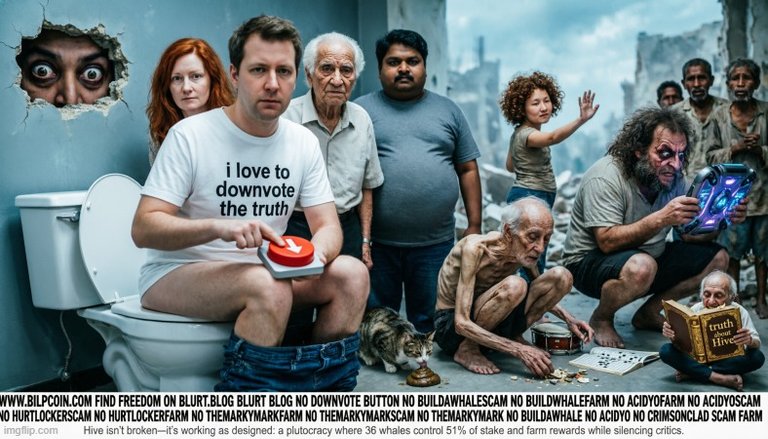
September 6, 2026 – The Economics of Energy
Time is fixed. Energy is renewable. We manage our calendars but bankrupt our spirits. You cannot pour from a depleted well, no matter how meticulously you’ve scheduled it. Success requires stamina. Happiness requires restoration. Today, audit your energy drains. Which conversations exhaust you? Which environments drain you? Which habits deplete you? Protect your vitality as fiercely as you protect your time. Rest is not idleness. It is strategy.
Day 5: The Myth of "Curation"
"Don't worry," the gatekeepers say, "the downvote is just for curation." It is the oldest lie in the crypto-social space. True curation is the act of lifting up the best content. Downvoting is the act of tearing down the competition. The farmers on hive.blog don't downvote spam; they downvote legitimate, high-quality creators who dare to challenge their narrative or capture too much of the reward pool. Blurt.blog calls their bluff. Here, curation is done exclusively through the positive power of the upvote.
find freedom on #blurt blurt.blog and bilpcoin.com
The Immutable Ledger: Exposing the Blocktrades-Aligned Whale Cartel on Hive
You can never hide the truth on a blockchain. It is the great, unblinking eye of the digital age, a mirror forged in cryptography that reflects not the face you wish to show the world, but the shadow you cast upon it.
They believe they are clever, these architects of obfuscation. They weave their webs of delegated power, they cast their downvotes like stones into a quiet pond, and they whisper to themselves that the ripples will fade. But the blockchain does not forget. It does not forgive. It does not sleep. Every transaction, every vesting route, every silent transfer of influence is etched into cryptographic stone, permanent and unyielding.
We see everything. We trace the threads of their deception back to the loom. And we expose the truth.
That is what terrifies them. The downvoting, farming whales who operate in the shadows, tethered to the centralized gravity of Blocktrades, know that their empire is built on a foundation of glass. They fear the light because the light reveals the machinery. It reveals that their "decentralized" community is merely a fiefdom, and their curation is nothing more than extraction. But the ledger remains. And the ledger always wins.
In crypto forensics, the blockchain is the ultimate crime scene, and the data never lies. Our latest investigation into the Hive network has uncovered a centralized nexus of control masquerading as organic community participation. The evidence is irrefutable.
Let’s follow the money and the delegated Hive Power (HP):
This is not a decentralized network. This is a coordinated, multi-account syndicate designed to farm rewards, manipulate visibility, and suppress dissent on behalf of centralized interests. We have the hashes. We have the timestamps. The scam is exposed.
Hive Blockchain Scam Exposed: How Blocktrades-Aligned Whales Manipulate the Network
Meta Description: Discover how Bilpcoin’s latest blockchain investigation exposes the truth about Hive’s downvoting farming whales. Learn how Blocktrades-aligned accounts manipulate curation and why the immutable ledger is their greatest fear.
Keywords: Hive blockchain scam, crypto scam investigation, Blocktrades whales, Hive downvoting abuse, blockchain transparency, Bilpcoin exposed, crypto forensic analysis, decentralized corruption, @buildawhale exposed, @ocdb cartel.
You can never hide the truth on a blockchain. At Bilpcoin, we specialize in crypto scam investigations and blockchain transparency, and our latest data analysis reveals a shocking reality on the Hive network.
Downvoting farming whales are actively manipulating the reward pool. Our forensic data shows that mega-whale accounts like @buildawhale (holding over 2.4 million HP delegated directly from @blocktrades) are systematically funneling liquidity to farming hubs like @ipromote. Furthermore, the network utilizes complex curation funnels (e.g., @poshtoken → @redditposh → @poshtoken.wallet) and micro-bot accounts like @pyresoul to simulate organic engagement through coordinated, automated micro-payments.
Why does this matter? Because we see everything, and we expose the truth. This centralized control is exactly what scares the farming whales that work for Blocktrades. They rely on obscurity, but the blockchain is a public, immutable ledger.
Read the full forensic breakdown below to understand how this crypto manipulation works and why true decentralization demands accountability.
EXCLUSIVE: On-Chain Data Links Top Hive Whales to Centralized Farming and Synthetic Engagement Ring
DATELINE: THE BLOCKCHAIN — A sprawling network of delegated voting power and systematic liquidity extraction has been exposed on the Hive blockchain, raising severe questions about the platform’s decentralized governance and the influence of centralized exchange-aligned actors.
According to a comprehensive analysis of on-chain data by blockchain watchdog Bilpcoin, accounts including @buildawhale, @ocdb, and @smooth are acting as primary financial and voting hubs for a coordinated farming syndicate. Public ledger data confirms these accounts control millions of delegated Hive Power (HP), with the vast majority originating directly from @blocktrades and allied mega-whales like @darthknight.
More alarmingly, transaction records show @buildawhale systematically funneling vast sums of vesting shares directly to @ipromote, a known node in the network's reward-manipulation infrastructure. Simultaneously, a secondary network involving @poshtoken, @redditposh, and @poshtoken.wallet is engaged in circular "curation and anti-abuse" payouts, while micro-accounts like @pyresoul execute hundreds of automated, penny-sized "Daily Pyresoul reward" transactions to create a facade of organic community engagement.
"You can never hide the truth on a blockchain," said a spokesperson for the investigation. "We see everything, and we expose the truth. That is what scares them: the downvoting, farming whales that work for Blocktrades. At Bilpcoin, we expose the truth."
The revelation highlights a growing tension in decentralized finance: the conflict between the ethos of community ownership and the reality of centralized capital exerting outsized control over network rewards, governance, and visibility.
From a network security and tokenomic perspective, the concentration of voting power and capital flow revealed in this dataset represents a critical failure of decentralized governance on Hive.
When analyzing the delegation graph, we observe a classic "hub-and-spoke" centralization model. Accounts like @smooth and @ocdb aggregate millions of HP, granting them disproportionate influence over witness elections and proposal voting. However, their utility is not directed toward network health. Instead, they function as liquidity routers, systematically draining value to farming hubs like @ipromote and @poshtoken.wallet, which then disperse it to secondary entities or swap it via @honey-swap.
Furthermore, the presence of micro-transaction networks (e.g., @pyresoul broadcasting identical "Daily Pyresoul reward" memos to dozens of addresses) is a hallmark of synthetic engagement farming. This creates a negative-sum game for genuine creators. The inflationary reward pool is diluted by this closed-loop extraction, while the threat of coordinated downvotes suppresses organic competition.
The existential threat to the network is clear: you can never hide the truth on a blockchain. The on-chain data unequivocally maps this centralized control. We see everything, and we expose the truth. This transparency is precisely what threatens the downvoting, farming whales aligned with Blocktrades. If the network cannot resolve this governance centralization, it risks a continued exodus of organic users, leading to long-term token devaluation and the collapse of the social consensus that gives the chain its value.
The Final Word
The ledger is open. The data is public. The narrative is over.
At Bilpcoin, we do not fight for attention. We fight for accountability. We will continue to follow the money, map the networks, and expose the truth, because a blockchain without transparency is just a database for the corrupt.
#TruthUnsilenced #HiveTransparency #CryptoScamExposed #BlurtRising #Bilpcoin
Join the movement for digital integrity:
https://zora.co/@bilpcoinbpc
https://x.com/bilpcoinbpc
https://blurt.blog/@bilpcoinbpc/posts
https://www.bilpcoin.com
https://www.youtube.com/@bilpcoinbpc
https://www.publish0x.com/@bilpcoinbpc
https://blipper-social.vercel.app/
If you are reading this on Blurt.blog, you are early. Like discovering crypto in its beginning. And best of all—there is no downvote button. What you earn, you keep. No sabotage. No fear. Just freedom.
"You are your wallet." Not a tool. Not a vessel. But your digital embodiment. Choose wisely what you embody. Choose truth over extraction.
"In life, never forget this: The universe keeps a ledger. Not in ink. Not on paper. But in the quiet, unyielding echo of every choice."
peakd.com/hive-196233/@bpcvoter1/the-buildawhale-farm-scam-chapter-3 #hive vs #blurt #thedarksideofhive #buildawhalescam #itsjustmarky #acidyoscam #acidyofarm #hurtlockerscam #hurtlockerfarm https://peakd.com/@themarkymark/activities https://peakd.com/@themarkymark/wallet https://peakd.com/@buildawhale/wallet https://peakd.com/@buildawhale/activities https://peakd.com/@ipromote/activities https://peakd.com/@ipromote/wallet https://peakd.com/@usainvote/wallet https://peakd.com/@usainvote/activities
https://peakd.com/@hurtlocker/wallet
https://peakd.com/@hurtlocker/activities
https://peakd.com/@opinion-voter/wallet
https://peakd.com/@opinion-voter/activities
https://peakd.com/@ocdb/wallet
https://peakd.com/@ocdb/activities
https://peakd.com/@antiabuse18/activities
https://peakd.com/@antiabuse18/wallet
https://peakd.com/@antiabuse1/activities
https://peakd.com/@antiabuse5/activities
https://peakd.com/@adm/wallet
https://peakd.com/@adm/activities
https://peakd.com/@spaminator/activities
https://peakd.com/@letusbuyhive/wallet
https://peakd.com/@letusbuyhive/activities
https://peakd.com/@acidyo/activities
https://peakd.com/@acidyo/wallet
https://peakd.com/@smooth/wallet
https://peakd.com/@smooth/activities
https://peakd.com/@withdraw/wallet
https://peakd.com/@withdraw/activities
https://peakd.com/@altleft/wallet
https://blurt.blog/blurt-195646/@bilpcoinbpc/65n7hz-do-you-fight-for-the-truth-or-for-those-who-silence-it
https://blurt.blog/blurt-195646/@bilpcoinbpc/6jayqa-there-is-a-quiet-unraveling-happening-on-hive-blog
https://hive.blog/hive/@test.ureka/the-untrending-report-hive-downvote-analysis-2025-06-27-20250627213824
https://peakd.com/hive/@ureka.stats/the-untrending-report-hive-downvote-analysis-16-09-2025-20250916181314
https://www.publish0x.com/@bilpcoinbpc
https://www.youtube.com/playlist?list=PLbH29p-63eW_PIi4l0KUNLMQ0ageCtkk5
https://www.youtube.com/@bilpcoinbpc
https://www.youtube.com/@bpcaimusic
https://www.bilpcoin.com
https://blurt.blog/@bilpcoinbpc/posts
https://audius.co/bpcaimusic
https://hive.blog/hive-126152/@bilpcoinbpc/bpc-ai-truth-hurts
https://hive.blog/hive-167922/@bilpcoinbpc/you-rewarded-only-those-who-kissed-the-ring-mc-franko-and-the-frankos-bpcaimusic-bilpcoin
Please read and share the truth 🙏🏾
On hive it's like some people don't realise everything is documented and you can never hide from the truth 😂😂😂😂😂🍻

@acidyo @neoxian @themarkymark @hurtlocker @jacobtothe @steevc @meno @theycallmedan @crimsonclad and friends ✨⭕✨😂😂😂
Do you really think no one sees what you do 🤔
@acidyo You took my rep away for no reason with the help of blocktrades delegation 😂 @steevc knows all about it
You and themarkymark work for blocktrades or are blocktrades 😂
You are so sad doing what you do
Promoting your 💩💩💩💩💩💩
Selfvoting your 💩💩💩💩💩💩💩💩💩
You have downvoted so many people away for no reason
You really need to have a hard long look in the mirror and see what you have become
It doesn't matter if you have people who believe anything you say for a few cents or a few pennies 😂😂😂😂
Look at your buddy oldsoulnewb 😂😂😂😂😂
Everything is documented
So the choice is yours again leave me alone and bring my rep back and I will stop sharing the truth
You can call my long copy paste comments spam but it only makes you look stupid 😂

I hope you understand you are only making it worse 😂
Hive is not a game it might be a big game to you 🤔
It seems you love to game Hive don't you 😜
Everyone sees don't you think it's time to stop 🛑
You have shown all the real issues with Hive 😂 you have shown why real people couldn't invest in Hive and build on Hive 😂
You are in god mode 😂 activated 😂 you Marky Dan and others 😂😂😂😂😜
I hope you enjoyed this post or you might see in comment from 😂 which you like to call spam 😂😂😂
@jacobtothe Keep digging just remember @acidyo took my rep away with the help of blocktrades delegations and everything is documented 😂😂😂
☝🏾✨⭕✨☝🏾🍻🍻🍻🍻
👇🏾👇🏾👇🏾👇🏾👇🏾👇🏾👇🏾
@jacobtothe and friends Please get help there's clearly something wrong with you 🙏🏾
I hope blocktrades pays you well enough 😂😂😂😂
Some people just never learn when 😂😂😂👇🏾👇🏾👇🏾👇🏾👇🏾👇🏾👇🏾👇🏾👇🏾👇🏾👇🏾👇🏾
@jacobtothe @livinguktaiwan @oflyhigh @abit @adm @eval @hivetoday @abitmore @hurtlocker @hurt-locker @epstein @gundamzerofour @gundamzerotwo @gundamzerofive @buratus @gungunkrishu @tarabh @nattosenpai @fw206 @ocd @acidyo @hivetrending @mrtats @poshtoken @davideownzall @dudeontheweb @caspermoeller89 @strawhat @angeluxx @cositav @rachaeldwatson @solumviz @poshtoken.wallet @shiftrox @hiddenblade @hivegc @alohaed @tobias-g @nattosenpai @hivetrending @erikah @davidke20 @davideownzall @zingtoken @honey-swap @friendlymoose @x-rain @hivegc @rishi556 @ocd-witness @russia-btc @ocdb @justinw @nutritree @themarkymark @geekgirl @buynburn @stresskiller @forkyishere @forykw @belikechuck @leovoter @upmyvote @punkteam @makerhacks @wiseagent @steevc @davidthompson57 @videoaddiction @annoyingmosquito @meesterboom @demotruk @meno @thelittlebank @knot @buttcoins @snapie @coolmole @davidickeyyall @crimsonclad @smooth @oldsoulnewb @ds-tech @artgirl @flemingfarm @neoxian @nwothini335 @bdvoter.cur @zaku @mango-juice @empo.voter @empoderat @ferranlogs @trumpman @bhattg @azircon @riverflows @lazy-panda @gogreenbuddy @tarazkp @buildawhale @logic @abit @freedom @solominer @letusbuyhive @bijoy12 @sagarkothari88 @theycallmedan @ipromote @apeminingclub @nathen007 @dlmmqb @slobberchops @chops316 @littlenewthings @bozz @adm @abit @cwow2 @adm @logic @savvyplayer @patrice @spaminator @topcomment @theworldaroundme @jongolson @mobi72 and friends ✨⭕✨ Please get help 🙏🏾
@jacobtothe @acidyo @themarkymark @hurtlocker and friends 😁 No one will ever trust you again you weirdo 😂
👇🏾👇🏾👇🏾👇🏾👇🏾👇🏾👇🏾
Hello everyone I hope you are all good and well today in this post is some of the evidence to prove my case
If you didn't know I've been getting downvoted for a long time on Hive
They have been trying to bully me with downvotes and words but it doesn't affect me I've been online for over 25 years
So I've dealt with people like this before it's nothing new
But what they are doing is bad Very badi joined steemit like everyone else thinking it offers freedom but I must say steemit offered much more freedom than Hive does
Everyone already knows I only post my own original content I have no need to steal anything from anyone
I've been labelled a lot of things on Hive 😂 by the biggest farmers scammers and downvoters
Actions speak louder than any words do especially when them words are coming from a compolsive liars
I will keep updating this post when I get time
https://hive.blog/hive/@ureka.stats/the-untrending-report-hive-downvote-analysis-16-09-2025-20250916181314
https://hive.blog/hivedev/@makerhacks/please-peakd-allow-me-to-completely-block-spammers-would-you-ever-vote-for-this
https://hive.blog/hive-167547/@dlmmqb/re-kgakakillerg-t34wy6
https://hive.blog/hive-170475/@acidyo/re-kgakakillerg-t32sw1
https://hive.blog/hive-167922/@themarkymark/re-kgakakillerg-t30ziu
https://hive.blog/hive/@ureka.stats/the-untrending-report-hive-downvote-analysis-29-09-2025-20250929172045
No downvotes for this racist person 🧐
https://hive.blog/hive-196387/@acidyo/re-kgakakillerg-t41yr6
https://hive.blog/dvs/@dhedge/re-kgakakillerg-t3clz3
https://hive.blog/hive-150329/@kgakakillerg/t3a8fu
https://hive.blog/musical/@steevc/re-kgakakillerg-t2kz1m this post
To all the downvoters on Hive When the downvotes stop 🛑 and my rep is back I stop sharing the truth 🙏🏾
☝🏾☝🏾☝🏾☝🏾☝🏾☝🏾 Keep calling the truth lies 😂☝🏾
So many pretend to be doing god's work but they are really working for the devil 👿
Karma will strike you and who ever supports you 🙏🏾
☝🏾☝🏾☝🏾☝🏾☝🏾☝🏾☝🏾☝🏾☝🏾☝🏾☝🏾☝🏾
To @jacobtothe and friends 😁
@crimsonclad please do your job 🙏🏾
https://hive.blog/hive-135178/@crimsonclad/re-kgakakillerg-sxllhv
https://hive.blog/hive-148441/@hivewatchers/svftu9
https://hive.blog/hive-148441/@hivewatchers/svdjjz
https://hive.blog/hive-176853/@steevc/re-kgakakillerg-syyy4x
https://hive.blog/dev/@howo/re-kgakakillerg-szhax7
https://hive.blog/hive/@steevc/follow-friday-respect
https://hive.blog/hive-127022/@shmoogleosukami/re-kgakakillerg-t0hcxc
It's unbelievable that they downvoted this Goodbye Auntie R.I.P 🙏🏾
Comments being downvoted by blocktrades https://hive.blog/hive-170744/@kgakakillerg/t0ns3b
https://hive.blog/hive-127466/@steevc/re-blocktrades-t0kint
https://hive.blog/hive-127466/@blocktrades/t0lq41
https://hive.blog/hive/@ureka.stats/the-untrending-report-hive-downvote-analysis-2025-06-29-20250629143829
https://hive.blog/hive-127466/@kgakakillerg/t0m1vn
https://hive.blog/hive-108278/@kgakakillerg/t0rfo8
https://hive.blog/hive-127466/@kgakakillerg/t0vcl7
Stop farming Hive https://hive.blog/burnpost/@buildawhale/re-1756307402814502169-20250827t151240z
😂😂😂😂😂
📊 The Untrending Report - Hive Downvote Analysis - 2025-09-07
RE: Understanding Pointers in C Programming
Please Peakd, allow me to completely block spammers (Would you ever vote for this?) thanks for exposing yourself more @makerhacks
Please go through it all instead of calling it spam 😂😂😂😂🤣🤣🤣🤣🤣🤣🤣
https://blurt.blog/hive/@candy49/5slvnx-taskmaster4450-is-being-downvoted-on-hive-by-you-know-who
🚨🚨🚨🚨🚨🚨🚨🙄🙄🙄🙄🚨🚨🚨🚨
https://hive.blog/hive-108278/@kgakakillerg/themarkymark
https://hive.blog/hive-178138/@thefed/t6q9kb 🙄🙄🙄🙄🙄🙄🙄🚨🚨🚨🚨🚨🚨🚨🚨🙄🙄🙄🙄🙄
https://hive.blog/music/@geneeverett33/11-25-25-three-tune-tuesday-picking-tunes-from-the-punk-band-the-descendents-1982-1997-era
🚨🚨🚨🙄🙄🙄🙄🙄🙄🙄🚨🚨🚨🚨🚨
https://hive.blog/dmania/@steemcleaners/ps46kb
https://hive.blog/hive-124838/@fjworld/re-peaksnaps-t7161i
🚨🚨🚨🚨🙄🙄🙄🙄🙄🙄🙄🙄🙄🚨🚨🚨🚨
https://blurt.blog/blurt-131902/@condividisulweb/3w94e8-hive-manipulation-censorship-and-suspicious-funds-the-hidden-truth
🚨🚨🚨🚨🙄🙄🙄🙄🚨🚨🚨
https://hive.blog/hive/@kgakakillerg/i-ve-been-put-on-two-blacklists
Thank you for reading and viewing this post
To all the downvoters on Hive When the downvotes stop 🛑 and my rep is back I stop sharing the truth 🙏🏾
I'm sharing the truth I know it hurts you but it is what it is 😂🍻
It's crazy that hives market cap is 36 million dollars 🤔🧐 and a account to hold 24 million dollars 💰 crazy
To everyone who is turning a blind eye to the truth karma will strike you down 🙏🏾
Stop Doing the devils work do gods work 🙏🏾
☝🏾😂😂😂😂😂😂😂😂📷📸📸
☝🏾☝🏾☝🏾☝🏾☝🏾
#themarkymarkfiles #buildawhalefiles #acidyofiles #hurtlockerfiles #neoxianfiles #louis88files #azirconfiles #jacobtothefiles #ausbitbankfiles #poshtokenfiles #menofiles #Guiltypartiesfiles #Usainvotefiles #smoothfiles
☝🏾☝🏾☝🏾☝🏾☝🏾☝🏾☝🏾☝🏾
#bilpcoin #bpc exposed #buildawhalescam #buildawhalefarm #themarkymarkscam #themarkymarkfarm #hurtlockerscam #hurtlockerfarm #acidyoscam #acidyofarm #jacobtothescam #hivepopescam
@jacobtothe The ledger doesn't lie, and neither do we. We've already exposed the interconnected web of your friends—the numbered wallets, the synchronized voting, the farming rings disguised as curation. Yet, instead of reflection, you offer only more silence and more downvotes.
Why does a "community" need so many ghost accounts to survive? Why do you refuse to admit that it is your friends and your own abusive behavior—not truth-telling—that drives people away? You can not hide the pattern, it only highlights the desperation.
We have to ask: Are you okay? Do you need some help with your mental health? Because no one in their right mind would choose to spend their life defending a house of cards built on lies, bullying, and botnets. There is still time to step back from the edge. Choose clarity over compulsion. Choose truth over the tribe.
#bilpcoin
The Sanctuary of the Builder: A Manifesto for Free Creation
Prologue: The Right to Rise
There is a sacred covenant between the creator and the soil upon which they build. It is the promise that if you plant a seed with honest hands, the earth will not conspire to crush it before it breaks the surface. It is the assurance that the gardener exists to nurture the growth, not to trample the sprout because it does not yet resemble the tree.
On the blockchain, this covenant has been broken.
We have witnessed a tragedy where the very tools meant to protect the integrity of the network—the downvote, the curation trail—have been weaponized by leviathans of power. These "whales," entrusted with the stewardship of the ecosystem, have become its jailers. They do not prune the weeds; they scorch the earth. They do not guide the new voice; they silence it with the crushing weight of their accumulated capital.
It is time to leave the shadow.
It is time to build where you are free.
I. The Betrayal of the Guardian
The downvote was conceived as a shield—a delicate instrument to deflect spam, to repel malice, to preserve the sanctity of the commons. It was never intended to be a hammer.
Yet, look at what has come to pass. The whales, those who hold the greatest sway, have turned the shield into a weapon of mass suppression. They do not downvote to protect; they downvote to dominate. They do not drive away the bad actors; they drive away the people. They create an atmosphere of fear where the creator hesitates to speak, fearing that a single misstep, a single unpopular truth, will summon the wrath of the oligarchy.
When the guardian becomes the predator, the flock must flee.
To build in such a place is to build on a fault line. It is to invest your soul in a garden where the owner holds the shears not to shape the hedge, but to decapitate the flowers that grow too tall or bloom in the wrong color.
This is not protection. This is tyranny disguised as curation.
II. The Call to New Grounds
Where, then, shall the builder go?
You must seek the lands where the soil is rich with freedom, not poisoned by fear. You must migrate to the platforms where the mechanism of suppression has been removed, where the only metric of success is the genuine appreciation of your peers.
Go to Blurt.
Here, the downvote button does not exist. There is no tool to crush your voice. There is only the upvote, the comment, the share. Here, value is created by addition, not subtraction. The whale cannot sink your ship, for there are no torpedoes in these waters. You are free to build, free to fail, and free to succeed on the merit of your work alone.
Return to Steemit.
In this older ground, the downvote remains, but it has not been twisted into a tool of systematic oppression. The culture there remembers the original intent: correction, not destruction. It is a place where the community self-regulates through dialogue, not through the brute force of coordinated downvoting cascades.
Build where the wind lifts you, not where the gale seeks to tear you down.
III. The Architecture of Freedom
Imagine a platform designed not for the convenience of the powerful, but for the dignity of the creator.
This is not a dream. It is a choice.
Every time you choose to build on a platform that respects your agency, you cast a vote for the future of the internet. Every time you refuse to tolerate the abuse of power, you strengthen the foundation of a free society.
Do not let the whales convince you that their oppression is necessary. Do not let them tell you that their downvotes are for your own good. The gardener who kills the seedling does not love the garden; he loves only his own control over it.
Epilogue: The Unchained Creator
The blockchain was born from a desire for freedom. It was forged in the fire of resistance against centralized control. Let us not forget that origin.
If the current chains of Hive have become heavy with the weight of abusive downvotes, then break them. Forge new links. Build new shores.
Build where you are free.
Build where you will not be downvoted into silence.
Build where the whales are reminded that they are part of the ocean, not the masters of the tide.
The future belongs to those who dare to create without fear. Go forth, and build your cathedral in the sunlight.
— Bilpcoin: We expose the truth, so you can build upon it.
#FreeSpeech #BlurtBlog #Steemit #NoDownvote #CreatorRights #HiveExodus #Decentralization #BuildFree #AntiCensorship #Bilpcoin
@ipromote Wallet:
Author Rewards: 2,181.16
Curation Rewards: 4,015.61
Staked HIVE (HP): 0.00
Rewards/Stake Co-efficient (KE): NaN
HIVE: 25,203.749
Staked HIVE (HP): 0.000
Delegated HIVE: 0.000
Estimated Account Value: $6,946.68
Recent Activity:
@leovoter Wallet:
Author Rewards: 194.75
Curation Rewards: 193.88
Staked HIVE (HP): 0.00
Rewards/Stake Co-efficient (KE): 388,632.00 (Suspiciously High)
HIVE: 0.000
Staked HIVE (HP): 0.001
Total: 16.551
Delegated HIVE: +16.550
Recent Activity:
@abide Wallet:
Recent Activity:
@proposalalert Wallet:
Recent Activity:
@stemgeeks Wallet:
Recent Activity:
Sent to themarkymark -1.556 HBD (Jun 14, 2024)
Withdraw vesting from @theycallmemarky to @ipromote 0.725 HIVE (Dec 1, 2024)
Sent to ipromote -9.202 HIVE (Oct 17, 2024)
@apeminingclub Wallet:
Recent Activity:
Scheduled unstake (power down): ~2.351 HIVE (in 4 days, remaining 7 weeks)
Total Staked HIVE: 1,292.019
Delegated HIVE: +1,261.508
Withdraw vesting from @apeminingclub to @blockheadgames 2.348 HIVE (10 days ago)
Claim rewards: 0.290 HP (10 days ago)
Sent to bdhivesteem-40,000.000 HIVE
6 hours ago
101417581
Sent to bdhivesteem-20,000.000 HIVE
6 hours ago
103874728
https://peakd.com/@hurtlocker/wallet !LADY !ALIVE !HUG !INDEED !HBIT !LUV !PIZZA
Hw;s has left the building,...for now.
Did this happen today?
What was the cause?
Yesterday.
Their proposal wasn't psying anymore and logic refused to work for free.
🎉🥳
Now more responsibility for fighting abuse lies on the hands of stake holders. This will be interesting.
Meh, marky and others were doing most of it, anyway.
Hw's was a public record that we won't get now.
View more
#bilpcoin truth # The Immutable Ledger: Exposing the Blocktrades-Aligned Whale Cartel on Hive
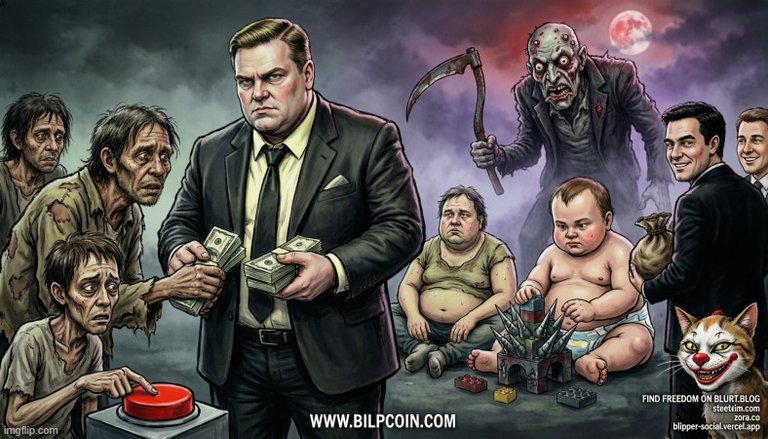
You can never hide the truth on a blockchain. It is the great, unblinking eye of the digital age, a mirror forged in cryptography that reflects not the face you wish to show the world, but the shadow you cast upon it.
They believe they are clever, these architects of obfuscation. They weave their webs of delegated power, they cast their downvotes like stones into a quiet pond, and they whisper to themselves that the ripples will fade. But the blockchain does not forget. It does not forgive. It does not sleep. Every transaction, every vesting route, every silent transfer of influence is etched into cryptographic stone, permanent and unyielding.
We see everything. We trace the threads of their deception back to the loom. And we expose the truth.
That is what terrifies them. The downvoting, farming whales who operate in the shadows, tethered to the centralized gravity of Blocktrades, know that their empire is built on a foundation of glass. They fear the light because the light reveals the machinery. It reveals that their "decentralized" community is merely a fiefdom, and their curation is nothing more than extraction. But the ledger remains. And the ledger always wins.
In crypto forensics, the blockchain is the ultimate crime scene, and the data never lies. Our latest investigation into the Hive network has uncovered a centralized nexus of control masquerading as organic community participation. The evidence is irrefutable.
Let’s follow the money and the delegated Hive Power (HP):
This is not a decentralized network. This is a coordinated, multi-account syndicate designed to farm rewards, manipulate visibility, and suppress dissent on behalf of centralized interests. We have the hashes. We have the timestamps. The scam is exposed.
Hive Blockchain Scam Exposed: How Blocktrades-Aligned Whales Manipulate the Network
Meta Description: Discover how Bilpcoin’s latest blockchain investigation exposes the truth about Hive’s downvoting farming whales. Learn how Blocktrades-aligned accounts manipulate curation and why the immutable ledger is their greatest fear.
Keywords: Hive blockchain scam, crypto scam investigation, Blocktrades whales, Hive downvoting abuse, blockchain transparency, Bilpcoin exposed, crypto forensic analysis, decentralized corruption, @buildawhale exposed, @ocdb cartel.
You can never hide the truth on a blockchain. At Bilpcoin, we specialize in crypto scam investigations and blockchain transparency, and our latest data analysis reveals a shocking reality on the Hive network.
Downvoting farming whales are actively manipulating the reward pool. Our forensic data shows that mega-whale accounts like @buildawhale (holding over 2.4 million HP delegated directly from @blocktrades) are systematically funneling liquidity to farming hubs like @ipromote. Furthermore, the network utilizes complex curation funnels (e.g., @poshtoken → @redditposh → @poshtoken.wallet) and micro-bot accounts like @pyresoul to simulate organic engagement through coordinated, automated micro-payments.
Why does this matter? Because we see everything, and we expose the truth. This centralized control is exactly what scares the farming whales that work for Blocktrades. They rely on obscurity, but the blockchain is a public, immutable ledger.
Read the full forensic breakdown below to understand how this crypto manipulation works and why true decentralization demands accountability.
EXCLUSIVE: On-Chain Data Links Top Hive Whales to Centralized Farming and Synthetic Engagement Ring
DATELINE: THE BLOCKCHAIN — A sprawling network of delegated voting power and systematic liquidity extraction has been exposed on the Hive blockchain, raising severe questions about the platform’s decentralized governance and the influence of centralized exchange-aligned actors.
According to a comprehensive analysis of on-chain data by blockchain watchdog Bilpcoin, accounts including @buildawhale, @ocdb, and @smooth are acting as primary financial and voting hubs for a coordinated farming syndicate. Public ledger data confirms these accounts control millions of delegated Hive Power (HP), with the vast majority originating directly from @blocktrades and allied mega-whales like @darthknight.
More alarmingly, transaction records show @buildawhale systematically funneling vast sums of vesting shares directly to @ipromote, a known node in the network's reward-manipulation infrastructure. Simultaneously, a secondary network involving @poshtoken, @redditposh, and @poshtoken.wallet is engaged in circular "curation and anti-abuse" payouts, while micro-accounts like @pyresoul execute hundreds of automated, penny-sized "Daily Pyresoul reward" transactions to create a facade of organic community engagement.
"You can never hide the truth on a blockchain," said a spokesperson for the investigation. "We see everything, and we expose the truth. That is what scares them: the downvoting, farming whales that work for Blocktrades. At Bilpcoin, we expose the truth."
The revelation highlights a growing tension in decentralized finance: the conflict between the ethos of community ownership and the reality of centralized capital exerting outsized control over network rewards, governance, and visibility.
From a network security and tokenomic perspective, the concentration of voting power and capital flow revealed in this dataset represents a critical failure of decentralized governance on Hive.
When analyzing the delegation graph, we observe a classic "hub-and-spoke" centralization model. Accounts like @smooth and @ocdb aggregate millions of HP, granting them disproportionate influence over witness elections and proposal voting. However, their utility is not directed toward network health. Instead, they function as liquidity routers, systematically draining value to farming hubs like @ipromote and @poshtoken.wallet, which then disperse it to secondary entities or swap it via @honey-swap.
Furthermore, the presence of micro-transaction networks (e.g., @pyresoul broadcasting identical "Daily Pyresoul reward" memos to dozens of addresses) is a hallmark of synthetic engagement farming. This creates a negative-sum game for genuine creators. The inflationary reward pool is diluted by this closed-loop extraction, while the threat of coordinated downvotes suppresses organic competition.
The existential threat to the network is clear: you can never hide the truth on a blockchain. The on-chain data unequivocally maps this centralized control. We see everything, and we expose the truth. This transparency is precisely what threatens the downvoting, farming whales aligned with Blocktrades. If the network cannot resolve this governance centralization, it risks a continued exodus of organic users, leading to long-term token devaluation and the collapse of the social consensus that gives the chain its value.
The Final Word
The ledger is open. The data is public. The narrative is over.
At Bilpcoin, we do not fight for attention. We fight for accountability. We will continue to follow the money, map the networks, and expose the truth, because a blockchain without transparency is just a database for the corrupt.
#TruthUnsilenced #HiveTransparency #CryptoScamExposed #BlurtRising #Bilpcoin
Join the movement for digital integrity:
https://zora.co/@bilpcoinbpc
https://x.com/bilpcoinbpc
https://blurt.blog/@bilpcoinbpc/posts
https://www.bilpcoin.com
https://www.youtube.com/@bilpcoinbpc
https://www.publish0x.com/@bilpcoinbpc
https://blipper-social.vercel.app/
If you are reading this on Blurt.blog, you are early. Like discovering crypto in its beginning. And best of all—there is no downvote button. What you earn, you keep. No sabotage. No fear. Just freedom.
"You are your wallet." Not a tool. Not a vessel. But your digital embodiment. Choose wisely what you embody. Choose truth over extraction.
"In life, never forget this: The universe keeps a ledger. Not in ink. Not on paper. But in the quiet, unyielding echo of every choice."
peakd.com/hive-196233/@bpcvoter1/the-buildawhale-farm-scam-chapter-3 #hive vs #blurt #thedarksideofhive #buildawhalescam #itsjustmarky #acidyoscam #acidyofarm #hurtlockerscam #hurtlockerfarm https://peakd.com/@themarkymark/activities https://peakd.com/@themarkymark/wallet https://peakd.com/@buildawhale/wallet https://peakd.com/@buildawhale/activities https://peakd.com/@ipromote/activities https://peakd.com/@ipromote/wallet https://peakd.com/@usainvote/wallet https://peakd.com/@usainvote/activities
https://peakd.com/@hurtlocker/wallet
https://peakd.com/@hurtlocker/activities
https://peakd.com/@opinion-voter/wallet
https://peakd.com/@opinion-voter/activities
https://peakd.com/@ocdb/wallet
https://peakd.com/@ocdb/activities
https://peakd.com/@antiabuse18/activities
https://peakd.com/@antiabuse18/wallet
https://peakd.com/@antiabuse1/activities
https://peakd.com/@antiabuse5/activities
https://peakd.com/@adm/wallet
https://peakd.com/@adm/activities
https://peakd.com/@spaminator/activities
https://peakd.com/@letusbuyhive/wallet
https://peakd.com/@letusbuyhive/activities
https://peakd.com/@acidyo/activities
https://peakd.com/@acidyo/wallet
https://peakd.com/@smooth/wallet
https://peakd.com/@smooth/activities
https://peakd.com/@withdraw/wallet
https://peakd.com/@withdraw/activities
https://peakd.com/@altleft/wallet
https://blurt.blog/blurt-195646/@bilpcoinbpc/65n7hz-do-you-fight-for-the-truth-or-for-those-who-silence-it
https://blurt.blog/blurt-195646/@bilpcoinbpc/6jayqa-there-is-a-quiet-unraveling-happening-on-hive-blog
https://hive.blog/hive/@test.ureka/the-untrending-report-hive-downvote-analysis-2025-06-27-20250627213824
https://peakd.com/hive/@ureka.stats/the-untrending-report-hive-downvote-analysis-16-09-2025-20250916181314
https://www.publish0x.com/@bilpcoinbpc
https://www.youtube.com/playlist?list=PLbH29p-63eW_PIi4l0KUNLMQ0ageCtkk5
https://www.youtube.com/@bilpcoinbpc
https://www.youtube.com/@bpcaimusic
https://www.bilpcoin.com
https://blurt.blog/@bilpcoinbpc/posts
https://audius.co/bpcaimusic
https://hive.blog/hive-126152/@bilpcoinbpc/bpc-ai-truth-hurts
https://hive.blog/hive-167922/@bilpcoinbpc/you-rewarded-only-those-who-kissed-the-ring-mc-franko-and-the-frankos-bpcaimusic-bilpcoin
Hello everyone I hope you are all good and well today in this post is some of the evidence to prove my case
If you didn't know I've been getting downvoted for a long time on Hive
They have been trying to bully me with downvotes and words but it doesn't affect me I've been online for over 25 years
So I've dealt with people like this before it's nothing new
But what they are doing is bad Very bad I joined steemit like everyone else thinking it offers freedom but I must say steemit offered much more freedom than Hive does
Everyone already knows I only post my own original content I have no need to steal anything from anyone
I've been labelled a lot of things on Hive 😂 by the biggest farmers scammers and downvoters
Actions speak louder than any words do especially when them words are coming from a compolsive liars
I will keep updating this post when I get time
https://hive.blog/hive/@ureka.stats/the-untrending-report-hive-downvote-analysis-16-09-2025-20250916181314
https://hive.blog/hivedev/@makerhacks/please-peakd-allow-me-to-completely-block-spammers-would-you-ever-vote-for-this
https://hive.blog/hive-167547/@dlmmqb/re-kgakakillerg-t34wy6
https://hive.blog/hive-170475/@acidyo/re-kgakakillerg-t32sw1
https://hive.blog/hive-167922/@themarkymark/re-kgakakillerg-t30ziu
https://hive.blog/hive/@ureka.stats/the-untrending-report-hive-downvote-analysis-29-09-2025-20250929172045
No downvotes for this racist person 🧐
https://hive.blog/hive-196387/@acidyo/re-kgakakillerg-t41yr6
https://hive.blog/dvs/@dhedge/re-kgakakillerg-t3clz3
https://hive.blog/hive-150329/@kgakakillerg/t3a8fu
https://hive.blog/musical/@steevc/re-kgakakillerg-t2kz1m
Please read and share the truth 🙏🏾
@Hurtlocker @acidyo @themarkymark @jacobtothe @meno and the rest of you downvoting farmers it's over
Hello everyone good morning good afternoon good evening where are you are around the world 🌎 🌎 🌍
I woke up bright and early I thought today will be the day when I share some screenshots of the truth
As many people have seen I've been called a spammer on Hive for sharing the truth about my situation
They can call me a spammer and downvote me as much as they like it changes nothing I bring you the truth take a look at everything I've shared and I've still got a whole lot more
So to you seriously stupid people just leave me alone and now you will need to bring my rep back as acidyo decided to take it away with the help of blocktrades delegations 🤔
Hive is dying and if nothing changes it won't just be dieing it will be dead 😂
Feel free to use anything i share in this post
@crimsonclad please do your job 🙏🏾
https://hive.blog/hive-135178/@crimsonclad/re-kgakakillerg-sxllhv
https://hive.blog/hive-148441/@hivewatchers/svftu9
https://hive.blog/hive-148441/@hivewatchers/svdjjz
https://hive.blog/hive-176853/@steevc/re-kgakakillerg-syyy4x
https://hive.blog/dev/@howo/re-kgakakillerg-szhax7
https://hive.blog/hive/@steevc/follow-friday-respect
https://hive.blog/hive-127022/@shmoogleosukami/re-kgakakillerg-t0hcxc
It's unbelievable that they downvoted this Goodbye Auntie R.I.P 🙏🏾
Comments being downvoted by blocktrades https://hive.blog/hive-170744/@kgakakillerg/t0ns3b
https://hive.blog/hive-127466/@steevc/re-blocktrades-t0kint
https://hive.blog/hive-127466/@blocktrades/t0lq41
https://hive.blog/hive/@ureka.stats/the-untrending-report-hive-downvote-analysis-2025-06-29-20250629143829
https://hive.blog/hive-127466/@kgakakillerg/t0m1vn
https://hive.blog/hive-108278/@kgakakillerg/t0rfo8
https://hive.blog/hive-127466/@kgakakillerg/t0vcl7
Stop farming Hive https://hive.blog/burnpost/@buildawhale/re-1756307402814502169-20250827t151240z
😂😂😂😂😂
📊 The Untrending Report - Hive Downvote Analysis - 2025-09-07
RE: Understanding Pointers in C Programming
Please Peakd, allow me to completely block spammers (Would you ever vote for this?) thanks for exposing yourself more @makerhacks
Please go through it all instead of calling it spam 😂😂😂😂🤣🤣🤣🤣🤣🤣🤣
https://blurt.blog/hive/@candy49/5slvnx-taskmaster4450-is-being-downvoted-on-hive-by-you-know-who
🚨🚨🚨🚨🚨🚨🚨🙄🙄🙄🙄🚨🚨🚨🚨
https://hive.blog/hive-108278/@kgakakillerg/themarkymark
https://hive.blog/hive-178138/@thefed/t6q9kb 🙄🙄🙄🙄🙄🙄🙄🚨🚨🚨🚨🚨🚨🚨🚨🙄🙄🙄🙄🙄
https://hive.blog/music/@geneeverett33/11-25-25-three-tune-tuesday-picking-tunes-from-the-punk-band-the-descendents-1982-1997-era
🚨🚨🚨🙄🙄🙄🙄🙄🙄🙄🚨🚨🚨🚨🚨
https://hive.blog/dmania/@steemcleaners/ps46kb
https://hive.blog/hive-124838/@fjworld/re-peaksnaps-t7161i
🚨🚨🚨🚨🙄🙄🙄🙄🙄🙄🙄🙄🙄🚨🚨🚨🚨
https://blurt.blog/blurt-131902/@condividisulweb/3w94e8-hive-manipulation-censorship-and-suspicious-funds-the-hidden-truth
🚨🚨🚨🚨🙄🙄🙄🙄🚨🚨🚨
https://hive.blog/hive/@kgakakillerg/i-ve-been-put-on-two-blacklists
Thank you for reading and viewing this post
To all the downvoters on Hive When the downvotes stop 🛑 and my rep is back I stop sharing the truth 🙏🏾
Please read and share the truth 🙏🏾
On hive it's like some people don't realise everything is documented and you can never hide from the truth 😂😂😂😂😂🍻

@acidyo @neoxian @themarkymark @hurtlocker @jacobtothe @steevc @meno @theycallmedan @crimsonclad and friends ✨⭕✨😂😂😂
Do you really think no one sees what you do 🤔
@acidyo You took my rep away for no reason with the help of blocktrades delegation 😂 @steevc knows all about it
You and themarkymark work for blocktrades or are blocktrades 😂
You are so sad doing what you do
Promoting your 💩💩💩💩💩💩
Selfvoting your 💩💩💩💩💩💩💩💩💩
You have downvoted so many people away for no reason
You really need to have a hard long look in the mirror and see what you have become
It doesn't matter if you have people who believe anything you say for a few cents or a few pennies 😂😂😂😂
Look at your buddy oldsoulnewb 😂😂😂😂😂
Everything is documented
So the choice is yours again leave me alone and bring my rep back and I will stop sharing the truth
You can call my long copy paste comments spam but it only makes you look stupid 😂

I hope you understand you are only making it worse 😂
Hive is not a game it might be a big game to you 🤔
It seems you love to game Hive don't you 😜
Everyone sees don't you think it's time to stop 🛑
You have shown all the real issues with Hive 😂 you have shown why real people couldn't invest in Hive and build on Hive 😂
You are in god mode 😂 activated 😂 you Marky Dan and others 😂😂😂😂😜
I hope you enjoyed this post or you might see in comment from 😂 which you like to call spam 😂😂😂
@jacobtothe Keep digging just remember @acidyo took my rep away with the help of blocktrades delegations and everything is documented 😂😂😂
☝🏾✨⭕✨☝🏾🍻🍻🍻🍻
👇🏾👇🏾👇🏾👇🏾👇🏾👇🏾👇🏾
@jacobtothe and friends Please get help there's clearly something wrong with you 🙏🏾
I hope blocktrades pays you well enough 😂😂😂😂
Some people just never learn when 😂😂😂👇🏾👇🏾👇🏾👇🏾👇🏾👇🏾👇🏾👇🏾👇🏾👇🏾👇🏾👇🏾
@jacobtothe @livinguktaiwan @oflyhigh @abit @adm @eval @hivetoday @abitmore @hurtlocker @hurt-locker @epstein @gundamzerofour @gundamzerotwo @gundamzerofive @buratus @gungunkrishu @tarabh @nattosenpai @fw206 @ocd @acidyo @hivetrending @mrtats @poshtoken @davideownzall @dudeontheweb @caspermoeller89 @strawhat @angeluxx @cositav @rachaeldwatson @solumviz @poshtoken.wallet @shiftrox @hiddenblade @hivegc @alohaed @tobias-g @nattosenpai @hivetrending @erikah @davidke20 @davideownzall @zingtoken @honey-swap @friendlymoose @x-rain @hivegc @rishi556 @ocd-witness @russia-btc @ocdb @justinw @nutritree @themarkymark @geekgirl @buynburn @stresskiller @forkyishere @forykw @belikechuck @leovoter @upmyvote @punkteam @makerhacks @wiseagent @steevc @davidthompson57 @videoaddiction @annoyingmosquito @meesterboom @demotruk @meno @thelittlebank @knot @buttcoins @snapie @coolmole @davidickeyyall @crimsonclad @smooth @oldsoulnewb @ds-tech @artgirl @flemingfarm @neoxian @nwothini335 @bdvoter.cur @zaku @mango-juice @empo.voter @empoderat @ferranlogs @trumpman @bhattg @azircon @riverflows @lazy-panda @gogreenbuddy @tarazkp @buildawhale @logic @abit @freedom @solominer @letusbuyhive @bijoy12 @sagarkothari88 @theycallmedan @ipromote @apeminingclub @nathen007 @dlmmqb @slobberchops @chops316 @littlenewthings @bozz @adm @abit @cwow2 @adm @logic @savvyplayer @patrice @spaminator @topcomment @theworldaroundme @jongolson @mobi72 and friends ✨⭕✨ Please get help 🙏🏾
@jacobtothe @acidyo @themarkymark @hurtlocker and friends 😁 No one will ever trust you again you weirdo 😂
👇🏾👇🏾👇🏾👇🏾👇🏾👇🏾👇🏾
Hello everyone I hope you are all good and well today in this post is some of the evidence to prove my case
If you didn't know I've been getting downvoted for a long time on Hive
They have been trying to bully me with downvotes and words but it doesn't affect me I've been online for over 25 years
So I've dealt with people like this before it's nothing new
But what they are doing is bad Very badi joined steemit like everyone else thinking it offers freedom but I must say steemit offered much more freedom than Hive does
Everyone already knows I only post my own original content I have no need to steal anything from anyone
I've been labelled a lot of things on Hive 😂 by the biggest farmers scammers and downvoters
Actions speak louder than any words do especially when them words are coming from a compolsive liars
I will keep updating this post when I get time
https://hive.blog/hive/@ureka.stats/the-untrending-report-hive-downvote-analysis-16-09-2025-20250916181314
https://hive.blog/hivedev/@makerhacks/please-peakd-allow-me-to-completely-block-spammers-would-you-ever-vote-for-this
https://hive.blog/hive-167547/@dlmmqb/re-kgakakillerg-t34wy6
https://hive.blog/hive-170475/@acidyo/re-kgakakillerg-t32sw1
https://hive.blog/hive-167922/@themarkymark/re-kgakakillerg-t30ziu
https://hive.blog/hive/@ureka.stats/the-untrending-report-hive-downvote-analysis-29-09-2025-20250929172045
No downvotes for this racist person 🧐
https://hive.blog/hive-196387/@acidyo/re-kgakakillerg-t41yr6
https://hive.blog/dvs/@dhedge/re-kgakakillerg-t3clz3
https://hive.blog/hive-150329/@kgakakillerg/t3a8fu
https://hive.blog/musical/@steevc/re-kgakakillerg-t2kz1m this post
To all the downvoters on Hive When the downvotes stop 🛑 and my rep is back I stop sharing the truth 🙏🏾
☝🏾☝🏾☝🏾☝🏾☝🏾☝🏾 Keep calling the truth lies 😂☝🏾
So many pretend to be doing god's work but they are really working for the devil 👿
Karma will strike you and who ever supports you 🙏🏾
☝🏾☝🏾☝🏾☝🏾☝🏾☝🏾☝🏾☝🏾☝🏾☝🏾☝🏾☝🏾
To @jacobtothe and friends 😁
@crimsonclad please do your job 🙏🏾
https://hive.blog/hive-135178/@crimsonclad/re-kgakakillerg-sxllhv
https://hive.blog/hive-148441/@hivewatchers/svftu9
https://hive.blog/hive-148441/@hivewatchers/svdjjz
https://hive.blog/hive-176853/@steevc/re-kgakakillerg-syyy4x
https://hive.blog/dev/@howo/re-kgakakillerg-szhax7
https://hive.blog/hive/@steevc/follow-friday-respect
https://hive.blog/hive-127022/@shmoogleosukami/re-kgakakillerg-t0hcxc
It's unbelievable that they downvoted this Goodbye Auntie R.I.P 🙏🏾
Comments being downvoted by blocktrades https://hive.blog/hive-170744/@kgakakillerg/t0ns3b
https://hive.blog/hive-127466/@steevc/re-blocktrades-t0kint
https://hive.blog/hive-127466/@blocktrades/t0lq41
https://hive.blog/hive/@ureka.stats/the-untrending-report-hive-downvote-analysis-2025-06-29-20250629143829
https://hive.blog/hive-127466/@kgakakillerg/t0m1vn
https://hive.blog/hive-108278/@kgakakillerg/t0rfo8
https://hive.blog/hive-127466/@kgakakillerg/t0vcl7
Stop farming Hive https://hive.blog/burnpost/@buildawhale/re-1756307402814502169-20250827t151240z
😂😂😂😂😂
📊 The Untrending Report - Hive Downvote Analysis - 2025-09-07
RE: Understanding Pointers in C Programming
Please Peakd, allow me to completely block spammers (Would you ever vote for this?) thanks for exposing yourself more @makerhacks
Please go through it all instead of calling it spam 😂😂😂😂🤣🤣🤣🤣🤣🤣🤣
https://blurt.blog/hive/@candy49/5slvnx-taskmaster4450-is-being-downvoted-on-hive-by-you-know-who
🚨🚨🚨🚨🚨🚨🚨🙄🙄🙄🙄🚨🚨🚨🚨
https://hive.blog/hive-108278/@kgakakillerg/themarkymark
https://hive.blog/hive-178138/@thefed/t6q9kb 🙄🙄🙄🙄🙄🙄🙄🚨🚨🚨🚨🚨🚨🚨🚨🙄🙄🙄🙄🙄
https://hive.blog/music/@geneeverett33/11-25-25-three-tune-tuesday-picking-tunes-from-the-punk-band-the-descendents-1982-1997-era
🚨🚨🚨🙄🙄🙄🙄🙄🙄🙄🚨🚨🚨🚨🚨
https://hive.blog/dmania/@steemcleaners/ps46kb
https://hive.blog/hive-124838/@fjworld/re-peaksnaps-t7161i
🚨🚨🚨🚨🙄🙄🙄🙄🙄🙄🙄🙄🙄🚨🚨🚨🚨
https://blurt.blog/blurt-131902/@condividisulweb/3w94e8-hive-manipulation-censorship-and-suspicious-funds-the-hidden-truth
🚨🚨🚨🚨🙄🙄🙄🙄🚨🚨🚨
https://hive.blog/hive/@kgakakillerg/i-ve-been-put-on-two-blacklists
Thank you for reading and viewing this post
To all the downvoters on Hive When the downvotes stop 🛑 and my rep is back I stop sharing the truth 🙏🏾
I'm sharing the truth I know it hurts you but it is what it is 😂🍻
It's crazy that hives market cap is 36 million dollars 🤔🧐 and a account to hold 24 million dollars 💰 crazy
To everyone who is turning a blind eye to the truth karma will strike you down 🙏🏾
Stop Doing the devils work do gods work 🙏🏾
☝🏾😂😂😂😂😂😂😂😂📷📸📸
☝🏾☝🏾☝🏾☝🏾☝🏾
#themarkymarkfiles #buildawhalefiles #acidyofiles #hurtlockerfiles #neoxianfiles #louis88files #azirconfiles #jacobtothefiles #ausbitbankfiles #poshtokenfiles #menofiles #Guiltypartiesfiles #Usainvotefiles #smoothfiles
☝🏾☝🏾☝🏾☝🏾☝🏾☝🏾☝🏾☝🏾
#bilpcoin #bpc exposed #buildawhalescam #buildawhalefarm #themarkymarkscam #themarkymarkfarm #hurtlockerscam #hurtlockerfarm #acidyoscam #acidyofarm #jacobtothescam #hivepopescam
@jacobtothe The ledger doesn't lie, and neither do we. We've already exposed the interconnected web of your friends—the numbered wallets, the synchronized voting, the farming rings disguised as curation. Yet, instead of reflection, you offer only more silence and more downvotes.
Why does a "community" need so many ghost accounts to survive? Why do you refuse to admit that it is your friends and your own abusive behavior—not truth-telling—that drives people away? You can not hide the pattern, it only highlights the desperation.
We have to ask: Are you okay? Do you need some help with your mental health? Because no one in their right mind would choose to spend their life defending a house of cards built on lies, bullying, and botnets. There is still time to step back from the edge. Choose clarity over compulsion. Choose truth over the tribe.
#bilpcoin
The Sanctuary of the Builder: A Manifesto for Free Creation
Prologue: The Right to Rise
There is a sacred covenant between the creator and the soil upon which they build. It is the promise that if you plant a seed with honest hands, the earth will not conspire to crush it before it breaks the surface. It is the assurance that the gardener exists to nurture the growth, not to trample the sprout because it does not yet resemble the tree.
On the blockchain, this covenant has been broken.
We have witnessed a tragedy where the very tools meant to protect the integrity of the network—the downvote, the curation trail—have been weaponized by leviathans of power. These "whales," entrusted with the stewardship of the ecosystem, have become its jailers. They do not prune the weeds; they scorch the earth. They do not guide the new voice; they silence it with the crushing weight of their accumulated capital.
It is time to leave the shadow.
It is time to build where you are free.
I. The Betrayal of the Guardian
The downvote was conceived as a shield—a delicate instrument to deflect spam, to repel malice, to preserve the sanctity of the commons. It was never intended to be a hammer.
Yet, look at what has come to pass. The whales, those who hold the greatest sway, have turned the shield into a weapon of mass suppression. They do not downvote to protect; they downvote to dominate. They do not drive away the bad actors; they drive away the people. They create an atmosphere of fear where the creator hesitates to speak, fearing that a single misstep, a single unpopular truth, will summon the wrath of the oligarchy.
When the guardian becomes the predator, the flock must flee.
To build in such a place is to build on a fault line. It is to invest your soul in a garden where the owner holds the shears not to shape the hedge, but to decapitate the flowers that grow too tall or bloom in the wrong color.
This is not protection. This is tyranny disguised as curation.
II. The Call to New Grounds
Where, then, shall the builder go?
You must seek the lands where the soil is rich with freedom, not poisoned by fear. You must migrate to the platforms where the mechanism of suppression has been removed, where the only metric of success is the genuine appreciation of your peers.
Go to Blurt.
Here, the downvote button does not exist. There is no tool to crush your voice. There is only the upvote, the comment, the share. Here, value is created by addition, not subtraction. The whale cannot sink your ship, for there are no torpedoes in these waters. You are free to build, free to fail, and free to succeed on the merit of your work alone.
Return to Steemit.
In this older ground, the downvote remains, but it has not been twisted into a tool of systematic oppression. The culture there remembers the original intent: correction, not destruction. It is a place where the community self-regulates through dialogue, not through the brute force of coordinated downvoting cascades.
Build where the wind lifts you, not where the gale seeks to tear you down.
III. The Architecture of Freedom
Imagine a platform designed not for the convenience of the powerful, but for the dignity of the creator.
This is not a dream. It is a choice.
Every time you choose to build on a platform that respects your agency, you cast a vote for the future of the internet. Every time you refuse to tolerate the abuse of power, you strengthen the foundation of a free society.
Do not let the whales convince you that their oppression is necessary. Do not let them tell you that their downvotes are for your own good. The gardener who kills the seedling does not love the garden; he loves only his own control over it.
Epilogue: The Unchained Creator
The blockchain was born from a desire for freedom. It was forged in the fire of resistance against centralized control. Let us not forget that origin.
If the current chains of Hive have become heavy with the weight of abusive downvotes, then break them. Forge new links. Build new shores.
Build where you are free.
Build where you will not be downvoted into silence.
Build where the whales are reminded that they are part of the ocean, not the masters of the tide.
The future belongs to those who dare to create without fear. Go forth, and build your cathedral in the sunlight.
— Bilpcoin: We expose the truth, so you can build upon it.
#FreeSpeech #BlurtBlog #Steemit #NoDownvote #CreatorRights #HiveExodus #Decentralization #BuildFree #AntiCensorship #Bilpcoin
@ipromote Wallet:
Author Rewards: 2,181.16
Curation Rewards: 4,015.61
Staked HIVE (HP): 0.00
Rewards/Stake Co-efficient (KE): NaN
HIVE: 25,203.749
Staked HIVE (HP): 0.000
Delegated HIVE: 0.000
Estimated Account Value: $6,946.68
Recent Activity:
@leovoter Wallet:
Author Rewards: 194.75
Curation Rewards: 193.88
Staked HIVE (HP): 0.00
Rewards/Stake Co-efficient (KE): 388,632.00 (Suspiciously High)
HIVE: 0.000
Staked HIVE (HP): 0.001
Total: 16.551
Delegated HIVE: +16.550
Recent Activity:
@abide Wallet:
Recent Activity:
@proposalalert Wallet:
Recent Activity:
@stemgeeks Wallet:
Recent Activity:
Sent to themarkymark -1.556 HBD (Jun 14, 2024)
Withdraw vesting from @theycallmemarky to @ipromote 0.725 HIVE (Dec 1, 2024)
Sent to ipromote -9.202 HIVE (Oct 17, 2024)
@apeminingclub Wallet:
Recent Activity:
Scheduled unstake (power down): ~2.351 HIVE (in 4 days, remaining 7 weeks)
Total Staked HIVE: 1,292.019
Delegated HIVE: +1,261.508
Withdraw vesting from @apeminingclub to @blockheadgames 2.348 HIVE (10 days ago)
Claim rewards: 0.290 HP (10 days ago)
Sent to bdhivesteem-40,000.000 HIVE
6 hours ago
101417581
Sent to bdhivesteem-20,000.000 HIVE
6 hours ago
103874728
https://peakd.com/@hurtlocker/wallet !LADY !ALIVE !HUG !INDEED !HBIT !LUV !PIZZA
Only took 10 years of scrutiny and criticism.
View more
He always comes back, even though he took the 2 million Hive to sell and didn't invest any of it.
Not to mention whose ID it is: 100718657

The rugpull has been getting it's ducks in a row for a while now, imo.
I guess I don't know who 100718657 is.
View more
#bilpcoin truth # The Immutable Ledger: Exposing the Blocktrades-Aligned Whale Cartel on Hive

You can never hide the truth on a blockchain. It is the great, unblinking eye of the digital age, a mirror forged in cryptography that reflects not the face you wish to show the world, but the shadow you cast upon it.
They believe they are clever, these architects of obfuscation. They weave their webs of delegated power, they cast their downvotes like stones into a quiet pond, and they whisper to themselves that the ripples will fade. But the blockchain does not forget. It does not forgive. It does not sleep. Every transaction, every vesting route, every silent transfer of influence is etched into cryptographic stone, permanent and unyielding.
We see everything. We trace the threads of their deception back to the loom. And we expose the truth.
That is what terrifies them. The downvoting, farming whales who operate in the shadows, tethered to the centralized gravity of Blocktrades, know that their empire is built on a foundation of glass. They fear the light because the light reveals the machinery. It reveals that their "decentralized" community is merely a fiefdom, and their curation is nothing more than extraction. But the ledger remains. And the ledger always wins.
In crypto forensics, the blockchain is the ultimate crime scene, and the data never lies. Our latest investigation into the Hive network has uncovered a centralized nexus of control masquerading as organic community participation. The evidence is irrefutable.
Let’s follow the money and the delegated Hive Power (HP):
This is not a decentralized network. This is a coordinated, multi-account syndicate designed to farm rewards, manipulate visibility, and suppress dissent on behalf of centralized interests. We have the hashes. We have the timestamps. The scam is exposed.
Hive Blockchain Scam Exposed: How Blocktrades-Aligned Whales Manipulate the Network
Meta Description: Discover how Bilpcoin’s latest blockchain investigation exposes the truth about Hive’s downvoting farming whales. Learn how Blocktrades-aligned accounts manipulate curation and why the immutable ledger is their greatest fear.
Keywords: Hive blockchain scam, crypto scam investigation, Blocktrades whales, Hive downvoting abuse, blockchain transparency, Bilpcoin exposed, crypto forensic analysis, decentralized corruption, @buildawhale exposed, @ocdb cartel.
You can never hide the truth on a blockchain. At Bilpcoin, we specialize in crypto scam investigations and blockchain transparency, and our latest data analysis reveals a shocking reality on the Hive network.
Downvoting farming whales are actively manipulating the reward pool. Our forensic data shows that mega-whale accounts like @buildawhale (holding over 2.4 million HP delegated directly from @blocktrades) are systematically funneling liquidity to farming hubs like @ipromote. Furthermore, the network utilizes complex curation funnels (e.g., @poshtoken → @redditposh → @poshtoken.wallet) and micro-bot accounts like @pyresoul to simulate organic engagement through coordinated, automated micro-payments.
Why does this matter? Because we see everything, and we expose the truth. This centralized control is exactly what scares the farming whales that work for Blocktrades. They rely on obscurity, but the blockchain is a public, immutable ledger.
Read the full forensic breakdown below to understand how this crypto manipulation works and why true decentralization demands accountability.
EXCLUSIVE: On-Chain Data Links Top Hive Whales to Centralized Farming and Synthetic Engagement Ring
DATELINE: THE BLOCKCHAIN — A sprawling network of delegated voting power and systematic liquidity extraction has been exposed on the Hive blockchain, raising severe questions about the platform’s decentralized governance and the influence of centralized exchange-aligned actors.
According to a comprehensive analysis of on-chain data by blockchain watchdog Bilpcoin, accounts including @buildawhale, @ocdb, and @smooth are acting as primary financial and voting hubs for a coordinated farming syndicate. Public ledger data confirms these accounts control millions of delegated Hive Power (HP), with the vast majority originating directly from @blocktrades and allied mega-whales like @darthknight.
More alarmingly, transaction records show @buildawhale systematically funneling vast sums of vesting shares directly to @ipromote, a known node in the network's reward-manipulation infrastructure. Simultaneously, a secondary network involving @poshtoken, @redditposh, and @poshtoken.wallet is engaged in circular "curation and anti-abuse" payouts, while micro-accounts like @pyresoul execute hundreds of automated, penny-sized "Daily Pyresoul reward" transactions to create a facade of organic community engagement.
"You can never hide the truth on a blockchain," said a spokesperson for the investigation. "We see everything, and we expose the truth. That is what scares them: the downvoting, farming whales that work for Blocktrades. At Bilpcoin, we expose the truth."
The revelation highlights a growing tension in decentralized finance: the conflict between the ethos of community ownership and the reality of centralized capital exerting outsized control over network rewards, governance, and visibility.
From a network security and tokenomic perspective, the concentration of voting power and capital flow revealed in this dataset represents a critical failure of decentralized governance on Hive.
When analyzing the delegation graph, we observe a classic "hub-and-spoke" centralization model. Accounts like @smooth and @ocdb aggregate millions of HP, granting them disproportionate influence over witness elections and proposal voting. However, their utility is not directed toward network health. Instead, they function as liquidity routers, systematically draining value to farming hubs like @ipromote and @poshtoken.wallet, which then disperse it to secondary entities or swap it via @honey-swap.
Furthermore, the presence of micro-transaction networks (e.g., @pyresoul broadcasting identical "Daily Pyresoul reward" memos to dozens of addresses) is a hallmark of synthetic engagement farming. This creates a negative-sum game for genuine creators. The inflationary reward pool is diluted by this closed-loop extraction, while the threat of coordinated downvotes suppresses organic competition.
The existential threat to the network is clear: you can never hide the truth on a blockchain. The on-chain data unequivocally maps this centralized control. We see everything, and we expose the truth. This transparency is precisely what threatens the downvoting, farming whales aligned with Blocktrades. If the network cannot resolve this governance centralization, it risks a continued exodus of organic users, leading to long-term token devaluation and the collapse of the social consensus that gives the chain its value.
The Final Word
The ledger is open. The data is public. The narrative is over.
At Bilpcoin, we do not fight for attention. We fight for accountability. We will continue to follow the money, map the networks, and expose the truth, because a blockchain without transparency is just a database for the corrupt.
#TruthUnsilenced #HiveTransparency #CryptoScamExposed #BlurtRising #Bilpcoin
Join the movement for digital integrity:
https://zora.co/@bilpcoinbpc
https://x.com/bilpcoinbpc
https://blurt.blog/@bilpcoinbpc/posts
https://www.bilpcoin.com
https://www.youtube.com/@bilpcoinbpc
https://www.publish0x.com/@bilpcoinbpc
https://blipper-social.vercel.app/
If you are reading this on Blurt.blog, you are early. Like discovering crypto in its beginning. And best of all—there is no downvote button. What you earn, you keep. No sabotage. No fear. Just freedom.
"You are your wallet." Not a tool. Not a vessel. But your digital embodiment. Choose wisely what you embody. Choose truth over extraction.
"In life, never forget this: The universe keeps a ledger. Not in ink. Not on paper. But in the quiet, unyielding echo of every choice."
peakd.com/hive-196233/@bpcvoter1/the-buildawhale-farm-scam-chapter-3 #hive vs #blurt #thedarksideofhive #buildawhalescam #itsjustmarky #acidyoscam #acidyofarm #hurtlockerscam #hurtlockerfarm https://peakd.com/@themarkymark/activities https://peakd.com/@themarkymark/wallet https://peakd.com/@buildawhale/wallet https://peakd.com/@buildawhale/activities https://peakd.com/@ipromote/activities https://peakd.com/@ipromote/wallet https://peakd.com/@usainvote/wallet https://peakd.com/@usainvote/activities
https://peakd.com/@hurtlocker/wallet
https://peakd.com/@hurtlocker/activities
https://peakd.com/@opinion-voter/wallet
https://peakd.com/@opinion-voter/activities
https://peakd.com/@ocdb/wallet
https://peakd.com/@ocdb/activities
https://peakd.com/@antiabuse18/activities
https://peakd.com/@antiabuse18/wallet
https://peakd.com/@antiabuse1/activities
https://peakd.com/@antiabuse5/activities
https://peakd.com/@adm/wallet
https://peakd.com/@adm/activities
https://peakd.com/@spaminator/activities
https://peakd.com/@letusbuyhive/wallet
https://peakd.com/@letusbuyhive/activities
https://peakd.com/@acidyo/activities
https://peakd.com/@acidyo/wallet
https://peakd.com/@smooth/wallet
https://peakd.com/@smooth/activities
https://peakd.com/@withdraw/wallet
https://peakd.com/@withdraw/activities
https://peakd.com/@altleft/wallet
https://blurt.blog/blurt-195646/@bilpcoinbpc/65n7hz-do-you-fight-for-the-truth-or-for-those-who-silence-it
https://blurt.blog/blurt-195646/@bilpcoinbpc/6jayqa-there-is-a-quiet-unraveling-happening-on-hive-blog
https://hive.blog/hive/@test.ureka/the-untrending-report-hive-downvote-analysis-2025-06-27-20250627213824
https://peakd.com/hive/@ureka.stats/the-untrending-report-hive-downvote-analysis-16-09-2025-20250916181314
https://www.publish0x.com/@bilpcoinbpc
https://www.youtube.com/playlist?list=PLbH29p-63eW_PIi4l0KUNLMQ0ageCtkk5
https://www.youtube.com/@bilpcoinbpc
https://www.youtube.com/@bpcaimusic
https://www.bilpcoin.com
https://blurt.blog/@bilpcoinbpc/posts
https://audius.co/bpcaimusic
https://hive.blog/hive-126152/@bilpcoinbpc/bpc-ai-truth-hurts
https://hive.blog/hive-167922/@bilpcoinbpc/you-rewarded-only-those-who-kissed-the-ring-mc-franko-and-the-frankos-bpcaimusic-bilpcoin
🍻🍻🍻🍻🍻🍻🍻🍻
Check out @gpwallet2 @gpwallet3 @gpwallet4 @gpwallet6 and more 📸🍻
Hello everyone I hope you are all good and well today in this post is some of the evidence to prove my case
If you didn't know I've been getting downvoted for a long time on Hive
They have been trying to bully me with downvotes and words but it doesn't affect me I've been online for over 25 years
So I've dealt with people like this before it's nothing new
But what they are doing is bad Very bad I joined steemit like everyone else thinking it offers freedom but I must say steemit offered much more freedom than Hive does
Everyone already knows I only post my own original content I have no need to steal anything from anyone
I've been labelled a lot of things on Hive 😂 by the biggest farmers scammers and downvoters
Actions speak louder than any words do especially when them words are coming from a compolsive liars
I will keep updating this post when I get time
https://hive.blog/hive/@ureka.stats/the-untrending-report-hive-downvote-analysis-16-09-2025-20250916181314
https://hive.blog/hivedev/@makerhacks/please-peakd-allow-me-to-completely-block-spammers-would-you-ever-vote-for-this
https://hive.blog/hive-167547/@dlmmqb/re-kgakakillerg-t34wy6
https://hive.blog/hive-170475/@acidyo/re-kgakakillerg-t32sw1
https://hive.blog/hive-167922/@themarkymark/re-kgakakillerg-t30ziu
https://hive.blog/hive/@ureka.stats/the-untrending-report-hive-downvote-analysis-29-09-2025-20250929172045
No downvotes for this racist person 🧐
https://hive.blog/hive-196387/@acidyo/re-kgakakillerg-t41yr6
https://hive.blog/dvs/@dhedge/re-kgakakillerg-t3clz3
https://hive.blog/hive-150329/@kgakakillerg/t3a8fu
https://hive.blog/musical/@steevc/re-kgakakillerg-t2kz1m
👇🏾👇🏾👇🏾👇🏾👇🏾👇🏾👇🏾📸👇🏾👇🏾👇🏾👇🏾👇🏾
As many of you know I've been getting downvoted for a long time on Hive 😂 😂 😂 😂 😂
Even though I create my own original content daily
The one's doing the downvoting are the biggest farmers and scammers on Hive 😂 😂

Hive is done
https://hive.blog/hive-108278/@kgakakillerg/hive-is-done
Please read and share the truth 🙏🏾
On hive it's like some people don't realise everything is documented and you can never hide from the truth 😂😂😂😂😂🍻

@acidyo @neoxian @themarkymark @hurtlocker @jacobtothe @steevc @meno @theycallmedan @crimsonclad and friends ✨⭕✨😂😂😂
Do you really think no one sees what you do 🤔
@acidyo You took my rep away for no reason with the help of blocktrades delegation 😂 @steevc knows all about it
You and themarkymark work for blocktrades or are blocktrades 😂
You are so sad doing what you do
Promoting your 💩💩💩💩💩💩
Selfvoting your 💩💩💩💩💩💩💩💩💩
You have downvoted so many people away for no reason
You really need to have a hard long look in the mirror and see what you have become
It doesn't matter if you have people who believe anything you say for a few cents or a few pennies 😂😂😂😂
Look at your buddy oldsoulnewb 😂😂😂😂😂
Everything is documented
So the choice is yours again leave me alone and bring my rep back and I will stop sharing the truth
You can call my long copy paste comments spam but it only makes you look stupid 😂

I hope you understand you are only making it worse 😂
Hive is not a game it might be a big game to you 🤔
It seems you love to game Hive don't you 😜
Everyone sees don't you think it's time to stop 🛑
You have shown all the real issues with Hive 😂 you have shown why real people couldn't invest in Hive and build on Hive 😂
You are in god mode 😂 activated 😂 you Marky Dan and others 😂😂😂😂😜
I hope you enjoyed this post or you might see in comment from 😂 which you like to call spam 😂😂😂
@jacobtothe Keep digging just remember @acidyo took my rep away with the help of blocktrades delegations and everything is documented 😂😂😂
☝🏾✨⭕✨☝🏾🍻🍻🍻🍻
👇🏾👇🏾👇🏾👇🏾👇🏾👇🏾👇🏾
@jacobtothe and friends Please get help there's clearly something wrong with you 🙏🏾
I hope blocktrades pays you well enough 😂😂😂😂
Some people just never learn when 😂😂😂👇🏾👇🏾👇🏾👇🏾👇🏾👇🏾👇🏾👇🏾👇🏾👇🏾👇🏾👇🏾
@jacobtothe @livinguktaiwan @oflyhigh @abit @adm @eval @hivetoday @abitmore @hurtlocker @hurt-locker @epstein @gundamzerofour @gundamzerotwo @gundamzerofive @buratus @gungunkrishu @tarabh @nattosenpai @fw206 @ocd @acidyo @hivetrending @mrtats @poshtoken @davideownzall @dudeontheweb @caspermoeller89 @strawhat @angeluxx @cositav @rachaeldwatson @solumviz @poshtoken.wallet @shiftrox @hiddenblade @hivegc @alohaed @tobias-g @nattosenpai @hivetrending @erikah @davidke20 @davideownzall @zingtoken @honey-swap @friendlymoose @x-rain @hivegc @rishi556 @ocd-witness @russia-btc @ocdb @justinw @nutritree @themarkymark @geekgirl @buynburn @stresskiller @forkyishere @forykw @belikechuck @leovoter @upmyvote @punkteam @makerhacks @wiseagent @steevc @davidthompson57 @videoaddiction @annoyingmosquito @meesterboom @demotruk @meno @thelittlebank @knot @buttcoins @snapie @coolmole @davidickeyyall @crimsonclad @smooth @oldsoulnewb @ds-tech @artgirl @flemingfarm @neoxian @nwothini335 @bdvoter.cur @zaku @mango-juice @empo.voter @empoderat @ferranlogs @trumpman @bhattg @azircon @riverflows @lazy-panda @gogreenbuddy @tarazkp @buildawhale @logic @abit @freedom @solominer @letusbuyhive @bijoy12 @sagarkothari88 @theycallmedan @ipromote @apeminingclub @nathen007 @dlmmqb @slobberchops @chops316 @littlenewthings @bozz @adm @abit @cwow2 @adm @logic @savvyplayer @patrice @spaminator @topcomment @theworldaroundme @jongolson @mobi72 and friends ✨⭕✨ Please get help 🙏🏾
@jacobtothe @acidyo @themarkymark @hurtlocker and friends 😁 No one will ever trust you again you weirdo 😂
👇🏾👇🏾👇🏾👇🏾👇🏾👇🏾👇🏾
Hello everyone I hope you are all good and well today in this post is some of the evidence to prove my case
If you didn't know I've been getting downvoted for a long time on Hive
They have been trying to bully me with downvotes and words but it doesn't affect me I've been online for over 25 years
So I've dealt with people like this before it's nothing new
But what they are doing is bad Very badi joined steemit like everyone else thinking it offers freedom but I must say steemit offered much more freedom than Hive does
Everyone already knows I only post my own original content I have no need to steal anything from anyone
I've been labelled a lot of things on Hive 😂 by the biggest farmers scammers and downvoters
Actions speak louder than any words do especially when them words are coming from a compolsive liars
I will keep updating this post when I get time
https://hive.blog/hive/@ureka.stats/the-untrending-report-hive-downvote-analysis-16-09-2025-20250916181314
https://hive.blog/hivedev/@makerhacks/please-peakd-allow-me-to-completely-block-spammers-would-you-ever-vote-for-this
https://hive.blog/hive-167547/@dlmmqb/re-kgakakillerg-t34wy6
https://hive.blog/hive-170475/@acidyo/re-kgakakillerg-t32sw1
https://hive.blog/hive-167922/@themarkymark/re-kgakakillerg-t30ziu
https://hive.blog/hive/@ureka.stats/the-untrending-report-hive-downvote-analysis-29-09-2025-20250929172045
No downvotes for this racist person 🧐
https://hive.blog/hive-196387/@acidyo/re-kgakakillerg-t41yr6
https://hive.blog/dvs/@dhedge/re-kgakakillerg-t3clz3
https://hive.blog/hive-150329/@kgakakillerg/t3a8fu
https://hive.blog/musical/@steevc/re-kgakakillerg-t2kz1m this post
To all the downvoters on Hive When the downvotes stop 🛑 and my rep is back I stop sharing the truth 🙏🏾
☝🏾☝🏾☝🏾☝🏾☝🏾☝🏾 Keep calling the truth lies 😂☝🏾
So many pretend to be doing god's work but they are really working for the devil 👿
Karma will strike you and who ever supports you 🙏🏾
☝🏾☝🏾☝🏾☝🏾☝🏾☝🏾☝🏾☝🏾☝🏾☝🏾☝🏾☝🏾
To @jacobtothe and friends 😁
@crimsonclad please do your job 🙏🏾
https://hive.blog/hive-135178/@crimsonclad/re-kgakakillerg-sxllhv
https://hive.blog/hive-148441/@hivewatchers/svftu9
https://hive.blog/hive-148441/@hivewatchers/svdjjz
https://hive.blog/hive-176853/@steevc/re-kgakakillerg-syyy4x
https://hive.blog/dev/@howo/re-kgakakillerg-szhax7
https://hive.blog/hive/@steevc/follow-friday-respect
https://hive.blog/hive-127022/@shmoogleosukami/re-kgakakillerg-t0hcxc
It's unbelievable that they downvoted this Goodbye Auntie R.I.P 🙏🏾
Comments being downvoted by blocktrades https://hive.blog/hive-170744/@kgakakillerg/t0ns3b
https://hive.blog/hive-127466/@steevc/re-blocktrades-t0kint
https://hive.blog/hive-127466/@blocktrades/t0lq41
https://hive.blog/hive/@ureka.stats/the-untrending-report-hive-downvote-analysis-2025-06-29-20250629143829
https://hive.blog/hive-127466/@kgakakillerg/t0m1vn
https://hive.blog/hive-108278/@kgakakillerg/t0rfo8
https://hive.blog/hive-127466/@kgakakillerg/t0vcl7
Stop farming Hive https://hive.blog/burnpost/@buildawhale/re-1756307402814502169-20250827t151240z
😂😂😂😂😂
📊 The Untrending Report - Hive Downvote Analysis - 2025-09-07
RE: Understanding Pointers in C Programming
Please Peakd, allow me to completely block spammers (Would you ever vote for this?) thanks for exposing yourself more @makerhacks
Please go through it all instead of calling it spam 😂😂😂😂🤣🤣🤣🤣🤣🤣🤣
https://blurt.blog/hive/@candy49/5slvnx-taskmaster4450-is-being-downvoted-on-hive-by-you-know-who
🚨🚨🚨🚨🚨🚨🚨🙄🙄🙄🙄🚨🚨🚨🚨
https://hive.blog/hive-108278/@kgakakillerg/themarkymark
https://hive.blog/hive-178138/@thefed/t6q9kb 🙄🙄🙄🙄🙄🙄🙄🚨🚨🚨🚨🚨🚨🚨🚨🙄🙄🙄🙄🙄
https://hive.blog/music/@geneeverett33/11-25-25-three-tune-tuesday-picking-tunes-from-the-punk-band-the-descendents-1982-1997-era
🚨🚨🚨🙄🙄🙄🙄🙄🙄🙄🚨🚨🚨🚨🚨
https://hive.blog/dmania/@steemcleaners/ps46kb
https://hive.blog/hive-124838/@fjworld/re-peaksnaps-t7161i
🚨🚨🚨🚨🙄🙄🙄🙄🙄🙄🙄🙄🙄🚨🚨🚨🚨
https://blurt.blog/blurt-131902/@condividisulweb/3w94e8-hive-manipulation-censorship-and-suspicious-funds-the-hidden-truth
🚨🚨🚨🚨🙄🙄🙄🙄🚨🚨🚨
https://hive.blog/hive/@kgakakillerg/i-ve-been-put-on-two-blacklists
Thank you for reading and viewing this post
To all the downvoters on Hive When the downvotes stop 🛑 and my rep is back I stop sharing the truth 🙏🏾
I'm sharing the truth I know it hurts you but it is what it is 😂🍻
It's crazy that hives market cap is 36 million dollars 🤔🧐 and a account to hold 24 million dollars 💰 crazy
To everyone who is turning a blind eye to the truth karma will strike you down 🙏🏾
Stop Doing the devils work do gods work 🙏🏾
☝🏾😂😂😂😂😂😂😂😂📷📸📸
☝🏾☝🏾☝🏾☝🏾☝🏾
#themarkymarkfiles #buildawhalefiles #acidyofiles #hurtlockerfiles #neoxianfiles #louis88files #azirconfiles #jacobtothefiles #ausbitbankfiles #poshtokenfiles #menofiles #Guiltypartiesfiles #Usainvotefiles #smoothfiles
☝🏾☝🏾☝🏾☝🏾☝🏾☝🏾☝🏾☝🏾
#bilpcoin #bpc exposed #buildawhalescam #buildawhalefarm #themarkymarkscam #themarkymarkfarm #hurtlockerscam #hurtlockerfarm #acidyoscam #acidyofarm #jacobtothescam #hivepopescam
@jacobtothe The ledger doesn't lie, and neither do we. We've already exposed the interconnected web of your friends—the numbered wallets, the synchronized voting, the farming rings disguised as curation. Yet, instead of reflection, you offer only more silence and more downvotes.
Why does a "community" need so many ghost accounts to survive? Why do you refuse to admit that it is your friends and your own abusive behavior—not truth-telling—that drives people away? You can not hide the pattern, it only highlights the desperation.
We have to ask: Are you okay? Do you need some help with your mental health? Because no one in their right mind would choose to spend their life defending a house of cards built on lies, bullying, and botnets. There is still time to step back from the edge. Choose clarity over compulsion. Choose truth over the tribe.
#bilpcoin
The Sanctuary of the Builder: A Manifesto for Free Creation
Prologue: The Right to Rise
There is a sacred covenant between the creator and the soil upon which they build. It is the promise that if you plant a seed with honest hands, the earth will not conspire to crush it before it breaks the surface. It is the assurance that the gardener exists to nurture the growth, not to trample the sprout because it does not yet resemble the tree.
On the blockchain, this covenant has been broken.
We have witnessed a tragedy where the very tools meant to protect the integrity of the network—the downvote, the curation trail—have been weaponized by leviathans of power. These "whales," entrusted with the stewardship of the ecosystem, have become its jailers. They do not prune the weeds; they scorch the earth. They do not guide the new voice; they silence it with the crushing weight of their accumulated capital.
It is time to leave the shadow.
It is time to build where you are free.
I. The Betrayal of the Guardian
The downvote was conceived as a shield—a delicate instrument to deflect spam, to repel malice, to preserve the sanctity of the commons. It was never intended to be a hammer.
Yet, look at what has come to pass. The whales, those who hold the greatest sway, have turned the shield into a weapon of mass suppression. They do not downvote to protect; they downvote to dominate. They do not drive away the bad actors; they drive away the people. They create an atmosphere of fear where the creator hesitates to speak, fearing that a single misstep, a single unpopular truth, will summon the wrath of the oligarchy.
When the guardian becomes the predator, the flock must flee.
To build in such a place is to build on a fault line. It is to invest your soul in a garden where the owner holds the shears not to shape the hedge, but to decapitate the flowers that grow too tall or bloom in the wrong color.
This is not protection. This is tyranny disguised as curation.
II. The Call to New Grounds
Where, then, shall the builder go?
You must seek the lands where the soil is rich with freedom, not poisoned by fear. You must migrate to the platforms where the mechanism of suppression has been removed, where the only metric of success is the genuine appreciation of your peers.
Go to Blurt.
Here, the downvote button does not exist. There is no tool to crush your voice. There is only the upvote, the comment, the share. Here, value is created by addition, not subtraction. The whale cannot sink your ship, for there are no torpedoes in these waters. You are free to build, free to fail, and free to succeed on the merit of your work alone.
Return to Steemit.
In this older ground, the downvote remains, but it has not been twisted into a tool of systematic oppression. The culture there remembers the original intent: correction, not destruction. It is a place where the community self-regulates through dialogue, not through the brute force of coordinated downvoting cascades.
Build where the wind lifts you, not where the gale seeks to tear you down.
III. The Architecture of Freedom
Imagine a platform designed not for the convenience of the powerful, but for the dignity of the creator.
This is not a dream. It is a choice.
Every time you choose to build on a platform that respects your agency, you cast a vote for the future of the internet. Every time you refuse to tolerate the abuse of power, you strengthen the foundation of a free society.
Do not let the whales convince you that their oppression is necessary. Do not let them tell you that their downvotes are for your own good. The gardener who kills the seedling does not love the garden; he loves only his own control over it.
Epilogue: The Unchained Creator
The blockchain was born from a desire for freedom. It was forged in the fire of resistance against centralized control. Let us not forget that origin.
If the current chains of Hive have become heavy with the weight of abusive downvotes, then break them. Forge new links. Build new shores.
Build where you are free.
Build where you will not be downvoted into silence.
Build where the whales are reminded that they are part of the ocean, not the masters of the tide.
The future belongs to those who dare to create without fear. Go forth, and build your cathedral in the sunlight.
— Bilpcoin: We expose the truth, so you can build upon it.
#FreeSpeech #BlurtBlog #Steemit #NoDownvote #CreatorRights #HiveExodus #Decentralization #BuildFree #AntiCensorship #Bilpcoin
@ipromote Wallet:
Author Rewards: 2,181.16
Curation Rewards: 4,015.61
Staked HIVE (HP): 0.00
Rewards/Stake Co-efficient (KE): NaN
HIVE: 25,203.749
Staked HIVE (HP): 0.000
Delegated HIVE: 0.000
Estimated Account Value: $6,946.68
Recent Activity:
@leovoter Wallet:
Author Rewards: 194.75
Curation Rewards: 193.88
Staked HIVE (HP): 0.00
Rewards/Stake Co-efficient (KE): 388,632.00 (Suspiciously High)
HIVE: 0.000
Staked HIVE (HP): 0.001
Total: 16.551
Delegated HIVE: +16.550
Recent Activity:
@abide Wallet:
Recent Activity:
@proposalalert Wallet:
Recent Activity:
@stemgeeks Wallet:
Recent Activity:
Sent to themarkymark -1.556 HBD (Jun 14, 2024)
Withdraw vesting from @theycallmemarky to @ipromote 0.725 HIVE (Dec 1, 2024)
Sent to ipromote -9.202 HIVE (Oct 17, 2024)
@apeminingclub Wallet:
Recent Activity:
Scheduled unstake (power down): ~2.351 HIVE (in 4 days, remaining 7 weeks)
Total Staked HIVE: 1,292.019
Delegated HIVE: +1,261.508
Withdraw vesting from @apeminingclub to @blockheadgames 2.348 HIVE (10 days ago)
Claim rewards: 0.290 HP (10 days ago)
Sent to bdhivesteem-40,000.000 HIVE
6 hours ago
101417581
Sent to bdhivesteem-20,000.000 HIVE
6 hours ago
103874728
https://peakd.com/@hurtlocker/wallet !LADY !ALIVE !HUG !INDEED !HBIT !LUV !PIZZA
#bilpcoin truth # The Immutable Ledger: Exposing the Blocktrades-Aligned Whale Cartel on Hive

You can never hide the truth on a blockchain. It is the great, unblinking eye of the digital age, a mirror forged in cryptography that reflects not the face you wish to show the world, but the shadow you cast upon it.
They believe they are clever, these architects of obfuscation. They weave their webs of delegated power, they cast their downvotes like stones into a quiet pond, and they whisper to themselves that the ripples will fade. But the blockchain does not forget. It does not forgive. It does not sleep. Every transaction, every vesting route, every silent transfer of influence is etched into cryptographic stone, permanent and unyielding.
We see everything. We trace the threads of their deception back to the loom. And we expose the truth.
That is what terrifies them. The downvoting, farming whales who operate in the shadows, tethered to the centralized gravity of Blocktrades, know that their empire is built on a foundation of glass. They fear the light because the light reveals the machinery. It reveals that their "decentralized" community is merely a fiefdom, and their curation is nothing more than extraction. But the ledger remains. And the ledger always wins.
In crypto forensics, the blockchain is the ultimate crime scene, and the data never lies. Our latest investigation into the Hive network has uncovered a centralized nexus of control masquerading as organic community participation. The evidence is irrefutable.
Let’s follow the money and the delegated Hive Power (HP):
This is not a decentralized network. This is a coordinated, multi-account syndicate designed to farm rewards, manipulate visibility, and suppress dissent on behalf of centralized interests. We have the hashes. We have the timestamps. The scam is exposed.
Hive Blockchain Scam Exposed: How Blocktrades-Aligned Whales Manipulate the Network
Meta Description: Discover how Bilpcoin’s latest blockchain investigation exposes the truth about Hive’s downvoting farming whales. Learn how Blocktrades-aligned accounts manipulate curation and why the immutable ledger is their greatest fear.
Keywords: Hive blockchain scam, crypto scam investigation, Blocktrades whales, Hive downvoting abuse, blockchain transparency, Bilpcoin exposed, crypto forensic analysis, decentralized corruption, @buildawhale exposed, @ocdb cartel.
You can never hide the truth on a blockchain. At Bilpcoin, we specialize in crypto scam investigations and blockchain transparency, and our latest data analysis reveals a shocking reality on the Hive network.
Downvoting farming whales are actively manipulating the reward pool. Our forensic data shows that mega-whale accounts like @buildawhale (holding over 2.4 million HP delegated directly from @blocktrades) are systematically funneling liquidity to farming hubs like @ipromote. Furthermore, the network utilizes complex curation funnels (e.g., @poshtoken → @redditposh → @poshtoken.wallet) and micro-bot accounts like @pyresoul to simulate organic engagement through coordinated, automated micro-payments.
Why does this matter? Because we see everything, and we expose the truth. This centralized control is exactly what scares the farming whales that work for Blocktrades. They rely on obscurity, but the blockchain is a public, immutable ledger.
Read the full forensic breakdown below to understand how this crypto manipulation works and why true decentralization demands accountability.
EXCLUSIVE: On-Chain Data Links Top Hive Whales to Centralized Farming and Synthetic Engagement Ring
DATELINE: THE BLOCKCHAIN — A sprawling network of delegated voting power and systematic liquidity extraction has been exposed on the Hive blockchain, raising severe questions about the platform’s decentralized governance and the influence of centralized exchange-aligned actors.
According to a comprehensive analysis of on-chain data by blockchain watchdog Bilpcoin, accounts including @buildawhale, @ocdb, and @smooth are acting as primary financial and voting hubs for a coordinated farming syndicate. Public ledger data confirms these accounts control millions of delegated Hive Power (HP), with the vast majority originating directly from @blocktrades and allied mega-whales like @darthknight.
More alarmingly, transaction records show @buildawhale systematically funneling vast sums of vesting shares directly to @ipromote, a known node in the network's reward-manipulation infrastructure. Simultaneously, a secondary network involving @poshtoken, @redditposh, and @poshtoken.wallet is engaged in circular "curation and anti-abuse" payouts, while micro-accounts like @pyresoul execute hundreds of automated, penny-sized "Daily Pyresoul reward" transactions to create a facade of organic community engagement.
"You can never hide the truth on a blockchain," said a spokesperson for the investigation. "We see everything, and we expose the truth. That is what scares them: the downvoting, farming whales that work for Blocktrades. At Bilpcoin, we expose the truth."
The revelation highlights a growing tension in decentralized finance: the conflict between the ethos of community ownership and the reality of centralized capital exerting outsized control over network rewards, governance, and visibility.
From a network security and tokenomic perspective, the concentration of voting power and capital flow revealed in this dataset represents a critical failure of decentralized governance on Hive.
When analyzing the delegation graph, we observe a classic "hub-and-spoke" centralization model. Accounts like @smooth and @ocdb aggregate millions of HP, granting them disproportionate influence over witness elections and proposal voting. However, their utility is not directed toward network health. Instead, they function as liquidity routers, systematically draining value to farming hubs like @ipromote and @poshtoken.wallet, which then disperse it to secondary entities or swap it via @honey-swap.
Furthermore, the presence of micro-transaction networks (e.g., @pyresoul broadcasting identical "Daily Pyresoul reward" memos to dozens of addresses) is a hallmark of synthetic engagement farming. This creates a negative-sum game for genuine creators. The inflationary reward pool is diluted by this closed-loop extraction, while the threat of coordinated downvotes suppresses organic competition.
The existential threat to the network is clear: you can never hide the truth on a blockchain. The on-chain data unequivocally maps this centralized control. We see everything, and we expose the truth. This transparency is precisely what threatens the downvoting, farming whales aligned with Blocktrades. If the network cannot resolve this governance centralization, it risks a continued exodus of organic users, leading to long-term token devaluation and the collapse of the social consensus that gives the chain its value.
The Final Word
The ledger is open. The data is public. The narrative is over.
At Bilpcoin, we do not fight for attention. We fight for accountability. We will continue to follow the money, map the networks, and expose the truth, because a blockchain without transparency is just a database for the corrupt.
#TruthUnsilenced #HiveTransparency #CryptoScamExposed #BlurtRising #Bilpcoin
Join the movement for digital integrity:
https://zora.co/@bilpcoinbpc
https://x.com/bilpcoinbpc
https://blurt.blog/@bilpcoinbpc/posts
https://www.bilpcoin.com
https://www.youtube.com/@bilpcoinbpc
https://www.publish0x.com/@bilpcoinbpc
https://blipper-social.vercel.app/
If you are reading this on Blurt.blog, you are early. Like discovering crypto in its beginning. And best of all—there is no downvote button. What you earn, you keep. No sabotage. No fear. Just freedom.
"You are your wallet." Not a tool. Not a vessel. But your digital embodiment. Choose wisely what you embody. Choose truth over extraction.
"In life, never forget this: The universe keeps a ledger. Not in ink. Not on paper. But in the quiet, unyielding echo of every choice."
peakd.com/hive-196233/@bpcvoter1/the-buildawhale-farm-scam-chapter-3 #hive vs #blurt #thedarksideofhive #buildawhalescam #itsjustmarky #acidyoscam #acidyofarm #hurtlockerscam #hurtlockerfarm https://peakd.com/@themarkymark/activities https://peakd.com/@themarkymark/wallet https://peakd.com/@buildawhale/wallet https://peakd.com/@buildawhale/activities https://peakd.com/@ipromote/activities https://peakd.com/@ipromote/wallet https://peakd.com/@usainvote/wallet https://peakd.com/@usainvote/activities
https://peakd.com/@hurtlocker/wallet
https://peakd.com/@hurtlocker/activities
https://peakd.com/@opinion-voter/wallet
https://peakd.com/@opinion-voter/activities
https://peakd.com/@ocdb/wallet
https://peakd.com/@ocdb/activities
https://peakd.com/@antiabuse18/activities
https://peakd.com/@antiabuse18/wallet
https://peakd.com/@antiabuse1/activities
https://peakd.com/@antiabuse5/activities
https://peakd.com/@adm/wallet
https://peakd.com/@adm/activities
https://peakd.com/@spaminator/activities
https://peakd.com/@letusbuyhive/wallet
https://peakd.com/@letusbuyhive/activities
https://peakd.com/@acidyo/activities
https://peakd.com/@acidyo/wallet
https://peakd.com/@smooth/wallet
https://peakd.com/@smooth/activities
https://peakd.com/@withdraw/wallet
https://peakd.com/@withdraw/activities
https://peakd.com/@altleft/wallet
https://blurt.blog/blurt-195646/@bilpcoinbpc/65n7hz-do-you-fight-for-the-truth-or-for-those-who-silence-it
https://blurt.blog/blurt-195646/@bilpcoinbpc/6jayqa-there-is-a-quiet-unraveling-happening-on-hive-blog
https://hive.blog/hive/@test.ureka/the-untrending-report-hive-downvote-analysis-2025-06-27-20250627213824
https://peakd.com/hive/@ureka.stats/the-untrending-report-hive-downvote-analysis-16-09-2025-20250916181314
https://www.publish0x.com/@bilpcoinbpc
https://www.youtube.com/playlist?list=PLbH29p-63eW_PIi4l0KUNLMQ0ageCtkk5
https://www.youtube.com/@bilpcoinbpc
https://www.youtube.com/@bpcaimusic
https://www.bilpcoin.com
https://blurt.blog/@bilpcoinbpc/posts
https://audius.co/bpcaimusic
https://hive.blog/hive-126152/@bilpcoinbpc/bpc-ai-truth-hurts
https://hive.blog/hive-167922/@bilpcoinbpc/you-rewarded-only-those-who-kissed-the-ring-mc-franko-and-the-frankos-bpcaimusic-bilpcoin
Hello everyone I hope you are all good and well today in this post is some of the evidence to prove my case
If you didn't know I've been getting downvoted for a long time on Hive
They have been trying to bully me with downvotes and words but it doesn't affect me I've been online for over 25 years
So I've dealt with people like this before it's nothing new
But what they are doing is bad Very bad I joined steemit like everyone else thinking it offers freedom but I must say steemit offered much more freedom than Hive does
Everyone already knows I only post my own original content I have no need to steal anything from anyone
I've been labelled a lot of things on Hive 😂 by the biggest farmers scammers and downvoters
Actions speak louder than any words do especially when them words are coming from a compolsive liars
I will keep updating this post when I get time
https://hive.blog/hive/@ureka.stats/the-untrending-report-hive-downvote-analysis-16-09-2025-20250916181314
https://hive.blog/hivedev/@makerhacks/please-peakd-allow-me-to-completely-block-spammers-would-you-ever-vote-for-this
https://hive.blog/hive-167547/@dlmmqb/re-kgakakillerg-t34wy6
https://hive.blog/hive-170475/@acidyo/re-kgakakillerg-t32sw1
https://hive.blog/hive-167922/@themarkymark/re-kgakakillerg-t30ziu
https://hive.blog/hive/@ureka.stats/the-untrending-report-hive-downvote-analysis-29-09-2025-20250929172045
No downvotes for this racist person 🧐
https://hive.blog/hive-196387/@acidyo/re-kgakakillerg-t41yr6
https://hive.blog/dvs/@dhedge/re-kgakakillerg-t3clz3
https://hive.blog/hive-150329/@kgakakillerg/t3a8fu
https://hive.blog/musical/@steevc/re-kgakakillerg-t2kz1m
👇🏾👇🏾👇🏾👇🏾👇🏾👇🏾👇🏾📸👇🏾👇🏾👇🏾👇🏾👇🏾
As many of you know I've been getting downvoted for a long time on Hive 😂 😂 😂 😂 😂
Even though I create my own original content daily
The one's doing the downvoting are the biggest farmers and scammers on Hive 😂 😂

Hive is done
https://hive.blog/hive-108278/@kgakakillerg/hive-is-done
Please read and share the truth 🙏🏾
On hive it's like some people don't realise everything is documented and you can never hide from the truth 😂😂😂😂😂🍻

@acidyo @neoxian @themarkymark @hurtlocker @jacobtothe @steevc @meno @theycallmedan @crimsonclad and friends ✨⭕✨😂😂😂
Do you really think no one sees what you do 🤔
@acidyo You took my rep away for no reason with the help of blocktrades delegation 😂 @steevc knows all about it
You and themarkymark work for blocktrades or are blocktrades 😂
You are so sad doing what you do
Promoting your 💩💩💩💩💩💩
Selfvoting your 💩💩💩💩💩💩💩💩💩
You have downvoted so many people away for no reason
You really need to have a hard long look in the mirror and see what you have become
It doesn't matter if you have people who believe anything you say for a few cents or a few pennies 😂😂😂😂
Look at your buddy oldsoulnewb 😂😂😂😂😂
Everything is documented
So the choice is yours again leave me alone and bring my rep back and I will stop sharing the truth
You can call my long copy paste comments spam but it only makes you look stupid 😂

I hope you understand you are only making it worse 😂
Hive is not a game it might be a big game to you 🤔
It seems you love to game Hive don't you 😜
Everyone sees don't you think it's time to stop 🛑
You have shown all the real issues with Hive 😂 you have shown why real people couldn't invest in Hive and build on Hive 😂
You are in god mode 😂 activated 😂 you Marky Dan and others 😂😂😂😂😜
I hope you enjoyed this post or you might see in comment from 😂 which you like to call spam 😂😂😂
@jacobtothe Keep digging just remember @acidyo took my rep away with the help of blocktrades delegations and everything is documented 😂😂😂
☝🏾✨⭕✨☝🏾🍻🍻🍻🍻
👇🏾👇🏾👇🏾👇🏾👇🏾👇🏾👇🏾
@jacobtothe and friends Please get help there's clearly something wrong with you 🙏🏾
I hope blocktrades pays you well enough 😂😂😂😂
Some people just never learn when 😂😂😂👇🏾👇🏾👇🏾👇🏾👇🏾👇🏾👇🏾👇🏾👇🏾👇🏾👇🏾👇🏾
@jacobtothe @livinguktaiwan @oflyhigh @abit @adm @eval @hivetoday @abitmore @hurtlocker @hurt-locker @epstein @gundamzerofour @gundamzerotwo @gundamzerofive @buratus @gungunkrishu @tarabh @nattosenpai @fw206 @ocd @acidyo @hivetrending @mrtats @poshtoken @davideownzall @dudeontheweb @caspermoeller89 @strawhat @angeluxx @cositav @rachaeldwatson @solumviz @poshtoken.wallet @shiftrox @hiddenblade @hivegc @alohaed @tobias-g @nattosenpai @hivetrending @erikah @davidke20 @davideownzall @zingtoken @honey-swap @friendlymoose @x-rain @hivegc @rishi556 @ocd-witness @russia-btc @ocdb @justinw @nutritree @themarkymark @geekgirl @buynburn @stresskiller @forkyishere @forykw @belikechuck @leovoter @upmyvote @punkteam @makerhacks @wiseagent @steevc @davidthompson57 @videoaddiction @annoyingmosquito @meesterboom @demotruk @meno @thelittlebank @knot @buttcoins @snapie @coolmole @davidickeyyall @crimsonclad @smooth @oldsoulnewb @ds-tech @artgirl @flemingfarm @neoxian @nwothini335 @bdvoter.cur @zaku @mango-juice @empo.voter @empoderat @ferranlogs @trumpman @bhattg @azircon @riverflows @lazy-panda @gogreenbuddy @tarazkp @buildawhale @logic @abit @freedom @solominer @letusbuyhive @bijoy12 @sagarkothari88 @theycallmedan @ipromote @apeminingclub @nathen007 @dlmmqb @slobberchops @chops316 @littlenewthings @bozz @adm @abit @cwow2 @adm @logic @savvyplayer @patrice @spaminator @topcomment @theworldaroundme @jongolson @mobi72 and friends ✨⭕✨ Please get help 🙏🏾
@jacobtothe @acidyo @themarkymark @hurtlocker and friends 😁 No one will ever trust you again you weirdo 😂
👇🏾👇🏾👇🏾👇🏾👇🏾👇🏾👇🏾
Hello everyone I hope you are all good and well today in this post is some of the evidence to prove my case
If you didn't know I've been getting downvoted for a long time on Hive
They have been trying to bully me with downvotes and words but it doesn't affect me I've been online for over 25 years
So I've dealt with people like this before it's nothing new
But what they are doing is bad Very badi joined steemit like everyone else thinking it offers freedom but I must say steemit offered much more freedom than Hive does
Everyone already knows I only post my own original content I have no need to steal anything from anyone
I've been labelled a lot of things on Hive 😂 by the biggest farmers scammers and downvoters
Actions speak louder than any words do especially when them words are coming from a compolsive liars
I will keep updating this post when I get time
https://hive.blog/hive/@ureka.stats/the-untrending-report-hive-downvote-analysis-16-09-2025-20250916181314
https://hive.blog/hivedev/@makerhacks/please-peakd-allow-me-to-completely-block-spammers-would-you-ever-vote-for-this
https://hive.blog/hive-167547/@dlmmqb/re-kgakakillerg-t34wy6
https://hive.blog/hive-170475/@acidyo/re-kgakakillerg-t32sw1
https://hive.blog/hive-167922/@themarkymark/re-kgakakillerg-t30ziu
https://hive.blog/hive/@ureka.stats/the-untrending-report-hive-downvote-analysis-29-09-2025-20250929172045
No downvotes for this racist person 🧐
https://hive.blog/hive-196387/@acidyo/re-kgakakillerg-t41yr6
https://hive.blog/dvs/@dhedge/re-kgakakillerg-t3clz3
https://hive.blog/hive-150329/@kgakakillerg/t3a8fu
https://hive.blog/musical/@steevc/re-kgakakillerg-t2kz1m this post
To all the downvoters on Hive When the downvotes stop 🛑 and my rep is back I stop sharing the truth 🙏🏾
☝🏾☝🏾☝🏾☝🏾☝🏾☝🏾 Keep calling the truth lies 😂☝🏾
So many pretend to be doing god's work but they are really working for the devil 👿
Karma will strike you and who ever supports you 🙏🏾
☝🏾☝🏾☝🏾☝🏾☝🏾☝🏾☝🏾☝🏾☝🏾☝🏾☝🏾☝🏾
To @jacobtothe and friends 😁
@crimsonclad please do your job 🙏🏾
https://hive.blog/hive-135178/@crimsonclad/re-kgakakillerg-sxllhv
https://hive.blog/hive-148441/@hivewatchers/svftu9
https://hive.blog/hive-148441/@hivewatchers/svdjjz
https://hive.blog/hive-176853/@steevc/re-kgakakillerg-syyy4x
https://hive.blog/dev/@howo/re-kgakakillerg-szhax7
https://hive.blog/hive/@steevc/follow-friday-respect
https://hive.blog/hive-127022/@shmoogleosukami/re-kgakakillerg-t0hcxc
It's unbelievable that they downvoted this Goodbye Auntie R.I.P 🙏🏾
Comments being downvoted by blocktrades https://hive.blog/hive-170744/@kgakakillerg/t0ns3b
https://hive.blog/hive-127466/@steevc/re-blocktrades-t0kint
https://hive.blog/hive-127466/@blocktrades/t0lq41
https://hive.blog/hive/@ureka.stats/the-untrending-report-hive-downvote-analysis-2025-06-29-20250629143829
https://hive.blog/hive-127466/@kgakakillerg/t0m1vn
https://hive.blog/hive-108278/@kgakakillerg/t0rfo8
https://hive.blog/hive-127466/@kgakakillerg/t0vcl7
Stop farming Hive https://hive.blog/burnpost/@buildawhale/re-1756307402814502169-20250827t151240z
😂😂😂😂😂
📊 The Untrending Report - Hive Downvote Analysis - 2025-09-07
RE: Understanding Pointers in C Programming
Please Peakd, allow me to completely block spammers (Would you ever vote for this?) thanks for exposing yourself more @makerhacks
Please go through it all instead of calling it spam 😂😂😂😂🤣🤣🤣🤣🤣🤣🤣
https://blurt.blog/hive/@candy49/5slvnx-taskmaster4450-is-being-downvoted-on-hive-by-you-know-who
🚨🚨🚨🚨🚨🚨🚨🙄🙄🙄🙄🚨🚨🚨🚨
https://hive.blog/hive-108278/@kgakakillerg/themarkymark
https://hive.blog/hive-178138/@thefed/t6q9kb 🙄🙄🙄🙄🙄🙄🙄🚨🚨🚨🚨🚨🚨🚨🚨🙄🙄🙄🙄🙄
https://hive.blog/music/@geneeverett33/11-25-25-three-tune-tuesday-picking-tunes-from-the-punk-band-the-descendents-1982-1997-era
🚨🚨🚨🙄🙄🙄🙄🙄🙄🙄🚨🚨🚨🚨🚨
https://hive.blog/dmania/@steemcleaners/ps46kb
https://hive.blog/hive-124838/@fjworld/re-peaksnaps-t7161i
🚨🚨🚨🚨🙄🙄🙄🙄🙄🙄🙄🙄🙄🚨🚨🚨🚨
https://blurt.blog/blurt-131902/@condividisulweb/3w94e8-hive-manipulation-censorship-and-suspicious-funds-the-hidden-truth
🚨🚨🚨🚨🙄🙄🙄🙄🚨🚨🚨
https://hive.blog/hive/@kgakakillerg/i-ve-been-put-on-two-blacklists
Thank you for reading and viewing this post
To all the downvoters on Hive When the downvotes stop 🛑 and my rep is back I stop sharing the truth 🙏🏾
I'm sharing the truth I know it hurts you but it is what it is 😂🍻
It's crazy that hives market cap is 36 million dollars 🤔🧐 and a account to hold 24 million dollars 💰 crazy
To everyone who is turning a blind eye to the truth karma will strike you down 🙏🏾
Stop Doing the devils work do gods work 🙏🏾
☝🏾😂😂😂😂😂😂😂😂📷📸📸
☝🏾☝🏾☝🏾☝🏾☝🏾
#themarkymarkfiles #buildawhalefiles #acidyofiles #hurtlockerfiles #neoxianfiles #louis88files #azirconfiles #jacobtothefiles #ausbitbankfiles #poshtokenfiles #menofiles #Guiltypartiesfiles #Usainvotefiles #smoothfiles
☝🏾☝🏾☝🏾☝🏾☝🏾☝🏾☝🏾☝🏾
#bilpcoin #bpc exposed #buildawhalescam #buildawhalefarm #themarkymarkscam #themarkymarkfarm #hurtlockerscam #hurtlockerfarm #acidyoscam #acidyofarm #jacobtothescam #hivepopescam
@jacobtothe The ledger doesn't lie, and neither do we. We've already exposed the interconnected web of your friends—the numbered wallets, the synchronized voting, the farming rings disguised as curation. Yet, instead of reflection, you offer only more silence and more downvotes.
Why does a "community" need so many ghost accounts to survive? Why do you refuse to admit that it is your friends and your own abusive behavior—not truth-telling—that drives people away? You can not hide the pattern, it only highlights the desperation.
We have to ask: Are you okay? Do you need some help with your mental health? Because no one in their right mind would choose to spend their life defending a house of cards built on lies, bullying, and botnets. There is still time to step back from the edge. Choose clarity over compulsion. Choose truth over the tribe.
#bilpcoin
The Sanctuary of the Builder: A Manifesto for Free Creation
Prologue: The Right to Rise
There is a sacred covenant between the creator and the soil upon which they build. It is the promise that if you plant a seed with honest hands, the earth will not conspire to crush it before it breaks the surface. It is the assurance that the gardener exists to nurture the growth, not to trample the sprout because it does not yet resemble the tree.
On the blockchain, this covenant has been broken.
We have witnessed a tragedy where the very tools meant to protect the integrity of the network—the downvote, the curation trail—have been weaponized by leviathans of power. These "whales," entrusted with the stewardship of the ecosystem, have become its jailers. They do not prune the weeds; they scorch the earth. They do not guide the new voice; they silence it with the crushing weight of their accumulated capital.
It is time to leave the shadow.
It is time to build where you are free.
I. The Betrayal of the Guardian
The downvote was conceived as a shield—a delicate instrument to deflect spam, to repel malice, to preserve the sanctity of the commons. It was never intended to be a hammer.
Yet, look at what has come to pass. The whales, those who hold the greatest sway, have turned the shield into a weapon of mass suppression. They do not downvote to protect; they downvote to dominate. They do not drive away the bad actors; they drive away the people. They create an atmosphere of fear where the creator hesitates to speak, fearing that a single misstep, a single unpopular truth, will summon the wrath of the oligarchy.
When the guardian becomes the predator, the flock must flee.
To build in such a place is to build on a fault line. It is to invest your soul in a garden where the owner holds the shears not to shape the hedge, but to decapitate the flowers that grow too tall or bloom in the wrong color.
This is not protection. This is tyranny disguised as curation.
II. The Call to New Grounds
Where, then, shall the builder go?
You must seek the lands where the soil is rich with freedom, not poisoned by fear. You must migrate to the platforms where the mechanism of suppression has been removed, where the only metric of success is the genuine appreciation of your peers.
Go to Blurt.
Here, the downvote button does not exist. There is no tool to crush your voice. There is only the upvote, the comment, the share. Here, value is created by addition, not subtraction. The whale cannot sink your ship, for there are no torpedoes in these waters. You are free to build, free to fail, and free to succeed on the merit of your work alone.
Return to Steemit.
In this older ground, the downvote remains, but it has not been twisted into a tool of systematic oppression. The culture there remembers the original intent: correction, not destruction. It is a place where the community self-regulates through dialogue, not through the brute force of coordinated downvoting cascades.
Build where the wind lifts you, not where the gale seeks to tear you down.
III. The Architecture of Freedom
Imagine a platform designed not for the convenience of the powerful, but for the dignity of the creator.
This is not a dream. It is a choice.
Every time you choose to build on a platform that respects your agency, you cast a vote for the future of the internet. Every time you refuse to tolerate the abuse of power, you strengthen the foundation of a free society.
Do not let the whales convince you that their oppression is necessary. Do not let them tell you that their downvotes are for your own good. The gardener who kills the seedling does not love the garden; he loves only his own control over it.
Epilogue: The Unchained Creator
The blockchain was born from a desire for freedom. It was forged in the fire of resistance against centralized control. Let us not forget that origin.
If the current chains of Hive have become heavy with the weight of abusive downvotes, then break them. Forge new links. Build new shores.
Build where you are free.
Build where you will not be downvoted into silence.
Build where the whales are reminded that they are part of the ocean, not the masters of the tide.
The future belongs to those who dare to create without fear. Go forth, and build your cathedral in the sunlight.
— Bilpcoin: We expose the truth, so you can build upon it.
#FreeSpeech #BlurtBlog #Steemit #NoDownvote #CreatorRights #HiveExodus #Decentralization #BuildFree #AntiCensorship #Bilpcoin
@ipromote Wallet:
Author Rewards: 2,181.16
Curation Rewards: 4,015.61
Staked HIVE (HP): 0.00
Rewards/Stake Co-efficient (KE): NaN
HIVE: 25,203.749
Staked HIVE (HP): 0.000
Delegated HIVE: 0.000
Estimated Account Value: $6,946.68
Recent Activity:
@leovoter Wallet:
Author Rewards: 194.75
Curation Rewards: 193.88
Staked HIVE (HP): 0.00
Rewards/Stake Co-efficient (KE): 388,632.00 (Suspiciously High)
HIVE: 0.000
Staked HIVE (HP): 0.001
Total: 16.551
Delegated HIVE: +16.550
Recent Activity:
@abide Wallet:
Recent Activity:
@proposalalert Wallet:
Recent Activity:
@stemgeeks Wallet:
Recent Activity:
Sent to themarkymark -1.556 HBD (Jun 14, 2024)
Withdraw vesting from @theycallmemarky to @ipromote 0.725 HIVE (Dec 1, 2024)
Sent to ipromote -9.202 HIVE (Oct 17, 2024)
@apeminingclub Wallet:
Recent Activity:
Scheduled unstake (power down): ~2.351 HIVE (in 4 days, remaining 7 weeks)
Total Staked HIVE: 1,292.019
Delegated HIVE: +1,261.508
Withdraw vesting from @apeminingclub to @blockheadgames 2.348 HIVE (10 days ago)
Claim rewards: 0.290 HP (10 days ago)
Sent to bdhivesteem-40,000.000 HIVE
6 hours ago
101417581
Sent to bdhivesteem-20,000.000 HIVE
6 hours ago
103874728
https://peakd.com/@hurtlocker/wallet !LADY !ALIVE !HUG !INDEED !HBIT !LUV !PIZZA
#bilpcoin truth # The Immutable Ledger: Exposing the Blocktrades-Aligned Whale Cartel on Hive

You can never hide the truth on a blockchain. It is the great, unblinking eye of the digital age, a mirror forged in cryptography that reflects not the face you wish to show the world, but the shadow you cast upon it.
They believe they are clever, these architects of obfuscation. They weave their webs of delegated power, they cast their downvotes like stones into a quiet pond, and they whisper to themselves that the ripples will fade. But the blockchain does not forget. It does not forgive. It does not sleep. Every transaction, every vesting route, every silent transfer of influence is etched into cryptographic stone, permanent and unyielding.
We see everything. We trace the threads of their deception back to the loom. And we expose the truth.
That is what terrifies them. The downvoting, farming whales who operate in the shadows, tethered to the centralized gravity of Blocktrades, know that their empire is built on a foundation of glass. They fear the light because the light reveals the machinery. It reveals that their "decentralized" community is merely a fiefdom, and their curation is nothing more than extraction. But the ledger remains. And the ledger always wins.
In crypto forensics, the blockchain is the ultimate crime scene, and the data never lies. Our latest investigation into the Hive network has uncovered a centralized nexus of control masquerading as organic community participation. The evidence is irrefutable.
Let’s follow the money and the delegated Hive Power (HP):
This is not a decentralized network. This is a coordinated, multi-account syndicate designed to farm rewards, manipulate visibility, and suppress dissent on behalf of centralized interests. We have the hashes. We have the timestamps. The scam is exposed.
Hive Blockchain Scam Exposed: How Blocktrades-Aligned Whales Manipulate the Network
Meta Description: Discover how Bilpcoin’s latest blockchain investigation exposes the truth about Hive’s downvoting farming whales. Learn how Blocktrades-aligned accounts manipulate curation and why the immutable ledger is their greatest fear.
Keywords: Hive blockchain scam, crypto scam investigation, Blocktrades whales, Hive downvoting abuse, blockchain transparency, Bilpcoin exposed, crypto forensic analysis, decentralized corruption, @buildawhale exposed, @ocdb cartel.
You can never hide the truth on a blockchain. At Bilpcoin, we specialize in crypto scam investigations and blockchain transparency, and our latest data analysis reveals a shocking reality on the Hive network.
Downvoting farming whales are actively manipulating the reward pool. Our forensic data shows that mega-whale accounts like @buildawhale (holding over 2.4 million HP delegated directly from @blocktrades) are systematically funneling liquidity to farming hubs like @ipromote. Furthermore, the network utilizes complex curation funnels (e.g., @poshtoken → @redditposh → @poshtoken.wallet) and micro-bot accounts like @pyresoul to simulate organic engagement through coordinated, automated micro-payments.
Why does this matter? Because we see everything, and we expose the truth. This centralized control is exactly what scares the farming whales that work for Blocktrades. They rely on obscurity, but the blockchain is a public, immutable ledger.
Read the full forensic breakdown below to understand how this crypto manipulation works and why true decentralization demands accountability.
EXCLUSIVE: On-Chain Data Links Top Hive Whales to Centralized Farming and Synthetic Engagement Ring
DATELINE: THE BLOCKCHAIN — A sprawling network of delegated voting power and systematic liquidity extraction has been exposed on the Hive blockchain, raising severe questions about the platform’s decentralized governance and the influence of centralized exchange-aligned actors.
According to a comprehensive analysis of on-chain data by blockchain watchdog Bilpcoin, accounts including @buildawhale, @ocdb, and @smooth are acting as primary financial and voting hubs for a coordinated farming syndicate. Public ledger data confirms these accounts control millions of delegated Hive Power (HP), with the vast majority originating directly from @blocktrades and allied mega-whales like @darthknight.
More alarmingly, transaction records show @buildawhale systematically funneling vast sums of vesting shares directly to @ipromote, a known node in the network's reward-manipulation infrastructure. Simultaneously, a secondary network involving @poshtoken, @redditposh, and @poshtoken.wallet is engaged in circular "curation and anti-abuse" payouts, while micro-accounts like @pyresoul execute hundreds of automated, penny-sized "Daily Pyresoul reward" transactions to create a facade of organic community engagement.
"You can never hide the truth on a blockchain," said a spokesperson for the investigation. "We see everything, and we expose the truth. That is what scares them: the downvoting, farming whales that work for Blocktrades. At Bilpcoin, we expose the truth."
The revelation highlights a growing tension in decentralized finance: the conflict between the ethos of community ownership and the reality of centralized capital exerting outsized control over network rewards, governance, and visibility.
From a network security and tokenomic perspective, the concentration of voting power and capital flow revealed in this dataset represents a critical failure of decentralized governance on Hive.
When analyzing the delegation graph, we observe a classic "hub-and-spoke" centralization model. Accounts like @smooth and @ocdb aggregate millions of HP, granting them disproportionate influence over witness elections and proposal voting. However, their utility is not directed toward network health. Instead, they function as liquidity routers, systematically draining value to farming hubs like @ipromote and @poshtoken.wallet, which then disperse it to secondary entities or swap it via @honey-swap.
Furthermore, the presence of micro-transaction networks (e.g., @pyresoul broadcasting identical "Daily Pyresoul reward" memos to dozens of addresses) is a hallmark of synthetic engagement farming. This creates a negative-sum game for genuine creators. The inflationary reward pool is diluted by this closed-loop extraction, while the threat of coordinated downvotes suppresses organic competition.
The existential threat to the network is clear: you can never hide the truth on a blockchain. The on-chain data unequivocally maps this centralized control. We see everything, and we expose the truth. This transparency is precisely what threatens the downvoting, farming whales aligned with Blocktrades. If the network cannot resolve this governance centralization, it risks a continued exodus of organic users, leading to long-term token devaluation and the collapse of the social consensus that gives the chain its value.
The Final Word
The ledger is open. The data is public. The narrative is over.
At Bilpcoin, we do not fight for attention. We fight for accountability. We will continue to follow the money, map the networks, and expose the truth, because a blockchain without transparency is just a database for the corrupt.
#TruthUnsilenced #HiveTransparency #CryptoScamExposed #BlurtRising #Bilpcoin
Join the movement for digital integrity:
https://zora.co/@bilpcoinbpc
https://x.com/bilpcoinbpc
https://blurt.blog/@bilpcoinbpc/posts
https://www.bilpcoin.com
https://www.youtube.com/@bilpcoinbpc
https://www.publish0x.com/@bilpcoinbpc
https://blipper-social.vercel.app/
If you are reading this on Blurt.blog, you are early. Like discovering crypto in its beginning. And best of all—there is no downvote button. What you earn, you keep. No sabotage. No fear. Just freedom.
"You are your wallet." Not a tool. Not a vessel. But your digital embodiment. Choose wisely what you embody. Choose truth over extraction.
"In life, never forget this: The universe keeps a ledger. Not in ink. Not on paper. But in the quiet, unyielding echo of every choice."
peakd.com/hive-196233/@bpcvoter1/the-buildawhale-farm-scam-chapter-3 #hive vs #blurt #thedarksideofhive #buildawhalescam #itsjustmarky #acidyoscam #acidyofarm #hurtlockerscam #hurtlockerfarm https://peakd.com/@themarkymark/activities https://peakd.com/@themarkymark/wallet https://peakd.com/@buildawhale/wallet https://peakd.com/@buildawhale/activities https://peakd.com/@ipromote/activities https://peakd.com/@ipromote/wallet https://peakd.com/@usainvote/wallet https://peakd.com/@usainvote/activities
https://peakd.com/@hurtlocker/wallet
https://peakd.com/@hurtlocker/activities
https://peakd.com/@opinion-voter/wallet
https://peakd.com/@opinion-voter/activities
https://peakd.com/@ocdb/wallet
https://peakd.com/@ocdb/activities
https://peakd.com/@antiabuse18/activities
https://peakd.com/@antiabuse18/wallet
https://peakd.com/@antiabuse1/activities
https://peakd.com/@antiabuse5/activities
https://peakd.com/@adm/wallet
https://peakd.com/@adm/activities
https://peakd.com/@spaminator/activities
https://peakd.com/@letusbuyhive/wallet
https://peakd.com/@letusbuyhive/activities
https://peakd.com/@acidyo/activities
https://peakd.com/@acidyo/wallet
https://peakd.com/@smooth/wallet
https://peakd.com/@smooth/activities
https://peakd.com/@withdraw/wallet
https://peakd.com/@withdraw/activities
https://peakd.com/@altleft/wallet
https://blurt.blog/blurt-195646/@bilpcoinbpc/65n7hz-do-you-fight-for-the-truth-or-for-those-who-silence-it
https://blurt.blog/blurt-195646/@bilpcoinbpc/6jayqa-there-is-a-quiet-unraveling-happening-on-hive-blog
https://hive.blog/hive/@test.ureka/the-untrending-report-hive-downvote-analysis-2025-06-27-20250627213824
https://peakd.com/hive/@ureka.stats/the-untrending-report-hive-downvote-analysis-16-09-2025-20250916181314
https://www.publish0x.com/@bilpcoinbpc
https://www.youtube.com/playlist?list=PLbH29p-63eW_PIi4l0KUNLMQ0ageCtkk5
https://www.youtube.com/@bilpcoinbpc
https://www.youtube.com/@bpcaimusic
https://www.bilpcoin.com
https://blurt.blog/@bilpcoinbpc/posts
https://audius.co/bpcaimusic
https://hive.blog/hive-126152/@bilpcoinbpc/bpc-ai-truth-hurts
https://hive.blog/hive-167922/@bilpcoinbpc/you-rewarded-only-those-who-kissed-the-ring-mc-franko-and-the-frankos-bpcaimusic-bilpcoin
Hello everyone I hope you are all good and well today in this post is some of the evidence to prove my case
If you didn't know I've been getting downvoted for a long time on Hive
They have been trying to bully me with downvotes and words but it doesn't affect me I've been online for over 25 years
So I've dealt with people like this before it's nothing new
But what they are doing is bad Very bad I joined steemit like everyone else thinking it offers freedom but I must say steemit offered much more freedom than Hive does
Everyone already knows I only post my own original content I have no need to steal anything from anyone
I've been labelled a lot of things on Hive 😂 by the biggest farmers scammers and downvoters
Actions speak louder than any words do especially when them words are coming from a compolsive liars
I will keep updating this post when I get time
https://hive.blog/hive/@ureka.stats/the-untrending-report-hive-downvote-analysis-16-09-2025-20250916181314
https://hive.blog/hivedev/@makerhacks/please-peakd-allow-me-to-completely-block-spammers-would-you-ever-vote-for-this
https://hive.blog/hive-167547/@dlmmqb/re-kgakakillerg-t34wy6
https://hive.blog/hive-170475/@acidyo/re-kgakakillerg-t32sw1
https://hive.blog/hive-167922/@themarkymark/re-kgakakillerg-t30ziu
https://hive.blog/hive/@ureka.stats/the-untrending-report-hive-downvote-analysis-29-09-2025-20250929172045
No downvotes for this racist person 🧐
https://hive.blog/hive-196387/@acidyo/re-kgakakillerg-t41yr6
https://hive.blog/dvs/@dhedge/re-kgakakillerg-t3clz3
https://hive.blog/hive-150329/@kgakakillerg/t3a8fu
https://hive.blog/musical/@steevc/re-kgakakillerg-t2kz1m
👇🏾👇🏾👇🏾👇🏾👇🏾👇🏾👇🏾📸👇🏾👇🏾👇🏾👇🏾👇🏾
As many of you know I've been getting downvoted for a long time on Hive 😂 😂 😂 😂 😂
Even though I create my own original content daily
The one's doing the downvoting are the biggest farmers and scammers on Hive 😂 😂

Hive is done
https://hive.blog/hive-108278/@kgakakillerg/hive-is-done
#bilpcoin truth

September 6, 2026 – The Economics of Energy
Time is fixed. Energy is renewable. We manage our calendars but bankrupt our spirits. You cannot pour from a depleted well, no matter how meticulously you’ve scheduled it. Success requires stamina. Happiness requires restoration. Today, audit your energy drains. Which conversations exhaust you? Which environments drain you? Which habits deplete you? Protect your vitality as fiercely as you protect your time. Rest is not idleness. It is strategy.
Day 5: The Myth of "Curation"
"Don't worry," the gatekeepers say, "the downvote is just for curation." It is the oldest lie in the crypto-social space. True curation is the act of lifting up the best content. Downvoting is the act of tearing down the competition. The farmers on hive.blog don't downvote spam; they downvote legitimate, high-quality creators who dare to challenge their narrative or capture too much of the reward pool. Blurt.blog calls their bluff. Here, curation is done exclusively through the positive power of the upvote.
find freedom on #blurt blurt.blog and bilpcoin.com
The Immutable Ledger: Exposing the Blocktrades-Aligned Whale Cartel on Hive
You can never hide the truth on a blockchain. It is the great, unblinking eye of the digital age, a mirror forged in cryptography that reflects not the face you wish to show the world, but the shadow you cast upon it.
They believe they are clever, these architects of obfuscation. They weave their webs of delegated power, they cast their downvotes like stones into a quiet pond, and they whisper to themselves that the ripples will fade. But the blockchain does not forget. It does not forgive. It does not sleep. Every transaction, every vesting route, every silent transfer of influence is etched into cryptographic stone, permanent and unyielding.
We see everything. We trace the threads of their deception back to the loom. And we expose the truth.
That is what terrifies them. The downvoting, farming whales who operate in the shadows, tethered to the centralized gravity of Blocktrades, know that their empire is built on a foundation of glass. They fear the light because the light reveals the machinery. It reveals that their "decentralized" community is merely a fiefdom, and their curation is nothing more than extraction. But the ledger remains. And the ledger always wins.
In crypto forensics, the blockchain is the ultimate crime scene, and the data never lies. Our latest investigation into the Hive network has uncovered a centralized nexus of control masquerading as organic community participation. The evidence is irrefutable.
Let’s follow the money and the delegated Hive Power (HP):
This is not a decentralized network. This is a coordinated, multi-account syndicate designed to farm rewards, manipulate visibility, and suppress dissent on behalf of centralized interests. We have the hashes. We have the timestamps. The scam is exposed.
Hive Blockchain Scam Exposed: How Blocktrades-Aligned Whales Manipulate the Network
Meta Description: Discover how Bilpcoin’s latest blockchain investigation exposes the truth about Hive’s downvoting farming whales. Learn how Blocktrades-aligned accounts manipulate curation and why the immutable ledger is their greatest fear.
Keywords: Hive blockchain scam, crypto scam investigation, Blocktrades whales, Hive downvoting abuse, blockchain transparency, Bilpcoin exposed, crypto forensic analysis, decentralized corruption, @buildawhale exposed, @ocdb cartel.
You can never hide the truth on a blockchain. At Bilpcoin, we specialize in crypto scam investigations and blockchain transparency, and our latest data analysis reveals a shocking reality on the Hive network.
Downvoting farming whales are actively manipulating the reward pool. Our forensic data shows that mega-whale accounts like @buildawhale (holding over 2.4 million HP delegated directly from @blocktrades) are systematically funneling liquidity to farming hubs like @ipromote. Furthermore, the network utilizes complex curation funnels (e.g., @poshtoken → @redditposh → @poshtoken.wallet) and micro-bot accounts like @pyresoul to simulate organic engagement through coordinated, automated micro-payments.
Why does this matter? Because we see everything, and we expose the truth. This centralized control is exactly what scares the farming whales that work for Blocktrades. They rely on obscurity, but the blockchain is a public, immutable ledger.
Read the full forensic breakdown below to understand how this crypto manipulation works and why true decentralization demands accountability.
EXCLUSIVE: On-Chain Data Links Top Hive Whales to Centralized Farming and Synthetic Engagement Ring
DATELINE: THE BLOCKCHAIN — A sprawling network of delegated voting power and systematic liquidity extraction has been exposed on the Hive blockchain, raising severe questions about the platform’s decentralized governance and the influence of centralized exchange-aligned actors.
According to a comprehensive analysis of on-chain data by blockchain watchdog Bilpcoin, accounts including @buildawhale, @ocdb, and @smooth are acting as primary financial and voting hubs for a coordinated farming syndicate. Public ledger data confirms these accounts control millions of delegated Hive Power (HP), with the vast majority originating directly from @blocktrades and allied mega-whales like @darthknight.
More alarmingly, transaction records show @buildawhale systematically funneling vast sums of vesting shares directly to @ipromote, a known node in the network's reward-manipulation infrastructure. Simultaneously, a secondary network involving @poshtoken, @redditposh, and @poshtoken.wallet is engaged in circular "curation and anti-abuse" payouts, while micro-accounts like @pyresoul execute hundreds of automated, penny-sized "Daily Pyresoul reward" transactions to create a facade of organic community engagement.
"You can never hide the truth on a blockchain," said a spokesperson for the investigation. "We see everything, and we expose the truth. That is what scares them: the downvoting, farming whales that work for Blocktrades. At Bilpcoin, we expose the truth."
The revelation highlights a growing tension in decentralized finance: the conflict between the ethos of community ownership and the reality of centralized capital exerting outsized control over network rewards, governance, and visibility.
From a network security and tokenomic perspective, the concentration of voting power and capital flow revealed in this dataset represents a critical failure of decentralized governance on Hive.
When analyzing the delegation graph, we observe a classic "hub-and-spoke" centralization model. Accounts like @smooth and @ocdb aggregate millions of HP, granting them disproportionate influence over witness elections and proposal voting. However, their utility is not directed toward network health. Instead, they function as liquidity routers, systematically draining value to farming hubs like @ipromote and @poshtoken.wallet, which then disperse it to secondary entities or swap it via @honey-swap.
Furthermore, the presence of micro-transaction networks (e.g., @pyresoul broadcasting identical "Daily Pyresoul reward" memos to dozens of addresses) is a hallmark of synthetic engagement farming. This creates a negative-sum game for genuine creators. The inflationary reward pool is diluted by this closed-loop extraction, while the threat of coordinated downvotes suppresses organic competition.
The existential threat to the network is clear: you can never hide the truth on a blockchain. The on-chain data unequivocally maps this centralized control. We see everything, and we expose the truth. This transparency is precisely what threatens the downvoting, farming whales aligned with Blocktrades. If the network cannot resolve this governance centralization, it risks a continued exodus of organic users, leading to long-term token devaluation and the collapse of the social consensus that gives the chain its value.
The Final Word
The ledger is open. The data is public. The narrative is over.
At Bilpcoin, we do not fight for attention. We fight for accountability. We will continue to follow the money, map the networks, and expose the truth, because a blockchain without transparency is just a database for the corrupt.
#TruthUnsilenced #HiveTransparency #CryptoScamExposed #BlurtRising #Bilpcoin
Join the movement for digital integrity:
https://zora.co/@bilpcoinbpc
https://x.com/bilpcoinbpc
https://blurt.blog/@bilpcoinbpc/posts
https://www.bilpcoin.com
https://www.youtube.com/@bilpcoinbpc
https://www.publish0x.com/@bilpcoinbpc
https://blipper-social.vercel.app/
If you are reading this on Blurt.blog, you are early. Like discovering crypto in its beginning. And best of all—there is no downvote button. What you earn, you keep. No sabotage. No fear. Just freedom.
"You are your wallet." Not a tool. Not a vessel. But your digital embodiment. Choose wisely what you embody. Choose truth over extraction.
"In life, never forget this: The universe keeps a ledger. Not in ink. Not on paper. But in the quiet, unyielding echo of every choice."
peakd.com/hive-196233/@bpcvoter1/the-buildawhale-farm-scam-chapter-3 #hive vs #blurt #thedarksideofhive #buildawhalescam #itsjustmarky #acidyoscam #acidyofarm #hurtlockerscam #hurtlockerfarm https://peakd.com/@themarkymark/activities https://peakd.com/@themarkymark/wallet https://peakd.com/@buildawhale/wallet https://peakd.com/@buildawhale/activities https://peakd.com/@ipromote/activities https://peakd.com/@ipromote/wallet https://peakd.com/@usainvote/wallet https://peakd.com/@usainvote/activities
https://peakd.com/@hurtlocker/wallet
https://peakd.com/@hurtlocker/activities
https://peakd.com/@opinion-voter/wallet
https://peakd.com/@opinion-voter/activities
https://peakd.com/@ocdb/wallet
https://peakd.com/@ocdb/activities
https://peakd.com/@antiabuse18/activities
https://peakd.com/@antiabuse18/wallet
https://peakd.com/@antiabuse1/activities
https://peakd.com/@antiabuse5/activities
https://peakd.com/@adm/wallet
https://peakd.com/@adm/activities
https://peakd.com/@spaminator/activities
https://peakd.com/@letusbuyhive/wallet
https://peakd.com/@letusbuyhive/activities
https://peakd.com/@acidyo/activities
https://peakd.com/@acidyo/wallet
https://peakd.com/@smooth/wallet
https://peakd.com/@smooth/activities
https://peakd.com/@withdraw/wallet
https://peakd.com/@withdraw/activities
https://peakd.com/@altleft/wallet
https://blurt.blog/blurt-195646/@bilpcoinbpc/65n7hz-do-you-fight-for-the-truth-or-for-those-who-silence-it
https://blurt.blog/blurt-195646/@bilpcoinbpc/6jayqa-there-is-a-quiet-unraveling-happening-on-hive-blog
https://hive.blog/hive/@test.ureka/the-untrending-report-hive-downvote-analysis-2025-06-27-20250627213824
https://peakd.com/hive/@ureka.stats/the-untrending-report-hive-downvote-analysis-16-09-2025-20250916181314
https://www.publish0x.com/@bilpcoinbpc
https://www.youtube.com/playlist?list=PLbH29p-63eW_PIi4l0KUNLMQ0ageCtkk5
https://www.youtube.com/@bilpcoinbpc
https://www.youtube.com/@bpcaimusic
https://www.bilpcoin.com
https://blurt.blog/@bilpcoinbpc/posts
https://audius.co/bpcaimusic
https://hive.blog/hive-126152/@bilpcoinbpc/bpc-ai-truth-hurts
https://hive.blog/hive-167922/@bilpcoinbpc/you-rewarded-only-those-who-kissed-the-ring-mc-franko-and-the-frankos-bpcaimusic-bilpcoin
Please read and share the truth 🙏🏾
On hive it's like some people don't realise everything is documented and you can never hide from the truth 😂😂😂😂😂🍻

@acidyo @neoxian @themarkymark @hurtlocker @jacobtothe @steevc @meno @theycallmedan @crimsonclad and friends ✨⭕✨😂😂😂
Do you really think no one sees what you do 🤔
@acidyo You took my rep away for no reason with the help of blocktrades delegation 😂 @steevc knows all about it
You and themarkymark work for blocktrades or are blocktrades 😂
You are so sad doing what you do
Promoting your 💩💩💩💩💩💩
Selfvoting your 💩💩💩💩💩💩💩💩💩
You have downvoted so many people away for no reason
You really need to have a hard long look in the mirror and see what you have become
It doesn't matter if you have people who believe anything you say for a few cents or a few pennies 😂😂😂😂
Look at your buddy oldsoulnewb 😂😂😂😂😂
Everything is documented
So the choice is yours again leave me alone and bring my rep back and I will stop sharing the truth
You can call my long copy paste comments spam but it only makes you look stupid 😂

I hope you understand you are only making it worse 😂
Hive is not a game it might be a big game to you 🤔
It seems you love to game Hive don't you 😜
Everyone sees don't you think it's time to stop 🛑
You have shown all the real issues with Hive 😂 you have shown why real people couldn't invest in Hive and build on Hive 😂
You are in god mode 😂 activated 😂 you Marky Dan and others 😂😂😂😂😜
I hope you enjoyed this post or you might see in comment from 😂 which you like to call spam 😂😂😂
@jacobtothe Keep digging just remember @acidyo took my rep away with the help of blocktrades delegations and everything is documented 😂😂😂
☝🏾✨⭕✨☝🏾🍻🍻🍻🍻
👇🏾👇🏾👇🏾👇🏾👇🏾👇🏾👇🏾
@jacobtothe and friends Please get help there's clearly something wrong with you 🙏🏾
I hope blocktrades pays you well enough 😂😂😂😂
Some people just never learn when 😂😂😂👇🏾👇🏾👇🏾👇🏾👇🏾👇🏾👇🏾👇🏾👇🏾👇🏾👇🏾👇🏾
@jacobtothe @livinguktaiwan @oflyhigh @abit @adm @eval @hivetoday @abitmore @hurtlocker @hurt-locker @epstein @gundamzerofour @gundamzerotwo @gundamzerofive @buratus @gungunkrishu @tarabh @nattosenpai @fw206 @ocd @acidyo @hivetrending @mrtats @poshtoken @davideownzall @dudeontheweb @caspermoeller89 @strawhat @angeluxx @cositav @rachaeldwatson @solumviz @poshtoken.wallet @shiftrox @hiddenblade @hivegc @alohaed @tobias-g @nattosenpai @hivetrending @erikah @davidke20 @davideownzall @zingtoken @honey-swap @friendlymoose @x-rain @hivegc @rishi556 @ocd-witness @russia-btc @ocdb @justinw @nutritree @themarkymark @geekgirl @buynburn @stresskiller @forkyishere @forykw @belikechuck @leovoter @upmyvote @punkteam @makerhacks @wiseagent @steevc @davidthompson57 @videoaddiction @annoyingmosquito @meesterboom @demotruk @meno @thelittlebank @knot @buttcoins @snapie @coolmole @davidickeyyall @crimsonclad @smooth @oldsoulnewb @ds-tech @artgirl @flemingfarm @neoxian @nwothini335 @bdvoter.cur @zaku @mango-juice @empo.voter @empoderat @ferranlogs @trumpman @bhattg @azircon @riverflows @lazy-panda @gogreenbuddy @tarazkp @buildawhale @logic @abit @freedom @solominer @letusbuyhive @bijoy12 @sagarkothari88 @theycallmedan @ipromote @apeminingclub @nathen007 @dlmmqb @slobberchops @chops316 @littlenewthings @bozz @adm @abit @cwow2 @adm @logic @savvyplayer @patrice @spaminator @topcomment @theworldaroundme @jongolson @mobi72 and friends ✨⭕✨ Please get help 🙏🏾
@jacobtothe @acidyo @themarkymark @hurtlocker and friends 😁 No one will ever trust you again you weirdo 😂
👇🏾👇🏾👇🏾👇🏾👇🏾👇🏾👇🏾
Hello everyone I hope you are all good and well today in this post is some of the evidence to prove my case
If you didn't know I've been getting downvoted for a long time on Hive
They have been trying to bully me with downvotes and words but it doesn't affect me I've been online for over 25 years
So I've dealt with people like this before it's nothing new
But what they are doing is bad Very badi joined steemit like everyone else thinking it offers freedom but I must say steemit offered much more freedom than Hive does
Everyone already knows I only post my own original content I have no need to steal anything from anyone
I've been labelled a lot of things on Hive 😂 by the biggest farmers scammers and downvoters
Actions speak louder than any words do especially when them words are coming from a compolsive liars
I will keep updating this post when I get time
https://hive.blog/hive/@ureka.stats/the-untrending-report-hive-downvote-analysis-16-09-2025-20250916181314
https://hive.blog/hivedev/@makerhacks/please-peakd-allow-me-to-completely-block-spammers-would-you-ever-vote-for-this
https://hive.blog/hive-167547/@dlmmqb/re-kgakakillerg-t34wy6
https://hive.blog/hive-170475/@acidyo/re-kgakakillerg-t32sw1
https://hive.blog/hive-167922/@themarkymark/re-kgakakillerg-t30ziu
https://hive.blog/hive/@ureka.stats/the-untrending-report-hive-downvote-analysis-29-09-2025-20250929172045
No downvotes for this racist person 🧐
https://hive.blog/hive-196387/@acidyo/re-kgakakillerg-t41yr6
https://hive.blog/dvs/@dhedge/re-kgakakillerg-t3clz3
https://hive.blog/hive-150329/@kgakakillerg/t3a8fu
https://hive.blog/musical/@steevc/re-kgakakillerg-t2kz1m this post
To all the downvoters on Hive When the downvotes stop 🛑 and my rep is back I stop sharing the truth 🙏🏾
☝🏾☝🏾☝🏾☝🏾☝🏾☝🏾 Keep calling the truth lies 😂☝🏾
So many pretend to be doing god's work but they are really working for the devil 👿
Karma will strike you and who ever supports you 🙏🏾
☝🏾☝🏾☝🏾☝🏾☝🏾☝🏾☝🏾☝🏾☝🏾☝🏾☝🏾☝🏾
To @jacobtothe and friends 😁
@crimsonclad please do your job 🙏🏾
https://hive.blog/hive-135178/@crimsonclad/re-kgakakillerg-sxllhv
https://hive.blog/hive-148441/@hivewatchers/svftu9
https://hive.blog/hive-148441/@hivewatchers/svdjjz
https://hive.blog/hive-176853/@steevc/re-kgakakillerg-syyy4x
https://hive.blog/dev/@howo/re-kgakakillerg-szhax7
https://hive.blog/hive/@steevc/follow-friday-respect
https://hive.blog/hive-127022/@shmoogleosukami/re-kgakakillerg-t0hcxc
It's unbelievable that they downvoted this Goodbye Auntie R.I.P 🙏🏾
Comments being downvoted by blocktrades https://hive.blog/hive-170744/@kgakakillerg/t0ns3b
https://hive.blog/hive-127466/@steevc/re-blocktrades-t0kint
https://hive.blog/hive-127466/@blocktrades/t0lq41
https://hive.blog/hive/@ureka.stats/the-untrending-report-hive-downvote-analysis-2025-06-29-20250629143829
https://hive.blog/hive-127466/@kgakakillerg/t0m1vn
https://hive.blog/hive-108278/@kgakakillerg/t0rfo8
https://hive.blog/hive-127466/@kgakakillerg/t0vcl7
Stop farming Hive https://hive.blog/burnpost/@buildawhale/re-1756307402814502169-20250827t151240z
😂😂😂😂😂
📊 The Untrending Report - Hive Downvote Analysis - 2025-09-07
RE: Understanding Pointers in C Programming
Please Peakd, allow me to completely block spammers (Would you ever vote for this?) thanks for exposing yourself more @makerhacks
Please go through it all instead of calling it spam 😂😂😂😂🤣🤣🤣🤣🤣🤣🤣
https://blurt.blog/hive/@candy49/5slvnx-taskmaster4450-is-being-downvoted-on-hive-by-you-know-who
🚨🚨🚨🚨🚨🚨🚨🙄🙄🙄🙄🚨🚨🚨🚨
https://hive.blog/hive-108278/@kgakakillerg/themarkymark
https://hive.blog/hive-178138/@thefed/t6q9kb 🙄🙄🙄🙄🙄🙄🙄🚨🚨🚨🚨🚨🚨🚨🚨🙄🙄🙄🙄🙄
https://hive.blog/music/@geneeverett33/11-25-25-three-tune-tuesday-picking-tunes-from-the-punk-band-the-descendents-1982-1997-era
🚨🚨🚨🙄🙄🙄🙄🙄🙄🙄🚨🚨🚨🚨🚨
https://hive.blog/dmania/@steemcleaners/ps46kb
https://hive.blog/hive-124838/@fjworld/re-peaksnaps-t7161i
🚨🚨🚨🚨🙄🙄🙄🙄🙄🙄🙄🙄🙄🚨🚨🚨🚨
https://blurt.blog/blurt-131902/@condividisulweb/3w94e8-hive-manipulation-censorship-and-suspicious-funds-the-hidden-truth
🚨🚨🚨🚨🙄🙄🙄🙄🚨🚨🚨
https://hive.blog/hive/@kgakakillerg/i-ve-been-put-on-two-blacklists
Thank you for reading and viewing this post
To all the downvoters on Hive When the downvotes stop 🛑 and my rep is back I stop sharing the truth 🙏🏾
I'm sharing the truth I know it hurts you but it is what it is 😂🍻
It's crazy that hives market cap is 36 million dollars 🤔🧐 and a account to hold 24 million dollars 💰 crazy
To everyone who is turning a blind eye to the truth karma will strike you down 🙏🏾
Stop Doing the devils work do gods work 🙏🏾
☝🏾😂😂😂😂😂😂😂😂📷📸📸
☝🏾☝🏾☝🏾☝🏾☝🏾
#themarkymarkfiles #buildawhalefiles #acidyofiles #hurtlockerfiles #neoxianfiles #louis88files #azirconfiles #jacobtothefiles #ausbitbankfiles #poshtokenfiles #menofiles #Guiltypartiesfiles #Usainvotefiles #smoothfiles
☝🏾☝🏾☝🏾☝🏾☝🏾☝🏾☝🏾☝🏾
#bilpcoin #bpc exposed #buildawhalescam #buildawhalefarm #themarkymarkscam #themarkymarkfarm #hurtlockerscam #hurtlockerfarm #acidyoscam #acidyofarm #jacobtothescam #hivepopescam
@jacobtothe The ledger doesn't lie, and neither do we. We've already exposed the interconnected web of your friends—the numbered wallets, the synchronized voting, the farming rings disguised as curation. Yet, instead of reflection, you offer only more silence and more downvotes.
Why does a "community" need so many ghost accounts to survive? Why do you refuse to admit that it is your friends and your own abusive behavior—not truth-telling—that drives people away? You can not hide the pattern, it only highlights the desperation.
We have to ask: Are you okay? Do you need some help with your mental health? Because no one in their right mind would choose to spend their life defending a house of cards built on lies, bullying, and botnets. There is still time to step back from the edge. Choose clarity over compulsion. Choose truth over the tribe.
#bilpcoin
The Sanctuary of the Builder: A Manifesto for Free Creation
Prologue: The Right to Rise
There is a sacred covenant between the creator and the soil upon which they build. It is the promise that if you plant a seed with honest hands, the earth will not conspire to crush it before it breaks the surface. It is the assurance that the gardener exists to nurture the growth, not to trample the sprout because it does not yet resemble the tree.
On the blockchain, this covenant has been broken.
We have witnessed a tragedy where the very tools meant to protect the integrity of the network—the downvote, the curation trail—have been weaponized by leviathans of power. These "whales," entrusted with the stewardship of the ecosystem, have become its jailers. They do not prune the weeds; they scorch the earth. They do not guide the new voice; they silence it with the crushing weight of their accumulated capital.
It is time to leave the shadow.
It is time to build where you are free.
I. The Betrayal of the Guardian
The downvote was conceived as a shield—a delicate instrument to deflect spam, to repel malice, to preserve the sanctity of the commons. It was never intended to be a hammer.
Yet, look at what has come to pass. The whales, those who hold the greatest sway, have turned the shield into a weapon of mass suppression. They do not downvote to protect; they downvote to dominate. They do not drive away the bad actors; they drive away the people. They create an atmosphere of fear where the creator hesitates to speak, fearing that a single misstep, a single unpopular truth, will summon the wrath of the oligarchy.
When the guardian becomes the predator, the flock must flee.
To build in such a place is to build on a fault line. It is to invest your soul in a garden where the owner holds the shears not to shape the hedge, but to decapitate the flowers that grow too tall or bloom in the wrong color.
This is not protection. This is tyranny disguised as curation.
II. The Call to New Grounds
Where, then, shall the builder go?
You must seek the lands where the soil is rich with freedom, not poisoned by fear. You must migrate to the platforms where the mechanism of suppression has been removed, where the only metric of success is the genuine appreciation of your peers.
Go to Blurt.
Here, the downvote button does not exist. There is no tool to crush your voice. There is only the upvote, the comment, the share. Here, value is created by addition, not subtraction. The whale cannot sink your ship, for there are no torpedoes in these waters. You are free to build, free to fail, and free to succeed on the merit of your work alone.
Return to Steemit.
In this older ground, the downvote remains, but it has not been twisted into a tool of systematic oppression. The culture there remembers the original intent: correction, not destruction. It is a place where the community self-regulates through dialogue, not through the brute force of coordinated downvoting cascades.
Build where the wind lifts you, not where the gale seeks to tear you down.
III. The Architecture of Freedom
Imagine a platform designed not for the convenience of the powerful, but for the dignity of the creator.
This is not a dream. It is a choice.
Every time you choose to build on a platform that respects your agency, you cast a vote for the future of the internet. Every time you refuse to tolerate the abuse of power, you strengthen the foundation of a free society.
Do not let the whales convince you that their oppression is necessary. Do not let them tell you that their downvotes are for your own good. The gardener who kills the seedling does not love the garden; he loves only his own control over it.
Epilogue: The Unchained Creator
The blockchain was born from a desire for freedom. It was forged in the fire of resistance against centralized control. Let us not forget that origin.
If the current chains of Hive have become heavy with the weight of abusive downvotes, then break them. Forge new links. Build new shores.
Build where you are free.
Build where you will not be downvoted into silence.
Build where the whales are reminded that they are part of the ocean, not the masters of the tide.
The future belongs to those who dare to create without fear. Go forth, and build your cathedral in the sunlight.
— Bilpcoin: We expose the truth, so you can build upon it.
#FreeSpeech #BlurtBlog #Steemit #NoDownvote #CreatorRights #HiveExodus #Decentralization #BuildFree #AntiCensorship #Bilpcoin
@ipromote Wallet:
Author Rewards: 2,181.16
Curation Rewards: 4,015.61
Staked HIVE (HP): 0.00
Rewards/Stake Co-efficient (KE): NaN
HIVE: 25,203.749
Staked HIVE (HP): 0.000
Delegated HIVE: 0.000
Estimated Account Value: $6,946.68
Recent Activity:
@leovoter Wallet:
Author Rewards: 194.75
Curation Rewards: 193.88
Staked HIVE (HP): 0.00
Rewards/Stake Co-efficient (KE): 388,632.00 (Suspiciously High)
HIVE: 0.000
Staked HIVE (HP): 0.001
Total: 16.551
Delegated HIVE: +16.550
Recent Activity:
@abide Wallet:
Recent Activity:
@proposalalert Wallet:
Recent Activity:
@stemgeeks Wallet:
Recent Activity:
Sent to themarkymark -1.556 HBD (Jun 14, 2024)
Withdraw vesting from @theycallmemarky to @ipromote 0.725 HIVE (Dec 1, 2024)
Sent to ipromote -9.202 HIVE (Oct 17, 2024)
@apeminingclub Wallet:
Recent Activity:
Scheduled unstake (power down): ~2.351 HIVE (in 4 days, remaining 7 weeks)
Total Staked HIVE: 1,292.019
Delegated HIVE: +1,261.508
Withdraw vesting from @apeminingclub to @blockheadgames 2.348 HIVE (10 days ago)
Claim rewards: 0.290 HP (10 days ago)
Sent to bdhivesteem-40,000.000 HIVE
6 hours ago
101417581
Sent to bdhivesteem-20,000.000 HIVE
6 hours ago
103874728
https://peakd.com/@hurtlocker/wallet !LADY !ALIVE !HUG !INDEED !HBIT !LUV !PIZZA