
Honoring History: The Debate Around Monuments and Flawed Leaders

> Estimated reading time: 2-3 minutes
I saw this prompt and I was skeptical about writing beacause I don't have enough historical facts to confidently judge historical leaders. I also feel it can be unfair to speak badly about someone who lived in a different time, especially when I was not born during their leadership, experienced it or have even read all of his history as a leader.
There is a saying:
"Honour is given to whom honour is deserved."
This begs an important question:
why are monuments and tributes even created in the first place?

This post is a response to hive learners prompt of the week: History Remembers. It talks about the ethical considerations of historical monuments. We will dive into knowing if their honour should be removed if later learned that they were terrible humans
CONTENT MAP
[01] Initial Reflection: Honoring Legacies
[02] Case Study: Professor Awojobi's Enduring Legacy
[03] Navigating Controversy: When Heroes Have Flaws
[04] A Balanced Approach to Historical Tributes
Initial Reflection: Honoring Legacies
Monuments aren't given just based on sentiments, it is done to honour legacies.
Monuments are physical reminders of those who shaped society.
Monuments are erected for historical leaders to serve as physical reminders of being the individuals who shaped the society. The statues erected, named road and building of past leaders often serve as a means for education, memory preservation, and the expression of collective values.

Case Study: Professor Awojobi's Enduring Legacy
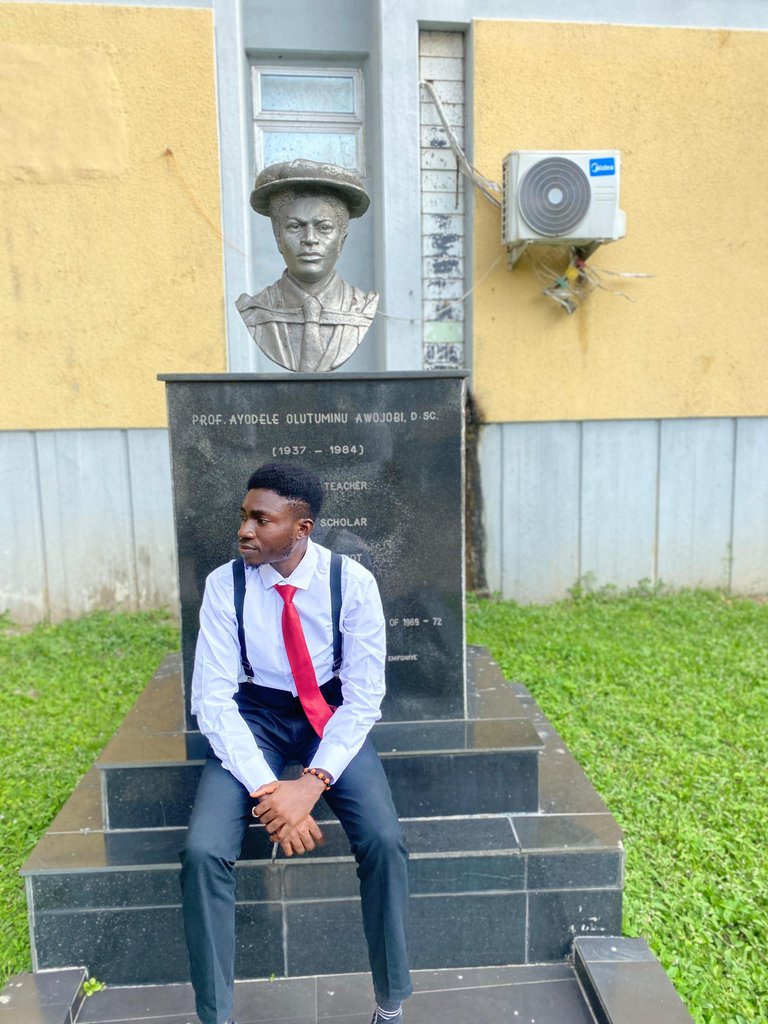
I remember my last moments in Univeristy of Lagos, in the Faculty of Engineering. Every student often gaze at the statue of Prof. Ayodele Olutuminu Awojobi and even take pictures with his statue because the stories of his intelligence and leadership spread through generations and was respected.

The statue of Prof. Ayodele Olutuminu Awojobi, revered for academic excellence.
He might not have been the best father or best husband but he met the milestone in academic excellence so the honour is well deserved. If one of his family members comes out today and accuses him of a misdeed, it makes no sense for the univeristy body to now take down the statue or honour because of that. If it were a situation where it was found out that he cheated his way thorough school or there was some kind of academic fraud, then yes, it is justified to remove that honour that was given to him.
Navigating Controversy: When Heroes Have Flaws
This is where the debate becomes a bit complicated. Some historical figures have skeletons in their cupboards and they are later discovered to have committed terrible acts such as corruption, abuse of power, molestation or oppression. In such cases, society must ask: what exactly are we even honouring? Are we honouring their contribution, or are we indirectly approving their wrong actions?

A Balanced Approach to Historical Tributes
I believe Monuments shouldn't be taken down at the slight news or rumor when they appear. Instead, society should carefully look at what the Monument represents in the first place. If that statue or naming of a building or road represents cruelity and an injustice, then removing it is the right thing to do inorder to correct history but if it honours a specific achievement and for some reason there is a flaw in the person that is being ignored, instead of removing the honour totally, then a plaque can be placed beside his statue to tell the full story (either good or bad).
There are many historal leaders around the world like Nelson Mandela and even Mary Slessor(the woman who stopped the killing of twins in Calabar, Nigeria). They obviously weren't perfect human beings but it would be wrong to take down the honour given to them and ignoring their achievement because of a controversial story about them.
In conlusion, the key is balance. Not every monument of a questionable person should be destroyed, and not every controversial figure should remain honoured without questions. We should not erase history, but we should also not glorify wrongdoings. Honours should reflect the values that we still stand for today.
✨ Hive Learners Prompt Week 204 Episode 02: History Remembers
> Tempo estimado de leitura: 2-3 minutos
Quando vi este tema, fiquei cético em relação a escrever, pois não tenho conhecimentos históricos suficientes para julgar com segurança os líderes históricos. Também acho que pode ser injusto falar mal de alguém que viveu em uma época diferente, especialmente quando não nasci durante a sua liderança, não a experimentei nem li toda a sua história como líder.
Há um ditado que diz: “A honra é dada a quem a merece”. Isso levanta uma questão importante: por que monumentos e homenagens são criados?
Este artigo é uma resposta ao tema da semana do Hive Learners: A história lembra. Ele fala sobre as considerações éticas dos monumentos históricos. Vamos nos aprofundar para saber se a honra deles deve ser removida se mais tarde descobrirmos que eram pessoas terríveis.
MAPA DO CONTEÚDO
[01] Reflexão inicial: honrando legados
[02] Estudo de caso: o legado duradouro do professor Awojobi
[03] Lidando com controvérsias: quando heróis têm falhas
[04] Uma abordagem equilibrada para homenagens históricas
Reflexão inicial: honrando legados
Os monumentos não são erguidos apenas com base em sentimentos, mas para honrar legados.
Os monumentos são lembranças físicas daqueles que moldaram a sociedade.
Os monumentos são erguidos para líderes históricos, servindo como lembranças físicas de que foram indivíduos que moldaram a sociedade. As estátuas erguidas, as ruas e edifícios batizados com nomes de líderes do passado costumam servir como meio de educação, preservação da memória e expressão de valores coletivos.
Estudo de caso: o legado duradouro do professor Awojobi
A estátua do Prof. Ayodele Olutuminu Awojobi, reverenciado por sua excelência acadêmica.
A estátua do Prof. Ayodele Olutuminu Awojobi, reverenciado por sua excelência acadêmica.
Ele pode não ter sido o melhor pai ou o melhor marido, mas alcançou um marco na excelência acadêmica, então a homenagem é bem merecida. Se um membro de sua família vier a público hoje e o acusar de algum delito, não faz sentido que a universidade retire a estátua ou a honraria por causa disso. Se fosse uma situação em que se descobrisse que ele trapaceou na escola ou cometeu algum tipo de fraude acadêmica, então sim, seria justificado retirar a honraria que lhe foi concedida.
Lidando com controvérsias: quando heróis têm falhas
É aqui que o debate se torna um pouco complicado. Algumas figuras históricas têm esqueletos no armário e, mais tarde, descobre-se que cometeram atos terríveis, como corrupção, abuso de poder, abuso sexual ou opressão. Nesses casos, a sociedade deve perguntar: o que exatamente estamos honrando? Estamos honrando sua contribuição ou aprovando indiretamente suas ações erradas?
Uma abordagem equilibrada para homenagens históricas
Acredito que os monumentos não devem ser removidos por causa de notícias ou rumores insignificantes. Em vez disso, a sociedade deve analisar cuidadosamente o que o monumento representa em primeiro lugar. Se aquela estátua ou o nome de um edifício ou rua representa crueldade e injustiça, então removê-lo é a coisa certa a fazer para corrigir a história, mas se ele homenageia uma conquista específica e, por alguma razão, há uma falha na pessoa que está sendo ignorada, em vez de remover totalmente a homenagem, pode-se colocar uma placa ao lado da estátua para contar a história completa (boa ou ruim).
Existem muitos líderes históricos em todo o mundo, como Nelson Mandela e até mesmo Mary Slessor (a mulher que impediu o assassinato de gêmeos em Calabar, na Nigéria). Eles obviamente não eram seres humanos perfeitos, mas seria errado retirar a honra que lhes foi concedida e ignorar suas conquistas por causa de uma história controversa sobre eles.
Em conclusão, o segredo é o equilíbrio. Nem todos os monumentos de pessoas questionáveis devem ser destruídos, e nem todas as figuras controversas devem permanecer honradas sem questionamentos. Não devemos apagar a história, mas também não devemos glorificar os erros. As honras devem refletir os valores que ainda defendemos hoje.
✨ Hive Learners Prompt Week 204 Episódio 02: A história lembra
Sending Ecency love your way, thanks for using Ecency.

I do agree with you on the fact that it's isn't ideal to destroy monument because it good or bad, having a dedicated written patch attached to it to explain in detail the story of such person is the way to go.
sharp ✅
Thank You for agreeing with me
Thank You for stopping by 💪🏼
Yeah, if it represents injustice and wickedness, it should be brought down. Thanks for sharing.