
Is Femin-ism The Downfall Of Femininity?


What happens when an ideology tells women that significant parts of that natural expression are weaknesses, limitations, conditioning, or things they need to overcome?
In order to understand what feminity actually is, we have to remove any political definitions of it, because they are often time lies, half truths and misconstrued information. Politics has always been a topic that has very little to do with reality and as such is the nature of politics, it can not be trusted in that light. We must also remove any social conditioning and assumptions associated with femininity if we are to understand it.
Stripping Feminity Down To Bare Nudity

Societies doesn't teach women how to behave like a female, because her biology is already doing the heavy lifting in that respect. So what remains when we strip all of that away and just leave her most natural aspect of femininity intact?
Femininity has, in today's modern society, been ridiculed by political and social expectations, while feminism, being of no innocent party to this, had contributed to teaching women to view their feminine traits as weaknesses while pretending to be do the opposite otherwise, and they do so under the guise of empowerment and independency among many other cadenced traits. Such traits like the desire for motherhood is taught as oppression because it conflicts with career choices, and also the desire for a masculine, protective, or providing man is viewed as dependency in bad light, because a woman is supposedly capable of providing for herself and wanting to nurture, create a home, raise children, or be cared for is viewed also as a defect that one needs to overcome.
There is no reason to believe that a woman isn't capable of surviving absent help, indeed they have demonstrated they can, but it's the legitimacy of her capabilities, her sanity, and of health that is being put to the question here. There's a difference between being capable in good health to carry on the world alone and another to be able to do the same thing but with dire consequences to their mind, body and soul. In other words, a woman being biologically and practically capable of doing something alone does not establish that doing it alone is optimal, healthy, or what she actually wants. The same applies to men.
The question isn't whether women can survive without men, it's obviously they can to a certain degree. The question is why the ability to survive independently became evidence that dependence, cooperation, protection, provision, or being cared for are somehow undesirable. A woman may not need a man to survive and still naturally want a man who provides, protects, leads, or supports her. Calling that dependency simply because she could survive without him changes the meaning of the word. If independence was supposed to give women the freedom to choose their lives, why were certain traditionally feminine choices subsequently portrayed as inferior choices?
More choices did not make you happier. More choices made you more paralyzed.

Women are told that freedom means they no longer have to accept the life that has been laid out for her. She begins to take that same idea and treating said life as something she actually wants as something she has to escape from. She then supposedly has to decide what kind of woman she is supposed to be, what kind of life she is supposed to want, and whether the things that come naturally to her are really her own desires or merely something society put there.
Every single meticulous choice becomes something to examine, and every single desire becomes something to justify. At some point, having the freedom to choose becomes the burden of having to choose correctly, and for the woman's specific biology and genetic makeup, this can be very overwhelming, at no fault of her own of course. It's just how we are naturally constructed.
Due to current environmental, societal expectations and peer pressures, fraudulent indoctrination from propaganda machines and government institutes, whilst growing up, she chooses the life that feminism has spent many decades telling them that it was a limitation, and what does that say about the freedom she was promised?
Wanting a man who can provide and protect her doesn’t just disappear because she’s been taught to provide and protect herself. She may be told she doesn’t need a man, while still wanting the qualities that made one appealing to her in the first place.
A woman can be fully capable of standing on her own and still want to stand beside someone for companionship, security, affection, leadership, or a man who’s willing to take on responsibilities she doesn’t want to carry by herself. Yet, somehow, the desire itself becomes suspicious.
She’s told to be IN-dependent, and when she is, she’s praised for not needing anyone, but when she admits she wants someone, that same desire can suddenly be treated like a weakness that needs fixing. Whatever happened to being free to choose?
If the answer was supposed to be freedom, then a woman choosing a husband, children, a home, and a life centered around her family should not be treated as though she has somehow failed to understand her own liberation, but this is the goal of the communist manifesto which has been such a close partner with feminism.
She could have it all, but by having it all, the very little of what she has constantly been told of the things she actually wants, supposedly are holding her back.
Consequences
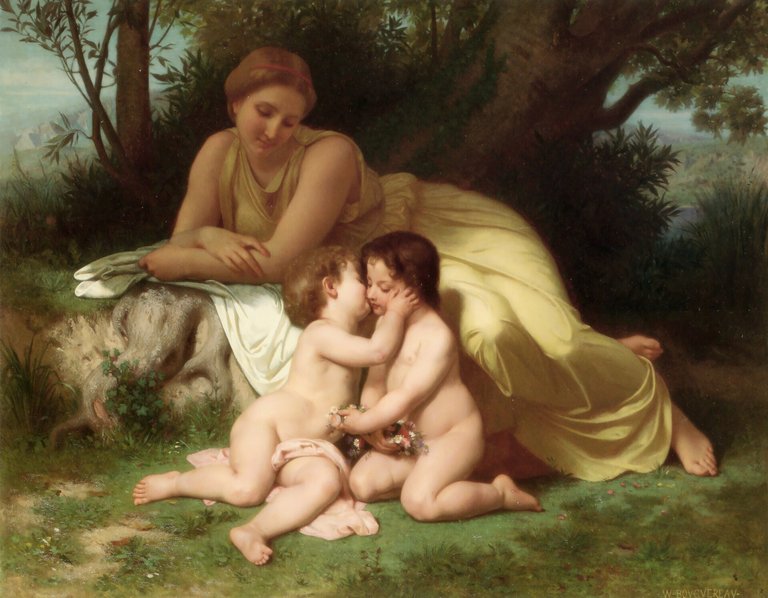
The woman who spent years building careers may eventually want children, while the woman who spent years proving she could live alone may eventually want a husband. These woman who are taught that needing to be cared for was weakness may eventually become exhausted from always having to be the one who carries everything. Then she is going to be left wondering why the freedom she was promised have never felt as freeing as it was supposed to be.
That's because freedom was never the problem. The problem was convincing her that femininity itself was something she needed to be free from.
When we look at what happens to the family itself, the woman is encouraged to treat the roles that once gave her life meaning as limitations. Eventually, those roles begin to disappear from the picture altogether. Marriage becomes something to postpone and motherhood becomes something to fit around a career. A husband becomes an optional accessory to a life that she has already been told she should be able to manage entirely on her own. Then, the consequences show up years later, when biology and time stop negotiating with ideology.
A woman can spend her twenties and thirties being told that there is plenty of time to figure everything out, only to discover that some choices become harder with age. The desire for children does not become less real because she spent years being encouraged to prioritize everything else. The desire for a husband does not become less natural because she was taught that needing one was a sign of weakness, and there is something particularly strange about a culture that spends decades telling women that these desires are merely products of conditioning, only to later spend considerable effort trying to convince them that motherhood, marriage and femininity are still perfectly compatible with the modern woman they have been encouraged to become.
That leaves a rather obvious question.
If femininity was never the enemy, why did women have to be taught to distrust it in the first place?
When the thing you needed and wanted most, became the thing you were taught to fear
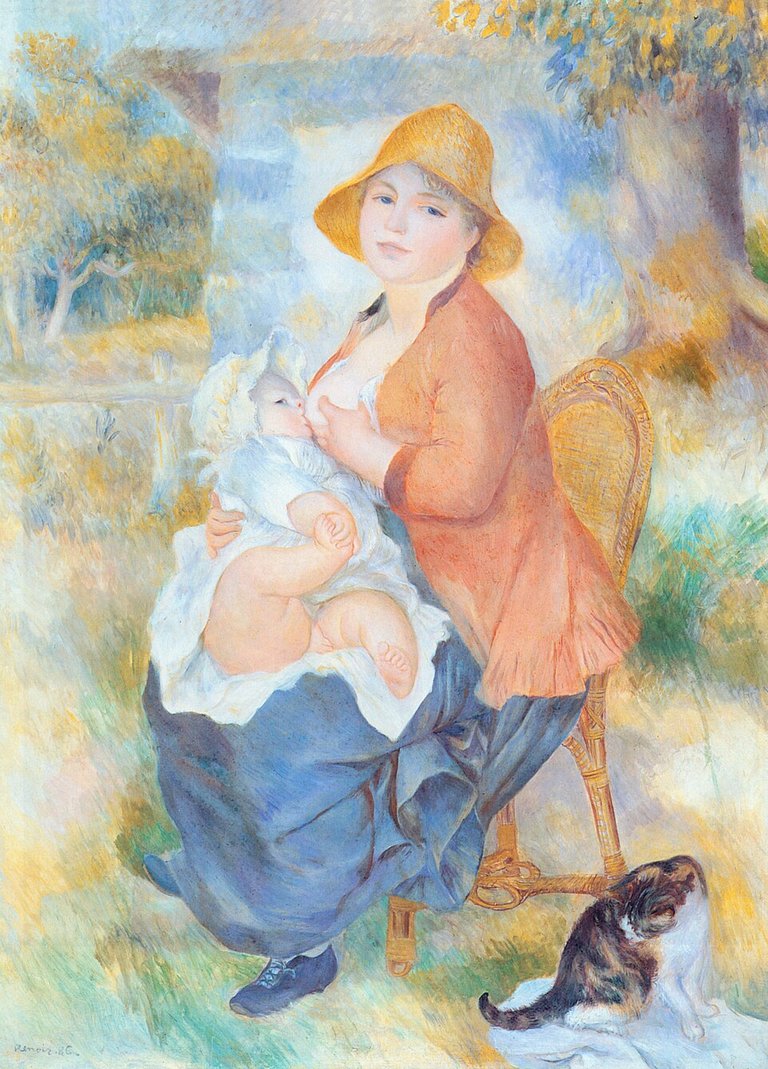
There is a strange conflict that develops when a woman spends years being told that the things she naturally wants are evidence that she has been conditioned. She can reject those desires for years and call it independence, only to eventually discover that the desire itself never actually went away. It was simply buried beneath everything she had been told it was supposed to mean.
She may want to be a mother, a wife to a husband who takes responsibility for his family, she may want to stay home with her children and be protected rather than always having to protect herself. She may want to be cared for without feeling like she has surrendered her independence, but none of those desires require her to be incapable of doing anything for herself, yet she can be made to feel as though admitting them, is somehow proving that the ideology was right about her being oppressed.
That creates a peculiar situation where the woman has to defend her own desires against an ideology that supposedly exists to give her freedom, and once that happens, the question of femininity becomes much bigger than whether women should wear dresses, stay home, work, marry, have children, or any other superficial definition that can be attached to the word. The real question becomes whether a woman is actually free to recognize what comes naturally to her without first having to determine whether that desire has been politically approved. If she has to reject a part of herself before she is allowed to call herself independent, then what exactly has been liberated?
Perhaps the problem was never that women had too few choices, but that teaching them that some of their own choices were beneath them.
So what is femininity when we remove the politics?

If femininity is stripped of everything that has been politically attached to it, what is left? A female body that develops differently, reproductive biology that imposes its own realities, instincts that do not require a political explanation, and a consciousness that experiences the world through that female biology. These things exist before anyone tells a girl what a woman is supposed to be.
A girl does not need to be instructed that she is female before her body begins making that distinction for her. Puberty does not wait for a classroom social theory before changing her. Her reproductive system does not ask whether motherhood is compatible with her career. Her body is already operating according to its own design long before she is old enough to understand any ideology surrounding it.
This does not mean that every woman will express femininity in exactly the same way. Not by a long shot. Women are individuals too, and like individuals, they have very real differences. One woman may be naturally maternal while another has little interest in motherhood. One may be gentle and reserved while another is assertive and confrontational. Likewise,femininity does not require every woman to become the same woman.
What matters is that these differences exist within a female organism rather than outside of it the body that came first, and not through the political interpretation which came much later.
A woman can choose how she dresses, where she works, whether she marries, whether she has children, and how she conducts herself. Those choices can vary enormously without changing the underlying reality that she is female. The question is whether those choices are actually expressions of freedom, when the woman making them has first been taught to distrust the parts of herself that might have led her somewhere else. If femininity is something that can only survive after being approved by an ideology, then it was never really being understood, but being managed.
The biology feminism cannot negotiate with
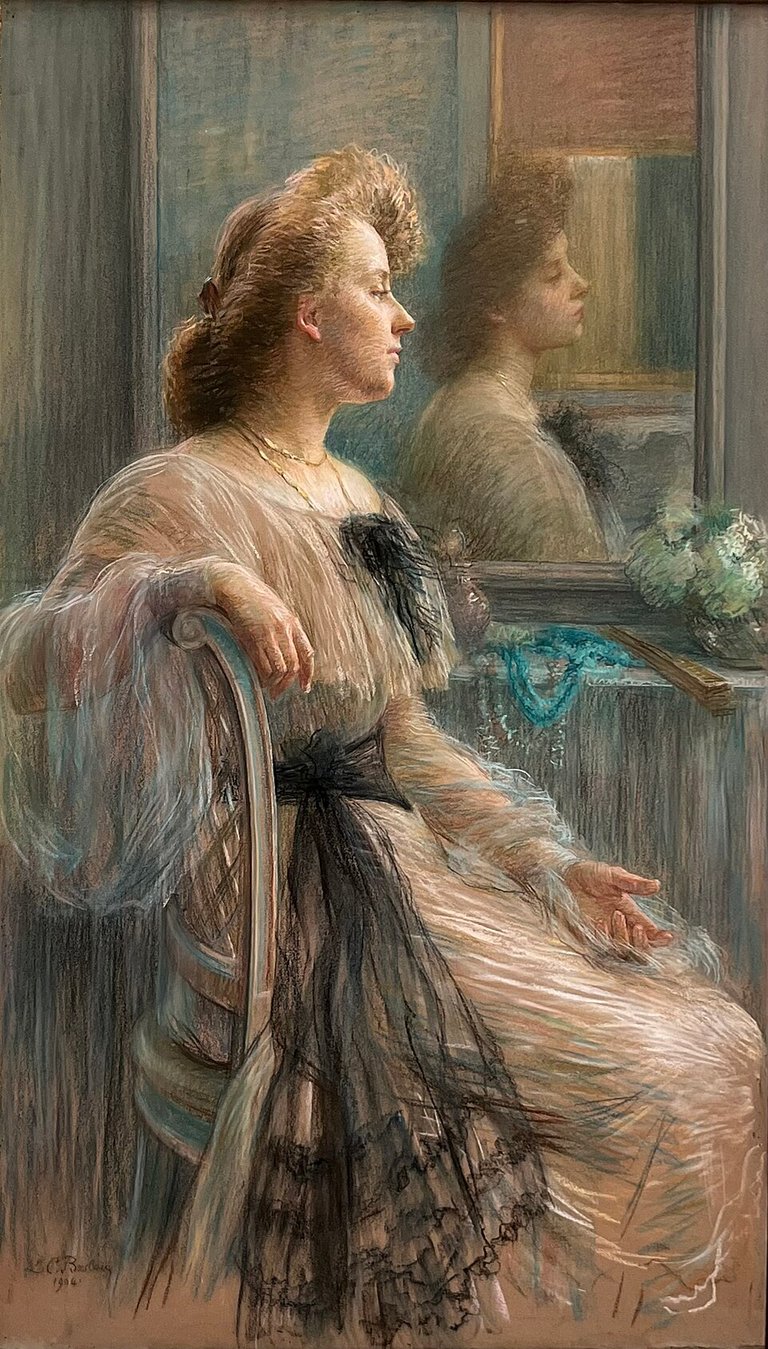
Motherhood is probably the clearest example of where the political definition of femininity runs into something that existed long before politics did. A woman can decide whether she wants children, but the fact that her body is the one designed to carry, nourish, and give birth to them is not a social invention. Pregnancy does not become a political construct because society has opinions about what a woman should do with her life.
There is something fundamentally different about a woman becoming a mother than simply adding another responsibility to her schedule. Her body changes, her priorities can change, her attachment to her child can become overwhelming, and the relationship between mother and child begins before the child can even exist independently of her body. Whatever political interpretation is placed on motherhood comes after those biological realities.
The same can be said about the instinct to nurture. It can be expressed differently from woman to woman, and it does not mean every woman wants to raise children, but the existence of maternal behavior across human societies and throughout human history is difficult to explain as nothing more than an instruction manual handed down by society. Women did not invent pregnancy because somebody told them motherhood was feminine. They were already mothers before anyone had a word for feminism.
That is why motherhood has been such an important target in the argument over women's liberation. Once motherhood is understood as something a woman may genuinely desire rather than merely a role imposed upon her, the idea that leaving it behind is automatically progress begins to look rather blatantly absurd.
A woman who wants children has not necessarily failed to become independent. She may simply be responding to something much older than the political world around her. Her very own biology is already speaking. Whether anyone should have the authority to tell her that she is wrong for listening, is questionable to say the least.
What happened to the man?

There is another part of this that has become very difficult to ignore. If women are told that they should be able to do everything a man traditionally did, what exactly is left for the man to do?
She can work, earn, protect herself, raise the children, maintain the household, make every important decision, carry the entire weight of her own life and still be told that this is what freedom looks like. Then she meets a man and discovers that she still wants him to be a man.
She wants him to be strong, protective, providing and take charge when things go wrong. She wants to feel safe around him, be able to relax because someone else is willing and capable of carrying some of the weight, but suddenly those desires need an explanation.
Why?
If a woman wanting a man who provides and protects is merely dependency, then why does she still want those qualities after spending years being told she doesn't need them? Why are those qualities still attractive to so many women who have been taught that independence means never having to rely on anyone?
And what happened to the man in all of this?
A man who who does all that and more is obviously useful. More so, he is biologically built for that stress and unwaver from that path unlike the woman is. note, i wm not saying a woman can't do the same, again the difference is in how healthy, sane and spiritually healthy it is for either party to do so. These were never particularly complicated concepts. A man knew what was expected of him because there was something expected of him.
Now he is increasingly told that a woman doesn't need him. Then everyone wonders why men are increasingly asking what their purpose is, and why so many suicides have been made.
You cannot spend decades telling one sex that it no longer needs the other and then act surprised when the relationship between them starts looking unnecessary. The issue was never that men and women had different roles, but ratjer that somebody decided different meant unequal and that one was more unnecessary than the other, serving no purpose in society other than to be a slave. How low society had become.
The irony, that the woman was supposed to be liberated from the man, while the man was gradually being stripped of the very reason his role mattered in the first place.
A woman was told she didn't need a man, and a man was told that being needed by a woman was no longer necessary. Somewhere along the way, dependence became a dirty word, cooperation became weakness, and complementing one another became something that had to be justified, but human beings did not suddenly become solitary creatures because an ideology said they should.
A woman can survive without a man and A man can definetly survive without a woman exceedingly better and not because of opinion or my say do. The data doesn't lie on this general fact, but that was never the remarkable discovery people pretend it was. Humans have always been capable of surviving under miserable circumstances. The fact that something can be endured does not tell us whether it is desirable, fulfilling, healthy, or what human beings were actually trying to achieve. Survival is a remarkably low standard to build an entire philosophy around.
And when that standard is applied to relationships, strangely, the woman is praised because she doesn't need the man, while the man is praised because he doesn't need the woman. Eventually they meet each other and are expected to somehow build a meaningful relationship out of two people who have been trained to regard needing one another as a personal defect.
What the hell do you think was supposed to happen?
Perhaps this is why the language surrounding relationships has become so fucking strange. Wanting somebody to hen be treated as though it exposes a weakness, and relying on somebody is treated as though you've surrendered your autonomy. Sacrificing for somebody is treated as though you've been exploited. Yet love has always required some degree of vulnerability. You cannot build a family while constantly measuring how little you need the people inside it.
At some point, somebody has to matter enough that their absence actually hurts. Somebody has to be worth sacrificing for, to be worth protecting and depending upon.
Otherwise what exactly is the relationship? Two independent people occasionally sharing a house? Roommates? How absurd!
That might be companionship, but it is a hell of a long way from the family that human beings spent thousands of years building their lives around, and this brings us back to femininity has became a problem precisely because it reminded people that men and women were never meant to be interchangeable pieces of the same machine. Her body is different. His body is different. Her reproductive reality is different. His physical reality is different. The way each responds to the world can be different. Yet that does not make one superior over the other.
It makes them different.
The moment difference became synonymous with inequality, equality required sameness, and once sameness became the goal, femininity had to be dragged onto the operating table and dissected until nothing remained that could be called distinctly feminine without somebody asking whether it was merely conditioning.
Mayhaps that was the mistake...
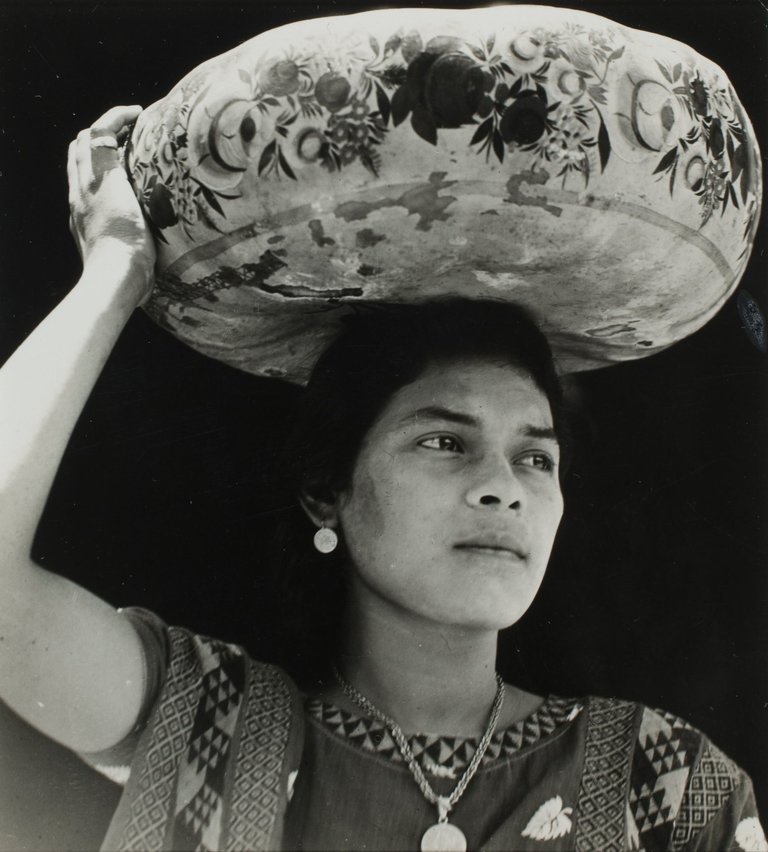
Maybe the woman never needed to become less feminine to become free. Maybe the man never needed to become less masculine to prove that women were his equal, or that two people can be equal in worth without being identical in function.
That sounds almost offensively simple. Which probably explains why it took so much ideology to make it complicated.
There is another part of this that becomes difficult to explain if the problem was supposedly that women were never given enough freedom to choose. What happens to the woman who already made that choice and is perfectly happy with it?
Your grandmother or great grandmother even. Oh how feminist despise and spite over the fact that she happier than you.
She may have married, raised children, devoted herself to her husband and family, depended upon her husband financially, stayed at home, and never spent a moment worrying about whether she had sufficiently demonstrated her independence. She may have spent her entire life doing exactly what modern feminism says women were oppressed into doing, and yet she may have been loved, secure, needed, respected and genuinely happy.
What exactly was she supposed to be liberated from?
If she was miserable, abused or trapped, then obviously that is another matter, but if she wasn't? If she actually wanted that life and considered it a good life, why does her choice suddenly become something that needs to be explained as conditioning?
This is where the idea of freedom starts becoming rather strange. The woman who chooses a career is allowed to say that she chose it because she wanted it. The woman who chooses to remain single can say the same, but when a woman chooses marriage, motherhood and a life centered around her family, there is often an impulse to look behind her decision and search for the invisible force that must have made her want it.
If she insists that she is happy, then apparently she has failed to recognize her own oppression. Imagine applying that standard to any other choice. A woman can reject motherhood and that is treated as discovering herself, but if she embraces motherhood, somebody wants to know who taught her to want it. She can reject marriage and be praised for knowing her worth, but if she happily marries and builds her life around her husband and children, suddenly somebody has to explain why she would surrender so much of her so called in-dependence.
At some point, the woman is no longer being given freedom to choose, but rather being given permission to choose from the choices that have already been approved, and that is where the woman she was taught to pity becomes rather inconvenient.
She may look at her grandmother and see a woman who had less political independence, fewer career opportunities and a much more traditional life, yet somehow managed to find meaning in it. She may even envy parts of that life while being told that she has progressed beyond it. The woman she was taught to pity may have had something the supposedly liberated woman is still searching for.
A family. A husband she could rely upon. A home she wanted to build. A role that gave her a reason to be needed. And perhaps most inconvenient of all, she may have been happy.
That does not mean every traditional marriage was good, nor does it mean every woman should want the same life. It means that the happiness of the woman who chose that life cannot simply be dismissed because her choice makes an ideology uncomfortable.
If femininity really belongs to women, then the woman who happily embraces it cannot be treated as though she has betrayed herself. Maybe the problem was never that women had too few choices. Maybe the problem was that some choices became so politically unfashionable, that women were taught to feel ashamed of wanting them.
And perhaps that is why the comparison with my cats is so fucking funny. My feline amores is more feminine than the modern woman.

My cats never had to go through any of this. A female cat does not need a political movement to convince her that she is female. She does not need somebody to explain that depending upon another creature for certain things makes her inferior. She does not spend her life trying to prove that she can behave like the male because being female was somehow an embarrassment. She simply behaves according to what she is. Nobody had to teach her that. Maybe there is something worth learning from that.
- @yayogerardo, writer, researcher, analyst, anarchist, autonomist, Human
--
Follow Me:
Services
Technical Document Translation Service
Writing, Ghostwriting & Editing Services
Independent Crypto Market Analysis
Donate
XMR:
86fXjLUF7W9SwGSjTtsbqq4t1LKzzypEZa1t77S5c68WF3yK9SmEfzPTtRyjUhDSk9Zn7p1ahFJT4PcKW8MN4h3QRpjx2Q5

Image Disclaimer
The images throughout this article are from public-domain or freely usable sources and are included for visual context and illustration.
Posted via HiveSuite
You really are damned if you do, damned if you don't, and damned for everything in between.
Which is difficult for many women who don't understand the politics of it either, or how much of their life is genuinely their free choice. I baulk at #tradwifes, for example - how could one possibly have their personal freedoms so curtailed? To choose against education, to choose indentured slavery? I also baulk at those women who say that they hate feminists, when feminism - or whatever we're calling it - has been fighting so hard for so many years for the rights of women to be self determining. That modern women don't even understand their own goddamn priviledge.
And yes, of course, to be happy in a role that society sets for you is happiness indeed - perhaps the grandmother with six children under three was happy, but perhaps because she didn't know or realise what she could be, or even if she did have the imagination, gave up because it was pointless trying under the weight of that much oppression.
I dont think feminists despise this - in fact, I think it's quite hard a hard thing to measure. I always wonder if, given a time machine, women would lead their lives differently, against social expectation. Some would choose the same. Some would run a mile and lead very different lives indeed.
Indeed. Sometimes I've been uncomfortable about my own life - I fought hard for financial independence, to do things a man would do - to play sport, to travel, to work a good career for good money for financial indepence, to do all of this as a single mother and defy the social expectations placed upon me to find a father for my son, a good male role model, as if the absence of one would make their lives lesser somehow - and then, to marry and to have a set of circumstances lead me to the point where my husband is the primary breadwinner and I'm at home cooking dinner - ouch. But I'll never take the bins out, which suits me fine... And if I could, I would.
I still will never have as much superannuation (Australian pension, self funded, salary sacrificed) as a man my age though, which is crazy, because of taking time to be a mother. And as an older woman now, I am less employable than a man who is not older, but 'experienced' than a woman who is 'past it' or worse 'menopausal' - and much less feminine, because she is pretty much crone/hag now and lacks social legitimacy...as if she ever really had it, apart from that brief time where her breasts were perky... what is one to do?
Personally, I never listened to the hype the social engineers pushed out, the "feminism" and all. I moved - and still move - as My heart leads me. And surely I have enjoyed being a mother, and One who did creative work for the money We must have to survive on Our planet.
And irrespective of gender, I am moved to obsolete that tool, knowing the moneyed psychopaths in control on Our planet (by virtue of money) are putting Our share of the wealth of Our planet into Cestui Que Vie "trusts" that They control, and keeping Us enslaved to Them with the chains of money.
Without money in the mix, there would be no social engineers to manipulate Us into molds of Their choosing. We all will be free to be who We are within the three Laws. We will fulfill Our potential, not having to find some way to plug Our energy into the psychopaths' engineered setup to get some tokens to "afford" to live on Our planet - to the profit of those psychopaths.
Good look at the manipulation We endure at the hands of those psychopaths!
I get what you're saying.
Yeah I tried to avoid all that hype but certain things had to be said and well, i been silent about the whole thing for a good while and people in person were asking about what I view of it and this is what resulted, though it's just a scratch of the surface i think it serves its point well enough.
Thank you
First off, thank you for this critically necessary article that sparks a dialogue between men and women that have been strategically divided by a system that views their singular and joint empowerment as a threat. Literary outreach like this spans a synthetic divide of alienation created by mutually shared enemies. The root of this all lies in the PSYOP of Divide and Conquer seeking to neutralise innate power of the masses and have it manipulated to the ends and agendas of a predator class. Relationship destruction, celebratory abortion, gender alienation and confusion along with subtlety indoctrinated disdain for Divine Femininity and motherhood are all the hallmarks of crypto-eugenics played out generationally in a long game. Mockery and ridiculed marginalisation of Divine Masculine energy and of fatherhood also serve those very same diabolical eugenic aims. The anti-tribe socially engineered divisions and associated support cults have wrought havoc and take us all from where we need to be by design.
Following their evil shepherding plans have left both genders weaker, alienated and divided and this needs to fixed by all invested parties now. True independence means saying NO to all that does not serve us and our intrinsic beneficial interests. This takes introspection, will to action and unification along common united interests to remediate. It starts with dialogue across the artificial divides and involves listening, empathy and the will to resolve and reunite. Leaving vital opportunities to fix damage only furthers the strategies and agendas of the imposed power dynamics of psychopathic demons hellbent on creating a shitworld in their twisted image. It all begins with honest, self-analytical, reflective communication and courageous ownership without emotive attachments to it. Ask yourselves this, do you serve slithering, conniving masters or do you serve and pursue the higher path of self-mastery, repair and reclamation of power? If your answer is the latter then get at it with sustained progressive effort every day being a sun in the world of darkness. A trusted star in the heavens that people use to align and navigate their lives and pay it forward. Houses divided can only destroy not build, doubt instilled and echoed internally is a devil’s whispered poison.
@topcomment hands down!
Right you are good sir! I really appreciate you coming by and adding to the distinctions that must be addressed in every home. Indeed we have a serious divide in the nuclear family and it's to a point where it looks a lot like the signs of a society about to collapse like ancient Rome or how any other civilization appeared like just right before they fell. It's quiet sad actually.
Posted via HiveSuite
My pleasure, if we are not all pursuing to rise and become our best versions of self and fix what is broken then what are we doing and why are we here in Earth School? There's a distinct and qualitative difference between existence and living and if we are about the business of living, then the mantle of responsibility falls upon us all to make this a fit and fertile place to do that in. The abdication of that responsibility by careless and apathetic parents and ancestors with little or bottom-barrel personal value got us here. The choice is on us is to repair the damage and move upwards or remain chained like livestock to a self-destructive existence managed by broken despots and insatiable predators.
YES! And of course this transcends the male/female divide. If only. Perhaps getting rid of Facebook would be a start...
Indeed good lady, I heartily agree. Cheers for the follow of which I returned.
View or trade
LOHtokens.@muhshrooms, You have received 1.0000 LOH for posting to Ladies of Hive.
We believe that you should be rewarded for the time and effort spent in creating articles. The goal is to encourage token holders to accumulate and hodl LOH tokens over a long period of time.
View or trade
LOHtokens.@ladiesofhive, you successfully shared 0.1000 LOH with @muhshrooms and you earned 0.1000 LOH as tips. (11/50 calls)
Use !LADY command to share LOH! More details available in this post.
This post has been manually curated by @bhattg from Indiaunited community. Join us on our Discord Server.
Do you know that you can earn a passive income by delegating to @indiaunited. We share more than 100 % of the curation rewards with the delegators in the form of IUC tokens.
Here are some handy links for delegations: 100HP, 250HP, 500HP, 1000HP.
100% of the rewards from this comment goes to the curator for their manual curation efforts. Please encourage the curator @bhattg by upvoting this comment and support the community by voting the posts made by @indiaunited.