
The Illusion of Wealth and the Value of Sovereignty

With all these reports of banking problems in the United States lately, I can't help but wonder how much longer people will continue putting their faith in a financial system that has repeatedly demonstrated its vulnerabilities throughout history.
Apparently, dozens of banks have been experiencing problems with deposits, withdrawals, and other transactions. Of course, the explanations being offered are mostly technical difficulties, software problems, and the usual reassurances that everything is "under control".
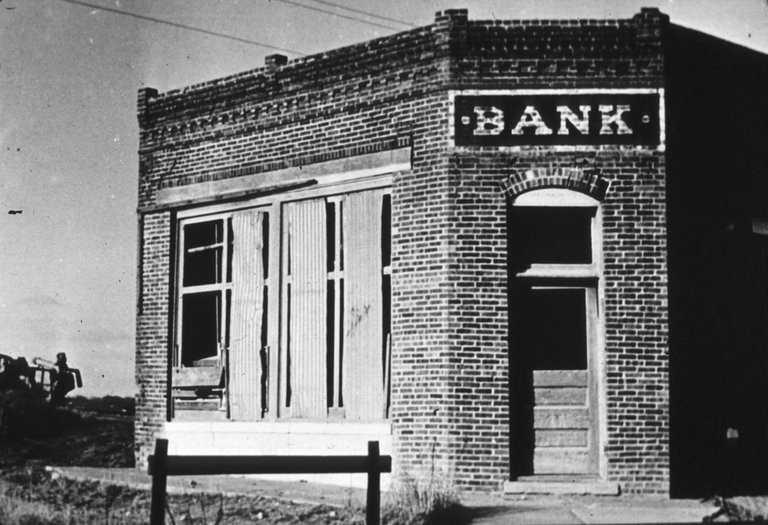
Whether those explanations are true or not, I don't particularly care to take their word for it. I've never been one to place faith in the official narratives of institutions, especially when those same institutions have an interest in maintaining public confidence.
And frankly 🥓, I'm not particularly concerned about the banks collapsing either. I've never built my life around depending on them. What interests me more is how dependent humanity has become on institutions that, in the grand scheme of human history, are relatively new.
Human beings were producing what they needed, exchanging goods, and organizing communities long before modern banking existed. Entire civilizations developed without the financial infrastructure we now consider indispensable. Yet today, the mere possibility of people losing access to their bank accounts is enough to generate widespread anxiety.
Think about that for a moment. People can have thousands or even millions sitting in an account, but if the institution controlling that account suddenly denies them access, what exactly do they possess?
Even cash, which people often refer to as king, isn't quite what it's made out to be, especially when we're talking about fiat currency operating within a debt-based monetary system. Its usefulness depends on other people continuing to recognize its value and accepting it in exchange for something they have produced.
I've always found it interesting how much importance people place on the monetary value of things while giving considerably less thought to their practical usefulness. Gold, for example, may be valuable in a market, but its market price tells us very little about a person's ability to sustain themselves. The same applies to cryptocurrencies, stocks, and most other financial assets.
Now, don't get me wrong. I happen to prefer Monero over most monetary alternatives because I value privacy and the ability to transact without depending on financial intermediaries, but even Monero is still money, and money itself is only one way human beings have chosen to organize the exchange of goods and services.
That brings me to something I've found considerably more interesting over the years: Jacque Fresco and the Venus Project.
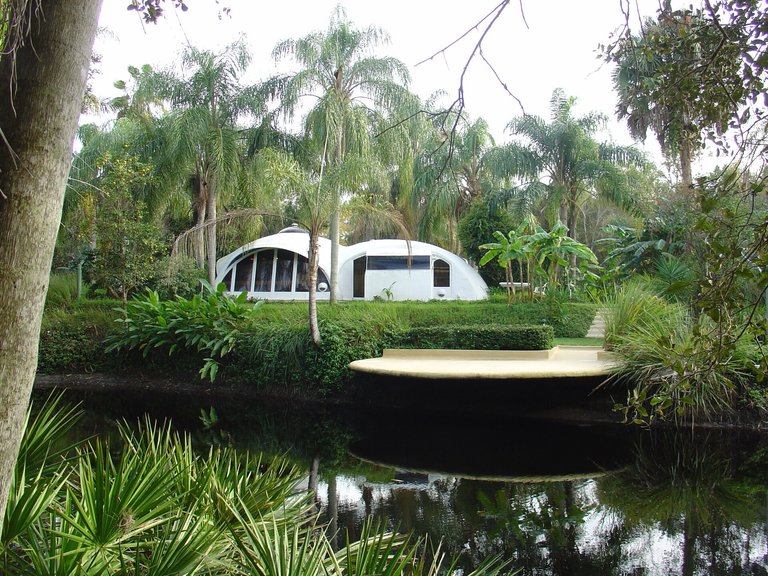
Of all the ideas Fresco presented, what interested me most was his understanding of human behavior and how much of it is influenced by the environment in which we live. Much of what people consider normal behavior develops through repeated exposure to the conditions surrounding them, including the institutions and social arrangements they grow up participating in.
We inherit these arrangements long before we're old enough to question them. By the time we reach adulthood, many have become so familiar that imagining society functioning differently can seem almost absurd.
Consider how we approach work, for example. From an early age, we're taught to prepare ourselves for employment so that we can earn money and eventually afford the necessities of life. We spend much of our adult lives repeating this process, often without questioning why our ability to participate in society must depend on monetary compensation in the first place.
But human beings have always worked because things needed to be done.
The farmer grows food because people need to eat, just as an electrician installs and maintains electrical systems because people need electricity. Every productive occupation exists because there's some human need or practical purpose behind it, regardless of the monetary arrangements we've attached to that activity.
Which brings me to what I consider one of the simplest ideas for changing the way our civilization operates. I thank antisocialist forr this very simple phrase.
"Keep working. Stop paying at the pump.™"
and
"We need more workers not more money.™"
That's it. And work and unemployment is high. now imagine when the doors open for all those out of a job. imagine then, have free open access to the things you need? the world doesn't have to go into chaos to settle this but control freaks today will certainly try to make it seem that way.
Turn off your television. seriously 😒
Think about what would actually change if people collectively decided to continue doing their jobs without charging one another for the results. The farmer would still know how to grow food, the electrician would still know how to install wiring, and the factories would still possess the equipment and knowledge required to manufacture whatever they're producing.
The infrastructure we've spent generations developing would still be there, along with the people who know how to operate and maintain it. Goods would continue moving through existing transportation and distribution networks according to where they're needed.
Supply goes where demand exists. It's really that simple. Stop over complicating it.
We've already developed enormous systems for identifying demand and organizing the production and distribution of resources. These are activities people perform every day, and their practical purpose doesn't somehow disappear when monetary transactions are removed from the equation.
Of course, some people will disagree with the idea, particularly those who have spent their entire lives believing that nobody would accomplish anything without the promise of financial compensation. Yet human beings voluntarily perform useful activities every day without expecting payment. Much of what happens within families and communities already operates through cooperation, mutual assistance, and the simple recognition that something needs to be done.
When people grow up in an environment where access to nearly everything necessary for survival depends on money, it should hardly surprise us when their behavior becomes heavily influenced by the pursuit of it. Their priorities, decisions, relationships, and even their understanding of success develop within those circumstances.
Now consider what might happen if those circumstances changed, and people no longer spent so much of their lives worrying about whether they could afford to survive. How much of what we currently attribute to human nature might actually be a response to the conditions we've created around ourselves?
Think on that question. It's worth exploring before making sweeping assumptions about what people would or wouldn't do in a society organized differently.
While I appreciate the broader vision presented by the Venus Project, I don't believe people need to wait for some grand transformation of civilization before they begin changing their own circumstances. In fact, I think one of the most valuable things people can do today is become more autonomous.
Which brings me back to the subject of wealth.
People spend enormous amounts of time discussing which assets are worth accumulating, usually based on their potential to increase in monetary value, but I've become considerably more interested in assets that improve a person's actual ability to live independently.
Homesteading, for example, is something I consider greatly undervalued in today's world. Understands how to produce food and maintain their living environment possesses capabilities that remain useful regardless of what happens to the financial markets. Develops practical skills that allow you to provide for your selves and cooperate with others.
These capabilities become even more valuable when people begin sharing their knowledge and working together voluntarily. Nobody needs to possess every skill or produce everything individually when they can participate in a community where different people contribute according to their abilities.
We already possess an extraordinary amount of practical knowledge and productive capacity, yet we've organized access to much of it around financial institutions and monetary obligations.
A person might spend their entire life working within this arrangement, accumulating financial assets while remaining almost completely dependent on others for their basic necessities. Meanwhile, someone with very little monetary wealth may possess the knowledge, resources, and relationships necessary to maintain a considerably greater degree of independence.
It makes me wonder how much of what we call wealth is really just a measurement of our position within the monetary system. This also brings us to the broader issue of centralization, which I consider fundamentally incompatible with the autonomy and adaptability of living systems when taken to the point of widespread dependence.
Life develops through countless relationships between organisms and their environments, continually responding to changing conditions. Diversity and adaptability play important roles in the survival of these systems, and I see no reason why humanity should regard increasing dependence on centralized institutions as some inevitable sign of progress.
The more people depend on a small number of institutions to access the necessities of life, the more vulnerable they become to circumstances beyond their control. A decision or failure within one institution can affect millions of people who had no part in making that decision.
The solution, as far as I'm concerned, begins with people taking greater responsibility for their own lives and developing the ability to cooperate without requiring someone else to direct every aspect of their existence.
Whether the present banking system survives another century or begins falling apart tomorrow doesn't change the fact that human beings will continue needing the same things they have always needed. Our ability to provide those things comes from the natural world, human knowledge, productive activity, and cooperation.
Money is merely one arrangement we've developed around those activities, and I see no reason to assume that arrangement must remain a permanent feature of human civilization. Perhaps the most important change we can make begins with reconsidering what we actually value and how much of our independence we're willing to surrender in exchange for the convenience of depending on someone else.
Personally, I'd rather invest my time in developing capabilities that make me less dependent on institutions, while encouraging others to recognize what they're already capable of accomplishing themselves. I have little interest in replacing one group of self proclaimed authorities with another control freak puppet. I'd much rather see people reach a point where they no longer feel the need to place so much of their lives under someone else's authority in the first place.
Nothing improves until sovereignty improves.™
— @yayogerardo, writer, researcher, analyst, anarchist, autonomist, Humanoid 🃏™️
Free Email Updates
Get new articles through Simple Newsletter via copying just a (RSS links](https://hiverss.com/@muhshrooms?interface=peakd)
Privacy Connectivity
10% off with code YAYOGERARDO
No signup, no email, no ID. Card and crypto accepted, including Monero.
Monero XMR:
86fXjLUF7W9SwGSjTtsbqq4t1LKzzypEZa1t77S5c68WF3yK9SmEfzPTtRyjUhDSk9Zn7p1ahFJT4PcKW8MN4h3QRpjx2Q5
And I am trying to obsolete the point to accounting for Our energy added into a system. And do consider what might happen to "crypto" when the next Carrington event (or worse) comes along... It's due any time.
When We have free energy flowing, with Our own energy producing machines, We will have no need for money. We can automate work no One wants to do, We can do the things We love to do - as long as they're Ethical (don't break the three Laws), We can fulfill Our potential.
As long as We're enslaved to having to plug Our energy in somehow for tokens to survive on, We are not free.
The Time We Spend on Crypto Issues (article): https://peakd.com/informationwar/@amaterasusolar/the-time-we-spend-on-crypto-issues
Excellent article on reclaiming one's own power and what you've described accurately fits the model of tribes and that is the way out of this cage. Being here on Earth School our reason for existing is to work with fellow students and elevate the state of the world to create and maintain a mutually prosperous world. What prevents this is fear, socially engineered indoctrination and the failure to get out of our own way and pursue a path of self-mastery. If one does not master themselves, then another negative energy or person will master them and they will remain static incurring lessons from the Divine to move them along to where they should be. This is aligning to reality and ones true and authentic environment that we, not it departed from by falling prey to predatory PSYOP grifters playing a long games of wealth attrition and subjugation.
Thank you for once again posting critically needed information and thought to ignite vital dialogue and inspire change both inner and outer. To resolve any issue one must first diagnose what is the problem and the core of it's nature, then engineer a progressive and sustainable alternative to pursue. I'm always impressed at the depth of your uplifting posts like these aimed at exiting hellworld and reclaiming our inherent power and independence.
I find it best to have a mix of silver, gold, crypto, ammo and basic supplies.
!BBH
!ALIVE